Mohamed Salah's World Cup Dream Realised: Egypt 3-1 New Zealand and Africa's Historic First Win
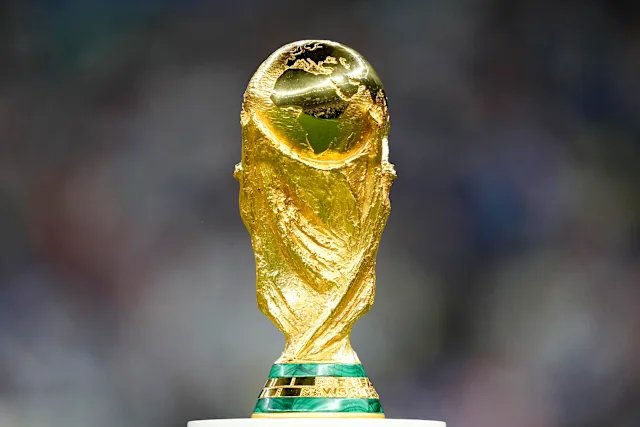
It has been the question that followed Mohamed Salah through the most decorated chapter of his club career: when, if ever, would he produce at a World Cup what he has so consistently produced for Liverpool across the most sustained period of individual excellence that English football has seen in a generation? Six Premier League Golden Boots. Champions League winner. Club World Cup. Africa Cup of Nations. The individual trophies accumulate with the steady authority of a player who has long since moved beyond the question of whether he belongs in the company of his era's greatest footballers. But the World Cup — the tournament that his generation's most admired players have used to cement their legacies, to write the chapter that gets quoted when their careers are eventually evaluated in full — had remained stubbornly, frustratingly, out of reach. Egypt qualified for 2018 in Russia and were eliminated in the group stage without Salah ever finding the net in meaningful conditions. They missed 2022 entirely, falling to Senegal in a playoff shootout that ended a continental qualifying campaign that had consumed months and given Salah no stage.
On the evening of June 21, 2026, at BC Place in Vancouver, Canada, that changed.
Salah scored Egypt's second goal of the afternoon in the 67th minute, completing a second-half comeback from 1-0 down that ended with the Pharaohs winning 3-1, reaching four points in Group G, and securing not just Egypt's first World Cup win in the modern era but the kind of individual moment that Salah's standing in the game has always demanded. He also assisted the third goal, a corner delivery in the 82nd minute that Trezeguet converted at the near post to seal the victory. In doing so, he became, at 34, both the oldest goalscorer in Egypt's World Cup history and the oldest African player on record to have both scored and assisted in a single World Cup match.
The numbers are significant. The image is more significant. Mohamed Salah, at the World Cup, scoring and assisting in a winning performance, his country's flag draped eventually across his shoulders as the stadium emptied around him.
Egypt's World Cup History: Context for the Win
To appreciate what Egypt's 3-1 win over New Zealand represents, the historical context matters enormously. Egypt is one of Africa's most celebrated football nations — seven Africa Cup of Nations titles, a population of over 100 million, and a cultural investment in football that rivals any on the continent. But their World Cup record, despite that domestic football tradition, has been thin: appearances in 1934, 1990, and 2018, with a total of one point from five matches across those three editions. They had never won a World Cup match until today.
The 2018 appearance in Russia had promised more. Egypt were drawn into a group with Uruguay, Russia, and Saudi Arabia, and Salah — who had just completed one of the most spectacular debut seasons in Premier League history with Liverpool, scoring 32 goals — had arrived in Russia with expectations that the Egyptian press had made no effort to moderate. A shoulder injury suffered in the Champions League final against Real Madrid two weeks before the tournament compromised his ability to perform at full capacity. He scored a penalty against Russia in a 3-1 defeat. He scored another against Saudi Arabia in a 2-1 win that was irrelevant for qualification purposes. Egypt were eliminated having scored twice and conceded seven. The World Cup had not been the stage it was supposed to be.
The intervening eight years brought Egypt close but not close enough to the 2022 edition, and then the draw for 2026 placed them in Group G alongside Belgium, Iran, and New Zealand — a group that, on paper, offered Egypt a genuine path to the knockout rounds if they could produce consistent performances. The opening match against Belgium produced a 1-1 draw that left the group wide open. Against New Zealand on June 21, with the knockout round still tantalizingly achievable, Egypt needed a win.
The Match: How Egypt Came Back from Behind
New Zealand did not read the script. Under their head coach, the All Whites arrived at BC Place with a coherent game plan — compact in defence, direct in transition, and prepared to use their physical qualities to compete with a more technically gifted opponent — and executed the first half of that plan with surprising effectiveness. When Chris Wood — or more precisely, a New Zealand forward playing in the channel behind Egypt's defensive line — latched onto a direct ball in the first half and converted with the kind of opportunistic finish that teams who defend well and attack simply can produce, the 1-0 halftime lead reflected a performance that had caused Egypt genuine problems.
Egypt's halftime dressing room conversation clearly produced changes. The Pharaohs came out for the second half with more directness, more urgency, and more willingness to play the ball into the feet of their forward players earlier in attacking sequences rather than recycling possession until openings appeared naturally. The plan worked, beginning in the 58th minute.
Mostafa Ziko — playing as Egypt's central striker and combining effectively with Salah throughout the second half — received a brilliant right-flank cross from Mohamed Hany, controlled it, and finished cleanly to level the score at 1-1. It was Egypt's first from open play, the product of a direct attacking sequence that reflected exactly the urgency the halftime reorganisation had demanded, and the stadium's Egyptian supporter contingent — loud throughout despite the first-half deficit — erupted.
Nine minutes later, in the 67th minute, Salah arrived.
The Moment: Salah's 67th-Minute Goal
The goal was constructed through the combination of two players who had spent the second half building an understanding that, on this occasion, broke New Zealand's defensive structure precisely where it needed breaking. Salah received the ball wide on the left, with his back to goal and a New Zealand defender closing from behind. He turned — the Salah turn, the one that has dispatched hundreds of Premier League defenders over the past decade, the movement that begins with a dropped shoulder and ends with an opponent facing the wrong direction — and played a short combination pass to Ziko inside him. Ziko played it straight back. Salah, now moving toward goal on his stronger left side with the New Zealand defensive line backpedalling, swept the ball into the far corner.
Goal. Egypt 2-1 New Zealand. Salah's first World Cup goal from open play in his career. A moment that the Egyptian supporters in Vancouver — and millions watching in Egypt, where the match had been played out on screens in cities across a country that has lived and died with its football team for generations — had been waiting for across a career that has produced nearly everything else the sport can offer.
"Tonight was very special for me," Salah said after the final whistle, with the particular restraint of a player who has learned, through twenty years at the top level, to carry great moments without being overwhelmed by them. "I always believed that one day I would be in a World Cup and help my country win. Today was that day."
The reaction across Egypt — the footage of celebrations in Cairo's squares, the images from Alexandria's seafront, the noise reported from restaurants and homes across a country that had stayed up through the night for a 4 a.m. local kick-off — conveyed what the achievement meant to people beyond the stadium. Egypt winning a World Cup match for the first time, with Salah scoring in it, in the 67th minute of a comeback from 1-0 down, is the kind of football story that becomes part of a country's national memory.
Salah at 34: The Statistical Landmarks
The records Salah set against New Zealand are worth cataloguing, both for their historical significance and for what they say about the shape of a career that has now extended into its mid-thirties without any visible reduction in its quality or its importance to the teams that depend on it.
At 34 years and some months, Salah became the oldest player ever to score for Egypt at a World Cup — a record set against the backdrop of Egypt's limited World Cup history, but a record nonetheless. He also became, according to post-match statistical analysis from Opta, the oldest African player to have both scored and assisted in a single World Cup match, a distinction that puts him in company that only the longest-serving and most productive African footballers at this level can claim.
His contribution to Egypt's qualifying campaign for this tournament — the goals in the final rounds, the performance in crucial continental playoffs that eventually secured Egypt's place in the 48-team field — and his role in the national team's setup over the past decade makes him, without serious argument, the most important player in the history of Egyptian international football. The goal and assist against New Zealand added a chapter to that history that had been conspicuously absent.
| Player | Age | Record Set Against New Zealand |
|---|---|---|
| Mohamed Salah | 34 | Oldest goalscorer in Egypt WC history |
| Mohamed Salah | 34 | Oldest African player to score+assist in single WC game |
| Mostafa Ziko | 25 | Goal + assist in winning WC performance |
Trezeguet's Seal: The 82nd-Minute Insurance
The match was not yet fully secured when Salah delivered the corner in the 82nd minute that put it beyond doubt. Substitute Trezeguet — who had come on in the second half and immediately brought the directness and physical engagement that Egypt needed to tire a New Zealand defence that had been excellent in the first half — arrived at the near post as Salah's outswinging delivery bent towards the area and stabbed the ball home. Three-one. Egypt's World Cup win confirmed.
Trezeguet's goal, and his overall contribution after coming on, reflected the depth available to Egypt's coaching staff in this tournament — players capable of changing matches from the bench, of adding a different kind of threat when the starting lineup needs support. It also reflected the extent to which Egypt's second-half performance was a collective effort rather than a one-man show, even if Salah's individual moment will dominate the discussion.
Group G After Egypt's Win: A Complicated Picture
Egypt's win reshapes Group G into one of the tournament's most complex and compelling group-stage situations. With all four teams having now played two matches each, the standings are:
| Team | P | W | D | L | GF | GA | GD | Pts |
|---|---|---|---|---|---|---|---|---|
| Egypt | 2 | 1 | 1 | 0 | 4 | 2 | +2 | 4 |
| Belgium | 2 | 0 | 2 | 0 | 1 | 1 | 0 | 2 |
| Iran | 2 | 0 | 2 | 0 | 0 | 0 | 0 | 2 |
| New Zealand | 2 | 0 | 0 | 2 | 2 | 5 | -3 | 0 |
Egypt, with four points and two matches played, have effectively secured their place in the knockout rounds. A draw in their final group match — against either Belgium or Iran — would guarantee their advancement regardless of other results. Egypt topping the group is a real possibility. That a country with Egypt's football tradition but limited World Cup history is sitting at the top of a group that included Belgium is, by itself, one of the 2026 tournament's significant stories.
Belgium and Iran, both on two points, still need results to qualify. Belgium face New Zealand — a must-win — while Iran's final group match will likely determine whether their disciplined defensive approach has been sufficient to carry them through. New Zealand, with zero points and a worsening goal difference, face elimination.
What Egypt's Win Means for African Football
Beyond Group G, Egypt's win over New Zealand carries a symbolic significance for African football at the 2026 World Cup. Across the first two weeks of the tournament, the continent's representatives have had mixed results — some performances that justified the optimism surrounding African sides in recent years, others that have confirmed the structural challenges that African national teams continue to face in terms of preparation time, coaching resources, and the competitive gap between European club football and the environments most African international players inhabit week to week.
Egypt's win, with Salah producing the goal and assist that made it happen, is the kind of result that African football's advocates have pointed to as evidence of the continent's potential: given the right squad, the right preparation, and the right player, African sides can beat well-organised European and Oceanian opposition at the World Cup and do so with the quality of performance that demands respect rather than just the result.
Salah's personal story — the boy from Nagrig in the Nile Delta who played for a local club, attracted attention from Cairo clubs as a teenager, made his way to Basel, then Fiorentina, then Roma, then Liverpool, and became one of the most decorated forwards of his generation while carrying the weight of an entire country's football ambitions — is inseparable from this broader story. He has been Egypt's World Cup dream for a decade. In Vancouver, he helped make part of that dream real.
A Career Complete?
The question of whether the World Cup goal changes anything in the assessment of Salah's career is one that football's discourse will likely pose and answer quickly: it doesn't change the Ballon d'Or situation, it doesn't retroactively alter the list of trophies, and it doesn't make him a better player than he already was. What it does is fill a space that had been conspicuously empty in an otherwise comprehensive individual record — the space where the goal and the win and the moment at the sport's biggest tournament should have been and, for reasons largely outside his control, had not been.
Whether there will be further World Cup matches for Salah — Egypt's advancement to the knockout rounds is effectively confirmed, and Salah's ability to play through the knockout phase at 34 remains to be seen — the evening of June 21, 2026, belongs to him in the way that these evenings belong to the players who define them. Egypt 3-1 New Zealand. Mohamed Salah, scorer and assister. The Pharaohs' first World Cup win. An African footballer's long-deferred World Cup moment, delivered precisely on time.
The Tactical Picture: How Egypt Adjusted at Halftime
The most significant story of Egypt's comeback is not just the individual quality that produced the three goals but the collective adjustment that made those individual moments possible. At halftime, behind 1-0 to a New Zealand side that had executed its defensive and transitional game plan with commendable precision, Egypt's coaching staff faced the classic problem of a technically superior team losing to organised, physical opposition: how to use the ball in ways that create genuine danger rather than just possession.
The solution they arrived at was essentially about directness. Egypt had spent the first half playing through New Zealand's midfield press with short, careful passing combinations that maintained possession but rarely penetrated the defensive block quickly enough to create the angled deliveries that Salah and Ziko needed to work in. In the second half, they went more direct: bypass the midfield press earlier, play balls into the channels behind New Zealand's defensive line, and force the defenders to turn and defend rather than face play and organise. The shift worked immediately — within thirteen minutes of the restart, Egypt had levelled through Ziko's conversion of the kind of direct right-flank cross that the second-half adjustment had been designed to create.
It is worth noting how often halftime coaching interventions at the World Cup fail to produce the desired result — the pressure of the environment, the quality of the opposition, and the psychological difficulty of changing tactical habits mid-match mean that many theoretically correct adjustments do not translate into improved performance. Egypt's second half against New Zealand was an example of the rare occasion when they do: the plan was clear, the players executed it quickly, and the goals followed with a directness that reflected genuine tactical improvement rather than fortunate circumstances.
New Zealand: A Performance That Deserved Acknowledgement
Egypt's win should not obscure what New Zealand produced, particularly in the first half. The All Whites — operating under a coherent defensive system — took the lead through a well-worked attacking sequence, defended with discipline and physicality when Egypt pressed in the second half of the first period, and came into the break having produced exactly the performance their game plan required.
The second half is where the gap in individual quality asserted itself. New Zealand's defenders, asked to deal with Salah and Ziko in a manner different from the first half — with the ball coming at them earlier, faster, and through different channels — found the adjustment more difficult than their first-half success suggested. The first equaliser came from the kind of cross they had managed comfortably in the opening forty-five minutes; the difference was that Egypt was now attacking the space behind the defensive line rather than in front of it.
For New Zealand, the defeat confirms elimination from Group G, but their performances showed that the expanded World Cup format has given an opportunity to compete at the tournament's highest level to a nation whose football development has been largely overlooked in the sport's global narrative. They will leave with zero points but with a first-half performance against Egypt that deserved, at minimum, to be remembered as competitive.
Egypt's Road to the Knockout Rounds
With four points from two matches and an effectively guaranteed place in the Round of 32, Egypt's coaching staff can now focus preparation on the knockout rounds rather than group survival. Salah, at 34, will need careful management — the combination of his age, the tournament intensity, and the physical demands of his role make minute management an important consideration for a staff that will want him fresh and effective when it matters most.
The path from the Round of 32 will depend on Egypt's final group position and the bracket that results from the twelve-group format. As Group G leaders, they would be seeded into a knockout match against a runner-up from another group — potentially a more manageable route than the second-place alternative. The quality of their squad and the defensive organisation that has functioned well across Group G suggest that a run to the last sixteen or beyond is achievable if Salah stays fit.
This is not language that would have attached to Egyptian World Cup ambitions before 2026. It is the language of a team that has arrived, won, and earned the right to think about the next round. That it is happening with Salah scoring is both entirely unexpected and completely appropriate.
The Training Lens: The Repeat-Sprint Engine Behind Salah
Salah's threat is built on repeated explosive sprints — making the same run in the 80th minute that he made in the 10th. That capacity, repeat-sprint ability, is one of the most trainable qualities in sport: it comes from a deep aerobic base layered with structured interval work, plus the posterior-chain strength that protects hamstrings under repeated high-speed efforts. Doing it at 33 is the payoff of years of unglamorous consistency.
Consistency is the quiet variable in every long career, and it's the hardest one to sustain alone. That's the gap workout accountability is designed to close — turning the daily training that builds a repeat-sprint engine into a habit that actually holds over months and years.