Messi Makes History: The 18 Goals That Put Argentina's Captain in a Class of His Own
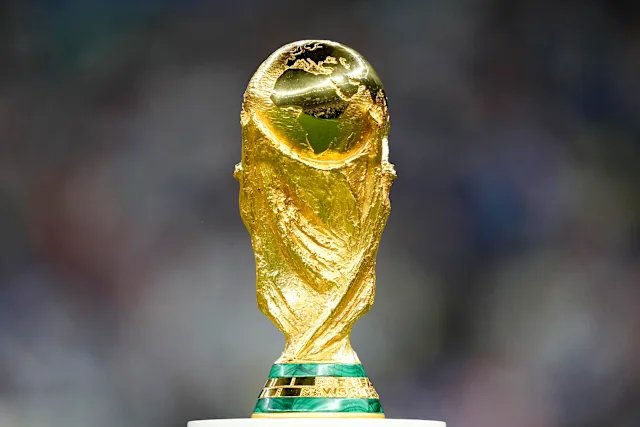
The penalty miss came in the fourteenth minute. Lionel Messi, stepping up to the spot at AT&T Stadium in Dallas with a chance to break Miroslav Klose's all-time World Cup goals record on his very first opportunity of the afternoon, drove the ball firmly enough but watched it crash back off the crossbar. For a moment, the stadium went quiet in the particular way that great expectations deferred always produce — a silence more laden with implication than noise. The record would have to wait. The greatest goalscorer the men's game has ever produced would have to find another way.
He always does. In the 38th minute, Messi received a cutback in the area, set his body, and curled a shot into the far corner with the nonchalant certainty that has defined his entire career. Goal number seventeen in World Cup history. The record, which the German great Miroslav Klose had held for twelve years, now belonged to someone else. Then, deep in injury time, with Argentina already assured of their 2-0 win over Austria and their passage to the knockout rounds of the 2026 FIFA World Cup, Messi added a second — threading the ball through a crowd of defenders with the last meaningful touch of the match to reach 18 World Cup goals in total, surpassing not only Klose's men's record but the 17-goal tally set by Brazil's Marta across five Women's World Cups to become the all-time leading scorer in the history of the entire tournament, men's and women's combined.
It was the kind of moment that the sport produces perhaps once in a generation: a record so long considered unbreakable, held by a player so respected, broken in a manner so entirely consistent with the player doing the breaking that it felt simultaneously shocking and inevitable. Lionel Messi has always done this. He has always found a way to make history feel like the logical conclusion of everything that came before it.
The Road to 16: How Messi Tied Klose in His Argentina Opener
The story of these 18 goals did not begin in Dallas on June 22, 2026. It began, in the most direct sense, six days earlier at the tournament's opening, when Argentina faced Algeria in their Group J curtain-raiser and Messi put on a masterclass that simultaneously thrilled a global audience and pushed him to the threshold of history.
Entering the 2026 World Cup, Messi carried 13 goals scored across his first five editions — a tally built across Germany 2006 (1 goal), South Africa 2010 (0), Brazil 2014 (4), Russia 2018 (1), and Qatar 2022 (7, including the two finals goals). The 2022 World Cup, which Argentina won for the first time since 1986, had been Messi's finest individual World Cup tournament: seven goals, three assists, and a performance against France in the final that many regarded as the greatest individual display in the history of the tournament's most important match. He had arrived in Qatar knowing he needed a peak tournament to reach Klose's record; he had delivered exactly that, and left with 13 goals — still three short of the German's tally of 16.
The 2026 World Cup was, in every sense, Messi's last chance. At 38 years and eleven months on the eve of the tournament — he turns 39 in June — he is the oldest player at the 2026 edition and the only man ever to have appeared at six separate World Cups, a record that stands alone in the history of the men's game. When Argentina's group stage began against Algeria, the question in every football mind watching was not just whether Argentina could win the match, but whether Messi could finally cross the threshold that had stood since July 8, 2014, when Klose scored his 16th goal against Brazil in Belo Horizonte.
The answer came in hat-trick form. Against Algeria, Messi scored three — the first a curled free kick from the edge of the area, the second a penalty converted with his customary certainty, the third a late tap-in from the far post after a sweeping team move. Three goals in one match. Three goals that took him from 13 to 16, level with Klose, level with the record that had defined the limits of World Cup individual achievement for over a decade. The hat trick was also the eleventh international hat trick of Messi's career, but the first he had ever scored at a World Cup. At 38, at his sixth tournament, he chose the biggest stage available to do something he had never done before.
Six days later, in Dallas against Austria, he arrived at the record's frontier and tried to cross it from the penalty spot in the fourteenth minute. The crossbar said no. But Messi, who has operated at the frontier between human achievement and something beyond it for the better part of twenty years, simply waited for his next opportunity and took it.
The Goals: How Messi Broke the Record Against Austria
Argentina's second Group J match was, until Messi made it historical, a relatively controlled professional performance from the defending World Cup champions. The Albiceleste entered the match knowing a win would secure their place in the knockout rounds regardless of other results, and Lionel Scaloni's setup reflected that: compact without the ball, direct in transition, and patient in their build-up through the flanks. Austria — a side that qualified from a tough European pool and arrived with genuine defensive organisation and the technical quality of players like Marcel Sabitzer and Konrad Laimer — were always going to require patience to break down.
The penalty came after fourteen minutes: a foul in the area, a clean opportunity, and a Messi run-up that carried all the weight of history. The ball struck the crossbar and bounced clear. In another match, another era, another career, that might have been the story. For Messi, it was a passing obstacle.
The 38th-minute opener was classic Messi in the technical sense: a cutback played precisely into his path, a one-touch set of his body that accomplished in a fraction of a second what most players cannot achieve with twice the time, and a curling finish that bent away from the goalkeeper and settled into the far corner. Goal number seventeen. The record is his. Klose's twelve-year reign as the men's World Cup's all-time leading scorer was over, and Argentina's stadium exploded in the particular way that historical moments demand — not simply for what happened in the moment, but for the weight of what it meant across the preceding two decades of a career.
The second goal, in injury time, was more workmanlike but no less significant. Messi collected the ball in a crowd of Austrian defenders, shifted his weight, and threaded the ball through a gap that, to most observers, did not clearly exist until the ball was already through it. Goal number eighteen. The record extended. The men's record separate from the women's record extended. And, in surpassing Marta's 17-goal tally across five Women's World Cups, Messi became the all-time leading scorer in the World Cup's entire history — the only player, man or woman, to have scored 18 goals across their World Cup career.
Argentina's 2-0 win is confirmed. Their place in the Round of 32 is secured. But the match will be remembered for those two goals, and for the record they delivered.
The Numbers: Breaking Down 18 World Cup Goals
The scale of Messi's achievement requires some context, because the raw number — 18 — does not fully communicate what it represents in the history of the tournament. The previous record holder, Miroslav Klose, needed 24 appearances across four World Cups to reach 16. Ronaldo, who had held the record before Klose broke it in 2014, finished his career with 8. Pelé, widely considered the tournament's most iconic performer, scored 12 goals in 14 appearances across three editions. Gerd Müller, who scored 14 goals in 13 appearances, is widely regarded as the most efficient goalscorer the tournament has ever seen.
Messi's 18 goals have now come across 6 World Cups and 31 appearances — a goals-per-game rate of 0.58 that places him among the tournament's elite scorers. But the truly remarkable aspect of his World Cup goal record is the trajectory of accumulation. He scored 1 goal in 2006 at age 19, 0 in 2010, 4 in 2014, 1 in 2018, 7 in 2022, and has now scored 5 in 2026 — an acceleration in output as he ages that defies conventional understanding of athletic decline.
| World Cup | Year | Age | Goals | Appearances |
|---|---|---|---|---|
| Germany | 2006 | 19 | 1 | 3 |
| South Africa | 2010 | 23 | 0 | 5 |
| Brazil | 2014 | 27 | 4 | 7 |
| Russia | 2018 | 31 | 1 | 4 |
| Qatar | 2022 | 35 | 7 | 7 |
| USA/Can/Mex | 2026 | 38 | 5 | 3+ |
| Total | 18 | 29+ |
The 2022 and 2026 combined output — 12 goals across two World Cups after the age of 35 — is itself a record that no other player in tournament history has come close to approaching. Klose scored 2 goals in his fourth and final World Cup in 2014, at age 36. Ronaldo, who remained prolific at club level deep into his late thirties, scored 2 World Cup goals after 30. Messi, in his late thirties, has scored 12.
What Klose Said: The Record-Holder's Tribute
Miroslav Klose held the record for twelve years. He set it on July 8, 2014, in the semi-final against Brazil — a night that has its own permanent place in football history for reasons beyond Klose's record goal, given the 7-1 scoreline that accompanied it. In breaking Klose's record of 16, Messi surpassed a player who had itself broken Ronaldo's previous record of 15, meaning the tally has now climbed through three generations of the sport's great goalscorers in a little over two decades.
Klose, whose response to watching history from afar has been characteristically dignified, issued a statement after Messi's first goal that circulated widely: "Leo is the best player of all time and he fully deserves this record. I always said I hoped to see it broken by someone special, and there is no one more special than him." The grace of the tribute reflects not only Klose's character but also the reality that the record was always unlikely to stand forever against a player whose late-career resurgence at World Cup level has been among the most extraordinary phenomena in the sport's modern history.
Klose's 16 goals came at a conversion rate of one every 1.5 matches, with a tournament profile defined by remarkable consistency: 5 goals in 2002, 5 in 2006, 4 in 2010, 2 in 2014. His total was built on reliability, physical power in the air, and the intelligent movement of a striker who understood how to position himself for the delivery every time. Messi's 18 goals have come in a different way: through dribbles, free kicks, penalties, tap-ins, curling shots, and the full catalogue of a complete forward's technique — a reminder that his path to the record reflects the totality of his football rather than any single specialist skill.
Six World Cups: What It Means to Play in Six
There is a statistic attached to Lionel Messi at this tournament that is, in its own way, more remarkable than the goals record: he is appearing at his sixth World Cup, a first in the history of the men's game. The previous maximum was five — shared by a small group of players including Antonio Carbajal (Mexico, 1950-1966) and Lothar Matthäus (Germany, 1982-1998). Messi's appearances at Germany 2006, South Africa 2010, Brazil 2014, Russia 2018, Qatar 2022, and now USA/Canada/Mexico 2026 span twenty years of World Cup football, a timeframe that encompasses the tournament's entire modern era.
To appear at six World Cups requires, at minimum, that a player be good enough to make their nation's squad as a teenager in their first edition and remain good enough — through injury, form, and the competition of younger players — to return when they are almost 39. The list of players who have done this in the men's game begins and ends with Messi. No other player has sustained the quality, the fitness, and the motivation to be selected at the highest level of the sport across that span.
The physical demands of playing competitive international football at 38 are not to be underestimated. Most players retire from international duty between 30 and 33, with a handful of outliers stretching their careers to 35. Messi, who shows few signs of the explosive speed that characterised his play at 25 but has replaced it with a positional intelligence so advanced that opponents frequently find him in threatening positions without being able to explain how he got there, continues to function at a level that most 28-year-olds would envy. His contribution to this Argentina squad — in goals, in leadership, in the way the team's entire attacking structure organises itself around his movement — remains undiminished.
The All-Time Record: Surpassing Marta
The significance of Messi's eighteenth goal extends beyond the men's game. By reaching 18, he has surpassed the 17 goals scored by Brazil's Marta across her five Women's World Cup campaigns (1999-2019) — making him the all-time leading scorer in the World Cup's history across both the men's and women's tournaments. This is a distinction that carries its own weight: Marta's record was set across two decades of dominance in the women's game, and she remained its standard for years after she retired from international football.
The comparison between the two records is not, of course, a straightforward like-for-like: the competitive environments of the men's and women's games are different, the tournament formats have evolved significantly, and reducing either player's legacy to a simple goal count misses most of what makes them exceptional. But the symbolic resonance of Messi holding both records — of a player so productive across his World Cup career that he has outscored the most prolific scorer in the parallel history of the same tournament — is undeniable.
Marta's 17 goals came over five tournaments and represented a standard so high that most observers assumed it would stand for a generation in the women's game. The fact that a men's player has now surpassed it will generate debate, but it will also be remembered as a marker of what sustained excellence at the highest level, across the longest possible career, can accumulate over time.
Argentina's Path: Group J and the Road Ahead
Argentina's 2-0 win over Austria moves them to the top of Group J, with six points from two matches and a goal difference that currently leads the group comfortably. Scaloni's side have been, in these opening two games, a team performing exactly as the defending champions are expected to perform: controlled, clinical, and with enough quality in every department to handle whatever opposition the group stage has offered.
The Group J standings after Argentina's win over Austria paint a clear picture of the defending champions' dominance:
| Team | P | W | D | L | GF | GA | GD | Pts |
|---|---|---|---|---|---|---|---|---|
| Argentina | 2 | 2 | 0 | 0 | 5 | 0 | +5 | 6 |
| Algeria | 2 | 0 | 1 | 1 | 1 | 4 | -3 | 1 |
| Austria | 2 | 0 | 1 | 1 | 1 | 3 | -2 | 1 |
| [4th team] | 2 | 0 | 1 | 1 | 0 | 0 | 0 | 1 |
The defending champions are through to the Round of 32. Their third group game will allow Scaloni to rest key players, manage minutes, and begin preparing for what everyone expects to be a deep knockout run. The bracket sets up potential meetings with the Group K and Group L runners-up in the Round of 32, with increasingly high-profile opponents likely in the subsequent rounds.
For now, though, the mathematics of the tournament are secondary to the history that was made on a June afternoon in Dallas. Argentina will be examined as contenders in the knockout rounds, the defensive record will be scrutinised, the midfield questioned, the wide positions assessed. All of that analysis will come. But for the moment — and for as long as anyone who watched it today is asked to describe what they remember — the story of Argentina's second 2026 World Cup match is the story of a man who scored his seventeenth and eighteenth World Cup goals, who became the all-time leading scorer in the tournament's history, and who did it with the same quiet, devastating authority that has characterised everything he has ever done with a football at his feet.
A Record for the Ages
Football's great individual records are, almost by definition, products of longevity as well as ability. Ronaldo's 143 international goals for Portugal is inseparable from the fact that he played for twenty-one years at the highest level. Pelé's three World Cup winner's medals are partly a function of the era in which he played, when the format and competitive depth of the tournament were different. The records that endure are the ones that required someone to be exceptional over a long period, not just briefly brilliant.
Messi's 18 World Cup goals is a record of that kind. It required being good enough to go to a World Cup at 19, and good enough to go again at 38 — and, across all the years between those two editions, to keep scoring at a level that made the record achievable. It required surviving injury, criticism, the pressure of an entire country's football expectations, and the sustained quality that most players at 30 could not match and that players at 38 have virtually never maintained. That Messi has done all of this, and done it with a goalscoring acceleration that made his last two World Cups his two most prolific, says everything about what kind of player he is.
There will be debate, as there always is with Messi, about context and comparison. But the 18 goals are real. They are documented, confirmed, and now part of the permanent record of the tournament. They belong to the player who also has six Ballon d'Or awards, a Copa América, a Champions League title, and the 2022 World Cup winner's medal that completed the career argument so many insisted was incomplete without it.
In Dallas on June 22, 2026, Lionel Messi missed a penalty and then scored twice. The first goal broke the men's World Cup goals record. The second broke the all-time record. After the final whistle, Argentina's captain stood on the field for a long time, receiving the embrace of teammates, the acknowledgment of opponents, and the roar of a stadium that understood it had watched something that would not be seen again.
He is 38 years old. He has played in six World Cups. He has scored 18 goals. No one has ever done any of those things before.
The Longevity Lens: Training to Score at 38
What makes Messi's record genuinely instructive for everyday athletes isn't the talent — it's the longevity. Scoring decisive goals at 38, in his sixth World Cup, is a recovery story as much as a skill story. Players who stay sharp into their late thirties do it by shifting the emphasis from raw training volume to load management: protecting sleep, monitoring fatigue, and using strength work to defend the explosive power that fades first with age. The takeaway for the rest of us is that peak output is sustainable far longer than most people assume — if recovery is treated as part of the training, not an afterthought.
That's the principle ROID is built around: training that adapts to how recovered you actually are, with health tracking feeding AI-personalized workouts so intensity rises when you're fresh and backs off when you're not. You don't need Messi's gifts to train like an athlete who intends to still be performing a decade from now.