Netherlands 5-1 Sweden: Brobbey and Gakpo Announce Dutch as World Cup Force
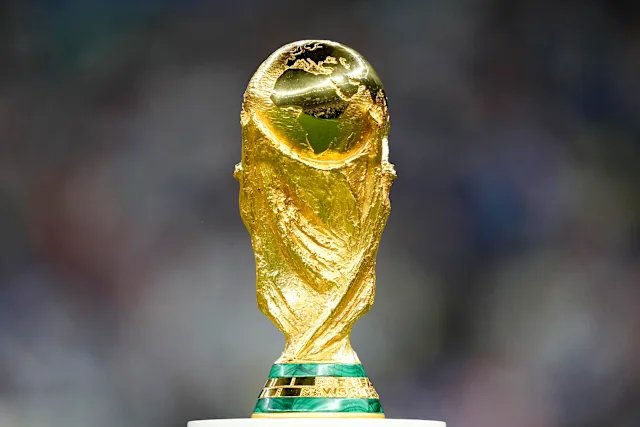
They arrived at NRG Stadium in Houston needing a response. Eight days into the 2026 FIFA World Cup, the Netherlands were sitting on one point after an entertaining but uncomfortable 2-2 draw with Japan in their opening Group F fixture — a result that left Ronald Koeman's squad behind Sweden in the early standings and under a creeping pressure that can only build in the later stages of a World Cup group. On a sweltering Texas Saturday afternoon, the Dutch answered emphatically. Brian Brobbey scored twice inside seventeen minutes, Cody Gakpo added a second-half double, and Crysencio Summerville wrapped it up with a late flourish as the Netherlands dismantled Sweden 5-1 — a result that simultaneously clinches the Oranje's passage into the knockout rounds and sends out a warning to every team still alive in this tournament.
This was not merely a win; it was a statement. The margin, the manner, the relentlessness of a Dutch side that seemed to shift through gears without ever reaching their ceiling — all of it pointed toward something more dangerous than a team that simply picked up three points. Ronald Koeman has found a system, a starting eleven, and a ruthless edge that can cut through any defence in the world when the pieces click. After the Japan draw raised questions, this afternoon at NRG Stadium answered all of them at once.
Group F Before Kick-Off
The context mattered. Sweden had been one of the tournament's early storylines, arriving at their Group F opener against Tunisia as something of an unknown quantity under English manager Graham Potter and leaving it with a thunderous 5-1 win — a result that catapulted them to the top of the group and earned Potter's side immediate respect as a genuine contender for the knockout rounds. Alexander Isak had been sharp, the wide players dynamic, and Sweden's high press relentless enough to stifle whatever Tunisia tried to build from the back.
The Netherlands, by contrast, had been brilliant in patches against Japan and careless in others. Two excellent goals — including a sweeping team move finished by Brian Brobbey — were undone by a Japanese side that refused to be intimidated, and the final 2-2 meant the Dutch entered this match a point behind their opponents and needing a win to take control of their own destiny. Ronald Koeman made one notable change from the Japan fixture, starting Brian Brobbey again but adjusting the structure slightly to give the Ajax striker more central support and reduce the isolation that had occasionally cost the Dutch their rhythm against Japan.
Sweden, for their part, arrived with confidence and a clear game plan. Potter had drilled his side well in the pre-tournament camp, and the Tunisia win had provided the kind of fluency and high score that settles a squad's nerves heading into a bigger game. But the Netherlands, even on an uncertain afternoon, have the individual quality to overwhelm most opponents when things click — and against Sweden, they clicked from the first whistle.
The Brobbey Show: A First-Half Brace That Changed the Match
Five minutes had elapsed when Brian Brobbey opened the scoring, and the manner of the goal told the entire story of what was coming. A sweeping Dutch move down the right ended with a low cross pulled back from the byline, and Brobbey — already moving before the ball arrived, his body position perfect, his movement dragging the Swedish centre-back fractionally off his line — converted with the kind of predatory close-range finish that separates strikers who look good on paper from those who perform when the pressure is genuine. It was his fifth touch of the match. It may as well have been his fifteenth, such was the authority with which he directed the ball into the net.
Sweden were still reorganising, still trying to process the concession, when the second arrived in the seventeenth minute. Again the work began wide, again the delivery was precisely calibrated, and again Brobbey found himself in a position that opponents who prepare for him know is coming but find almost impossible to prevent. He finished again with complete composure — feet set, weight right, the ball precisely directed across the goalkeeper and into the far corner — and the Dutch bench reacted with a controlled satisfaction that spoke of belief rather than surprise. Two goals from two chances. A striker in the form of his career, performing on the biggest stage it offers.
Brobbey's contribution to this Dutch side runs deeper than the goals, though the goals are what the headline demands. His pressing triggers the first wave of Sweden's discomfort every time the Swedes try to build from the back; his physical presence creates space for Gakpo and Summerville on either side; and his runs in behind stretch the Swedish defensive line far enough that the gaps between the lines become exploitable by the Dutch midfield. At 24, he is playing the best football of his career, and the World Cup is proving to be the stage that takes him from very good to genuinely elite.
Sweden's Disallowed Goal and the Halftime Picture
Sweden were not passive victims. Graham Potter's side — trained through a pre-tournament camp that stressed directness, athleticism, and the threat of Isak and Dejan Kulusevski in the wide channels — created moments of genuine danger throughout the first half, and on one occasion appeared to have pulled a goal back when a Swedish striker connected with a Marcus Danielson cross and directed the ball into the net. The celebration had barely begun when the assistant referee's flag went up: offside, marginal but clear on review, and the goal was correctly chalked off. It was the kind of decision that can change the psychological momentum of a match, and in this case it did — Sweden visibly deflated, the Dutch bench roared, and the second half began with the game already feeling decided.
At halftime, the Netherlands led 2-0 with the momentum of a team that had found its rhythm. The Swedish manager would have had fifteen minutes to reorganise, to re-press, to find some way back into a game that had begun to slip away. Potter, who built his reputation on tactical flexibility at Brighton and has tried to bring that same adaptability to the Swedish national setup, made the sort of adjustments in the dressing room that theoretically offered a path back: higher press, more direct balls in behind the Dutch line, switching Isak's position from the left channel back to central. In practice, the theoretical adjustments collided with the reality of a Netherlands side that was playing with the kind of momentum that breaks even well-laid plans.
Gakpo's Second-Half Double Buries Sweden
If Brobbey's brace had won the match, Cody Gakpo's second-half double made it a rout. Two minutes after the restart, Gakpo — who had been excellent throughout the first half, constantly finding pockets of space between Sweden's lines and distributing with the kind of economy that great wide players develop over years of high-level football — received the ball on the left side of the penalty area, turned his marker with one touch, and finished with his stronger foot into the bottom right corner. Two minutes in the second half. 3-0. The game was over as a contest.
Gakpo's second arrived in the 54th minute, and it was the most complete piece of individual skill on display in the match. Picking up the ball thirty yards from goal following a Dutch turnover, he drove forward with the directness that has made him such a consistent threat at club level, resisted a challenge from a tracking Swedish midfielder, and, from the edge of the penalty area, drove a precise low shot into the far corner. The goalkeeper got a hand to it and could only push it into the net. Four goals for the Netherlands. Half an hour still to play. The energy in the stadium, which had been at a constant roar since Brobbey's opener, was already taking on the quality of a celebration.
This second-half display from Gakpo carried a particular significance: it drew him level with Robin van Persie as the Netherlands' most prolific scorer in the group stage of World Cup history, his five goals across this and previous tournaments matching a landmark set by one of the country's most celebrated strikers. The record sits, for now, as a shared one — but with the Netherlands almost certain to progress to the knockout rounds, Gakpo has every opportunity to break it in the weeks ahead.
According to Sky Sports' match report, Gakpo's second goal was the outstanding individual moment of a match full of them — a product of the composure, technical precision, and physical courage that define his play at his best.
Elanga Pulls One Back, Summerville Closes Out
The 59th minute brought Sweden's moment of consolation. Anthony Elanga — one of Potter's most trusted wide forwards, pace and directness his primary weapons — latched onto a ball played over the Dutch defensive line and, with the composure of a player determined not to let the afternoon pass without leaving a mark, slotted past the Netherlands goalkeeper to make it 4-1. It was a well-taken goal, a deserved moment for a player who had worked hard throughout, and it provided Sweden with a statistic that will look slightly better in the eventual group table than the scoreline threatened to become.
But any notion of a Swedish comeback was extinguished thirty minutes later when Crysencio Summerville — who had replaced Brobbey with twenty minutes remaining and immediately looked sharp — cut inside from the right channel, evaded his marker with a close-controlling touch, and drove a shot across the goalkeeper and into the far post to make it 5-1. It was the kind of goal that sends a message: this Dutch squad has quality eleven deep, and the options available to Ronald Koeman off the bench would strengthen many starting lineups at this tournament.
The final whistle confirmed a scoreline that felt entirely justified. The Netherlands had been dominant in every phase: winning the first and second ball, pressing Sweden out of their defensive structure, creating at will, and converting their chances with a ruthlessness that their Japan draw had not fully suggested. Sweden had competed with spirit and occasional quality, and will take heart from Elanga's goal and from knowing that they already have three points from the Tunisia win — enough to stay in serious contention for the last sixteen. But on this afternoon in Houston, they were comprehensively outclassed.
Tactical Analysis: How Koeman's System Dismantled Sweden
Ronald Koeman is not a manager who favours complexity for its own sake. His Netherlands setup is identifiable: a 4-3-3 base that shifts to a 4-2-3-1 in possession, with the two wide forwards pressing the opposition's full-backs aggressively when out of the ball and tucking into the penalty area as additional goal threats when the Dutch are attacking in the final third. Against Sweden, that system worked with particular efficiency because the Swedish shape — which sits in a 4-4-2 medium block out of possession — left exactly the spaces that the Dutch midfielders are built to exploit: the pockets between the defensive and midfield lines on either side of the Swedish pivot.
The Netherlands' key advantage was the quality of their transition football. When Sweden did win the ball, the Dutch press was immediate and coordinated, with Brobbey setting the press from the front and the two wide forwards joining to compress the space on the near side. Sweden's ability to build from the back — which was formidable against Tunisia — was substantially reduced by a Dutch press that was better organised, better executed, and better supported by the midfield than anything Tunisia could offer. As a result, Sweden were regularly forced into long balls that bypassed their midfield and landed on the head of the Dutch centre-backs, who dealt with them comfortably throughout.
In possession, the Dutch were a different kind of problem: patient in the build-up, quick in the final third, and with the individual quality in Gakpo, Brobbey, and Summerville to turn half-chances into goals. The movement of Brobbey in particular caused Sweden's centre-back pairing constant discomfort — his runs across the face of the defence opened up the space wide that the Dutch full-backs exploited relentlessly, and the Swedish midfielders who were meant to track those runs consistently arrived a half-second too late.
Individual Brilliance: A Squad Built for the Knockout Rounds
Brian Brobbey was, on the evidence of this afternoon, one of the players of the tournament. His brace — two goals in seventeen minutes, both finished with the cold-blooded certainty of a man in complete control of his craft — showed a striker at the summit of his powers, and the overall picture he painted was of a player who has learned, in the last eighteen months of his career, how to translate potential into consistent, devastating performance. His movement, his physical intensity, and his willingness to do the dirty work of a centre-forward — the pressing, the hold-up, the one-touch link play in tight areas — make him an ideal instrument for the system Koeman has built, and the system appears, in turn, to have been tailored precisely for what he does best.
Cody Gakpo, with his two goals and an assist, produced a performance that will likely be discussed for some time as one of the outstanding individual displays of the 2026 tournament's group stage. His ability to find space in the inside-left channel, to receive the ball under pressure and immediately identify the correct next action, and to finish with both power and accuracy means he is essentially impossible to neutralise without either man-marking him — which disrupts the defensive structure — or sitting so deep that the rest of the Dutch attack gets the time and space it needs. The Swedish coaching staff will have had a plan to contain him. It didn't work.
Crysencio Summerville's cameo reminded the Dutch coaching staff that their options in the wide areas are exceptional. Coming off the bench with the game already won, he looked sharper, more direct, and more dangerous than Sweden could cope with — a reminder that even in a squad full of quality, the Netherlands' depth is perhaps their most formidable attribute heading into the knockout rounds.
Group F Standings After the Demolition
The result reshapes Group F decisively. After today's events in Houston, the standings look like this — with Japan and Tunisia yet to face each other later in the tournament:
| Team | P | W | D | L | GF | GA | GD | Pts |
|---|---|---|---|---|---|---|---|---|
| Netherlands | 2 | 1 | 1 | 0 | 7 | 3 | +4 | 4 |
| Sweden | 2 | 1 | 0 | 1 | 6 | 6 | 0 | 3 |
| Japan | 1 | 0 | 1 | 0 | 2 | 2 | 0 | 1 |
| Tunisia | 1 | 0 | 0 | 1 | 1 | 5 | -4 | 0 |
The Netherlands are, on current numbers, the group's dominant force, and their goal difference advantage means they should top Group F regardless of what happens in the remaining fixtures. Sweden's three points and their own goal difference — the product of that 5-1 opening win over Tunisia — mean they remain in strong contention for second place, but the result of the Japan-Tunisia match will determine whether Potter's side can secure a passage to the Round of 32 or whether the pressure of the final group game increases.
Japan, who drew the Netherlands 2-2 and showed they can compete at this level, retain the possibility of advancing if they win their remaining fixtures. Tunisia, having lost to both Sweden and not yet played Japan, face the steepest climb.
Sweden: What Next for Potter's Project?
For Graham Potter, the defeat is a test of the composure and long-term thinking he has made his managerial trademark. The 5-1 scoreline is painful, but the context softens it somewhat: Sweden faced one of the better-organised and more talented teams in the entire tournament and were never going to be expected to match them for quality across ninety minutes. What will concern Potter more is the manner of the concessions — the ease with which Brobbey found space in the box, the frequency with which the Dutch midfield found the channels between the lines — because those patterns suggest structural vulnerabilities that better opponents in a knockout round would exploit just as efficiently.
The tactical questions Potter must resolve before Sweden's remaining group game are specific: how to set the midfield pressure so the space between the lines is reduced, how to use the athleticism of Isak and Elanga in a way that stretches opponents rather than being contained by them, and how to find the consistent service into the box that the Sweden forwards need to function at their best. The Tunisia result showed Potter's system can work brilliantly against lower-ranked opposition; the Netherlands result showed that against elite opposition, the same system leaves dangerous gaps. Navigating that tension is the challenge of any World Cup campaign.
Sweden's path to the knockout rounds remains open. Three points from the Tunisia win is a solid foundation, and if the Japan-Tunisia match goes the right way, Potter's side may need only a point from their final group fixture to advance. But the question of whether they have the depth and tactical flexibility to progress deep into the knockout rounds — especially if they face a side of the Netherlands' quality again — remains genuinely uncertain.
The Netherlands' Road Ahead
For Ronald Koeman, this afternoon in Houston represented everything his tournament build-up pointed toward. His squad contains genuine world-class quality across every position, the tactical framework he has spent two years developing is clear and well-executed, and the players — Brobbey, Gakpo, Summerville, and the excellent Virgil van Dijk anchoring a defence that has conceded only three goals in two games — appear to be playing with the cohesion and confidence of a team that believes it can win the tournament.
The Netherlands have not won a World Cup since 1978, and the intervening forty-eight years have contained some heartbreaking near-misses: three World Cup final defeats, a semi-final exit in 2022 on penalties, and enough tournament pain to make their supporters instinctively cautious about excitement. But the depth of this squad, the quality of the coaching, and the form of the key players in these opening two games suggest that the 2026 edition of Oranje may be the most complete Dutch side in a generation.
The knockout rounds await, and the opponents there will be better, more organised, and more dangerous than Sweden. But the Netherlands arrive at that stage in the form of their World Cup campaign in four decades — and on the evidence of this afternoon in Houston, they will be a nightmare to face.
The Training Lens: The Conditioning Behind Relentless Attacking
Scoring five means attacking in waves, and attacking in waves is expensive — repeated high-speed runs, quick transitions, and the recovery capacity to do it again moments later. A blowout like the Netherlands' is as much a fitness statement as a tactical one; the team that can keep sprinting in the final twenty minutes usually decides the scoreline.
Repeat-sprint capacity is trainable through structured intervals layered on a solid aerobic base. AI-powered training helps you build that base progressively, balancing the hard sessions with enough recovery that the gains actually stick.