Morocco Stun the Netherlands on Penalties — Then Face the Tightest Recovery Window of the Tournament
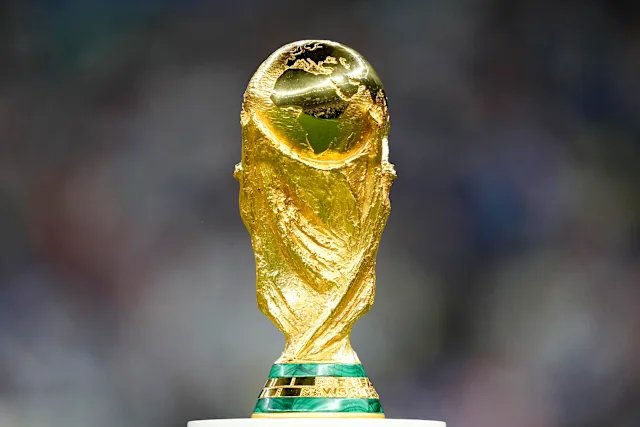
Monterrey delivered one of the defining knockout matches of the 2026 World Cup on June 30, when Morocco eliminated the Netherlands in a penalty shootout after 120 dramatic minutes that swung from Dutch control to a stoppage-time equalizer to a shootout decided by a goalkeeper who has quietly become one of the tournament's most important players. But the result itself is only half the story. Morocco now walks straight into the shortest, most physically demanding turnaround of their World Cup campaign — a Round of 16 date with Canada in Houston that arrives before their bodies have had time to fully recover from a match that pushed them well past the standard 90 minutes.
How the Match Unfolded
For long stretches, this looked like a routine Dutch victory in the making. Ronald Koeman's side, unbeaten and dominant through the group stage, controlled large portions of the match in Monterrey, and it was Cody Gakpo — the same player who had torched Sweden with a brace in the group stage — who broke the deadlock in the 72nd minute with the kind of composed finish that has defined his tournament. For nearly twenty minutes afterward, the Netherlands looked to be cruising into the Round of 16 as one of the form teams left in the draw.
Morocco had other ideas. In the first minute of stoppage time, with the Dutch seemingly seconds from closing out the win, Issa Diop rose to glance in a dramatic equalizer that sent the match to extra time and turned the entire complexion of the tie, according to Al Jazeera's match report. Neither side could find a winner across the additional 30 minutes, and the tie went to penalties — a format that, in this tournament as in most, has come to feel like a lottery decided as much by goalkeeping as by the takers themselves.
That is precisely how it played out. Morocco goalkeeper Yassine Bounou, already one of the most respected shot-stoppers of his generation, produced the decisive save of the shootout by blocking Crysencio Summerville's fourth Dutch penalty, according to detailed statistical breakdowns from Opta Analyst. Ismael Saibari then stepped up and buried Morocco's winning spot-kick, sealing a 3-2 shootout win and sending the Atlas Lions through to the Round of 16 at the Netherlands' expense — a result confirmed across ESPN's match center and FIFA's official match report.
A Result That Reshapes the Bracket
For the Netherlands, the exit is a genuine gut-punch. Koeman's side had entered the knockout rounds after a group stage that included the 5-1 demolition of Sweden and looked, on paper, like one of the most dangerous teams left in the tournament. Instead, a single stoppage-time lapse and a shootout miss have ended their run at the Round of 32 — a reminder of how thin the margins become once the format shifts to single elimination, regardless of how a team performed across the group stage.
For Morocco, the win extends a run that has made them one of the most compelling storylines of the tournament's knockout phase. Bounou's performance in particular continues a pattern: Morocco have built their deepest World Cup runs in recent history on defensive resilience and elite goalkeeping precisely in the moments — shootouts, late defending, game management — where physical and mental fatigue compound fastest. The win sends Morocco into a Round of 16 clash with Canada in Houston, a meeting between a co-host nation riding home support and a Moroccan side that has now shown, twice in as many rounds, that it can survive the most physically taxing version of a knockout match.
The Real Opponent Now Is the Calendar
Here is the detail that gets lost in the celebration of a shootout win: Morocco didn't just win a football match on June 30 — they played 120 minutes plus a penalty shootout, which is a fundamentally different physiological event than a standard 90-minute fixture, and they now have only a handful of days before they have to do it again. The Round of 32 runs from June 28 to July 3; the Round of 16 begins July 4 and runs through July 7. For a team that went to extra time, that leaves a recovery window measured in days, not the week or more that domestic league fixtures typically allow between matches of this intensity.
The science of what extra time does to the body is well established, and it is not subtle. Research on elite match-running data shows that muscle glycogen — the primary fuel source for high-intensity efforts — drops by roughly 29 percent from pre-match levels across a standard 90 minutes, and then falls by a further 30 percent during the additional 30 minutes of extra time, according to a review of muscle glycogen dynamics in elite soccer published via PMC. By full time in a 120-minute match, roughly three-quarters of both slow- and fast-twitch muscle fibers in a player's dominant leg are depleted or running on very low glycogen. Restoring those stores to pre-match levels typically takes two to three full days, even with optimal nutrition — which means Morocco's players are still mid-recovery, physiologically, by the time kickoff arrives in Houston.
A dedicated analysis of match-running performance following extra-time fixtures across the 2022 World Cup and 2023 Women's World Cup, published in BMC Sports Science, Medicine and Rehabilitation, reinforces the same picture: teams that go to extra time show measurably reduced high-intensity running output in their following match, and recovery is described in the literature as "compromised" following 120-minute matches even several days later. A broader review of fatigue and recovery science at the 2026 World Cup from HMMR Media notes that post-match fatigue affects performance for 48 to 72 hours after the final whistle under normal circumstances — a window that extra time and a shootout only stretch further — and cites data from the UEFA Champions League showing that hamstring and quadriceps injury rates rise specifically in matches played with fewer than four days of recovery.
The Numbers on Recovery
The table below summarizes what the research shows happens to the body across a standard match versus one that reaches extra time — and why the gap matters so much for a team facing a compressed knockout schedule.
| Recovery Marker | After 90 Minutes | After 120 Minutes (Extra Time) |
|---|---|---|
| Muscle glycogen depletion | ~29% drop from pre-match levels | Further ~30% drop on top of the 90-minute loss; ~75% of muscle fibers depleted or very low |
| Time to restore glycogen to baseline | 2–3 days with proper nutrition | 2–3 days minimum, often longer; recovery described as "compromised" in follow-up research |
| High-intensity running in next match | Modest reduction if recovery is short | Measurably greater reduction, per post-World Cup match analyses |
| Injury risk (hamstring/quad) | Baseline tournament risk | Elevated when the gap to the next match is under 4 days |
| Fluid loss during play | Can exceed 2% of body weight | Same or greater, compounded by extra playing time |
Morocco's turnaround into the Canada fixture sits right at the edge of that four-day danger zone identified in the Champions League injury data — not an impossible gap to manage, but one that puts a real premium on exactly how the Moroccan medical and conditioning staff use the days between now and kickoff in Houston.
What Comes Next for Morocco and the Netherlands
Morocco's route to the quarterfinals now runs through Canada in Houston, a fixture where the co-hosts will have home support and, notably, home comfort — NRG Stadium's climate-controlled environment removes the heat variable that has been a major storyline elsewhere in this tournament, which at least simplifies one part of Morocco's recovery equation even if it does nothing to restore depleted glycogen stores on its own. For the Netherlands, the tournament ends earlier than almost anyone predicted after the group stage, and Koeman's side will now face the familiar post-mortem of a talented squad that fell in the moment that mattered most — a stoppage-time equalizer conceded, and a shootout lost to the finer margins of penalty-taking and goalkeeping form.
The Recovery Lens: Racing the Clock on Glycogen
What makes Morocco's situation a genuinely useful case study, beyond the drama of the shootout itself, is how precisely it illustrates the gap between what tournament football demands and what the human body can physiologically deliver on short notice. A 120-minute match is not simply 33 percent more fatigue than a 90-minute one — the data shows the marginal cost accelerates, with the final 30 minutes draining glycogen at a rate that outpaces the earlier stages of the game, on top of accumulated neuromuscular fatigue that raises injury risk in the days that follow. Morocco's medical staff will now be working the same protocols that sports science identifies as the highest-leverage interventions in a short window: aggressive carbohydrate reloading in the first 24 hours to jump-start glycogen resynthesis, cold water immersion to manage the inflammatory and muscle-damage response, prioritized sleep to support both physical and neural recovery, and compression garments to assist circulation during travel. None of these interventions can compress two to three days of glycogen restoration into one, which is precisely why the four-day recovery threshold identified in the injury literature is not an arbitrary number — it reflects a real physiological floor. For any athlete, tracking how the body actually responds to a hard effort — resting heart rate, sleep quality, perceived recovery — is what turns generic recovery advice into a personalized plan, which is the same principle behind ROID's health tracking tools and the kind of AI-adjusted training load that adapts to how recovered you actually are, not just how many days have passed on a calendar.
Sources
- Morocco beat Netherlands in dramatic World Cup shootout to reach last 16 — Al Jazeera
- Netherlands 1-1 (2-3 pens) Morocco: Bounou the Hero in Dramatic Shoot-out Win — Opta Analyst
- Netherlands 1-1 Morocco match report — ESPN
- Netherlands v Morocco result and stats — FIFA
- Muscle Glycogen in Elite Soccer: A Perspective on Performance, Fatigue, and Recovery — PMC
- How did match running performance change after an extra time match during FIFA 2022 World Cup and 2023 Women's World Cup? — BMC Sports Science, Medicine and Rehabilitation
- Playing to the Limit: The Science of Fatigue and Recovery at the World Cup — HMMR Media