Saudi Arabia 1-0 Spain: The Upset That Plunged Group H Into Chaos
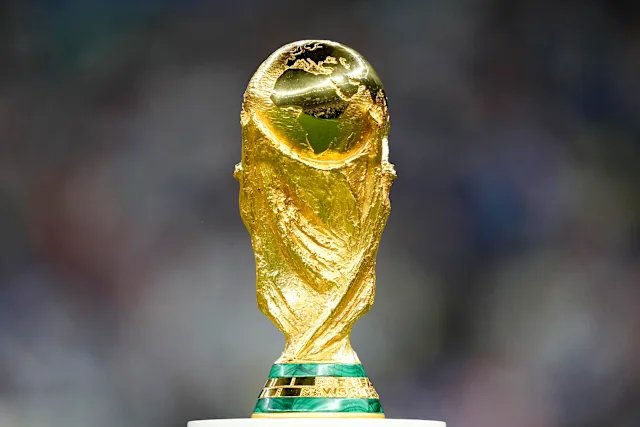
There is a specific cruelty reserved for the favourite who does not just lose, but loses in a way that strips bare every flaw in plain sight. Spain did not simply fall 1-0 to Saudi Arabia at a sun-drenched Mercedes-Benz Stadium in Atlanta on June 21. They were outfought by a team ranked far below them, failed to score from a position of overwhelming territorial dominance for a second consecutive match, and now stare into a World Cup abyss that seemed unthinkable before a ball was kicked. The 2010 world champions, pre-tournament dark horses, are in a full-blown crisis after two games, one point, and zero goals. Saudi Arabia, meanwhile, have four points and a very real shot at winning one of the most dramatic groups in the entire competition.
This was not a neutral shock. It was a sequel to a mounting disaster, and that made it cut far deeper.
The Game That Mirrored the First
Spain's night began in the same key as their opener against Cape Verde — the slow, suffocating accumulation of possession that looks beautiful in theory and accomplishes very little when the final-third product is missing. Luis de la Fuente's side again controlled the ball, again moved it crisply through midfield, and again found themselves standing in front of a well-organised defensive wall with no clear idea of how to bring it down. The Spanish coaching staff had five days between the Cape Verde draw and this match to diagnose the problem and apply a cure. Watching the first hour against Saudi Arabia, it was not obvious any prescription had been filled.
The 2010 champions created half-chances — a Pedri effort that curled wide, a Yamal pull-back that nobody attacked at the far post, a Morata shot straight at keeper Mohammed Al-Owais. The pattern was one of circulation without penetration, of a team that knows how to keep the ball but has temporarily lost the instinct for giving it a destination. At the Cape Verde game, Spain took 27 shots and did not score. Against Saudi Arabia, they did not even manage that many clear sights before the night turned against them entirely.
The Goal That Decided Everything
It arrived against the run of play in the way the cruelest goals always do. Saudi Arabia, compact and disciplined in their defensive shape, had ceded territory deliberately — surrendering the ball in the knowledge that Spain's endgame product was misfiring and that the space in behind could be exploited on the transition. That strategy paid its first dividend in the second half when Abdulelah Al-Amri latched onto a direct, incisive ball over the top of Spain's high defensive line, took a touch to set himself, and slotted calmly past David Raya.
Al-Amri's was not a lucky goal. It was a technically accomplished finish from a player who had already shown his composure in the opener against Uruguay, where he also found the net. The Saudi Arabia coach Roberto Mancini — whose brief has been transformed from a project of gradual development into something considerably more urgent and glorious — had a striker operating with the poise of someone who had earned the spotlight, not stumbled into it. The stadium, half-filled with Spain supporters who had traveled to Atlanta expecting a different story, fell quiet in the way only genuine shocks can achieve.
Spain chased the game in the final half-hour with an urgency that had been absent all night. The introductions of Ferran Torres and Dani Olmo brought more direct running, more willingness to go beyond the defensive line. But Saudi Arabia, who had drawn on exactly these counter-pressing qualities during their 1-1 draw with Uruguay, knew what was coming and absorbed it. Al-Owais was rarely troubled. The final whistle sounded Spain's second successive goalless defeat in terms of attacking output — and their first defeat of the tournament — with an efficiency that said everything about how Saudi Arabia had executed Mancini's gameplan.
Spain's Attacking Crisis, Dissected
To understand the depth of Spain's problem, you have to pull on two threads simultaneously: what they are producing in front of goal, and what that says about the structure behind it. On the numbers alone, Spain in two World Cup games have attempted more than 40 shots without converting a single one. The xG figures suggest they should have scored against Cape Verde from a total of more than 2.5 cumulative expected goals across both games. In a tournament context, where every dropped point has amplified consequences, converting that kind of dominance into zero goals is the kind of statistical aberration that defines tournament exits.
The root cause is not, on closer inspection, a personnel problem. Spain have Lamine Yamal, who at 18 is already one of the most dangerous wide players at this tournament, and whose directness has consistently pulled Saudi Arabia's defensive shape out of position on the right side. They have Pedri, whose link play and ball retention in midfield remain exemplary. They have Alvaro Morata, who is a capable finisher when service arrives in the right places. The problem is that the system — the midfield-heavy, possession-saturated approach that de la Fuente has imported wholesale from the Barcelona template — does not sufficiently stress a low-block defensive structure. It is a pressing game that becomes predictable when an opponent simply decides to park and absorb and then spring fast.
The question that will haunt Spanish football through the remaining group game and into what will be a fraught qualification scenario is whether de la Fuente will adapt. There is evidence within the squad to suggest he could — Ferran Torres's introduction was electric for fifteen minutes against Saudi Arabia, his directness a different vocabulary entirely from the possession football of the first half. But introducing a solution as a second-half substitute is very different from building it into the structure of the team from the opening whistle, and Spain are running out of games to find the answer.
Saudi Arabia: The Method Behind the Miracle
It would be a disservice to Saudi Arabia to frame their victory purely as a Spanish failure, because the execution was coherent, disciplined, and tactically sophisticated. Roberto Mancini, the Italian coach who won the Champions League with Inter Milan and the European Championship with Italy, has worked with patience and pragmatism to build a Saudi team that understands exactly who it is — not a side built to beat you in an open game, but a side built to neutralize your strengths and exploit your lapses.
The defensive shape against Spain was, by any objective measure, one of the most well-organized single-game performances from an Asian team at a World Cup since South Korea's run to the semi-finals in 2002. The four-man defensive block maintained its compactness through ninety minutes, never allowing Spain the kind of space between the lines that their midfield engineers — Pedri, Fabian Ruiz, Dani Olmo — are built to exploit. Every time a Spanish midfielder turned with the ball and looked for a vertical pass, a Saudi central midfielder was already positioned to cut the lane. It was not spectacular football, but it was very good football.
The transition moments were when Saudi Arabia came alive — quick, direct balls in behind the line, with the front two running the channels intelligently and Al-Amri providing the clinical endpoint that Spain were unable to find for a second match running. Mancini's team does not attempt to play the game that Spain want to play; they accept the territorial deficit and turn the match into a different contest, one where their defensive compactness and counter-attacking efficiency give them the best chance of winning. Against Spain in their current form, that blueprint was close to perfect.
Al-Amri, the 24-year-old striker who plays his club football in the Saudi Pro League for Al-Qadsiah, has now scored in both of Saudi Arabia's group matches. His goal against Uruguay in the opener — also a composed finish from inside the box — demonstrated that Atlanta was not a one-off. At 24, he carries himself with a calm that senior Saudi strikers would envy, and his double in the group stage has made him one of the most effective finishers at the tournament so far, regardless of the team he represents.
Group H: The Table After the Shock
| Team | Played | W | D | L | GF | GA | GD | Pts |
|---|---|---|---|---|---|---|---|---|
| Saudi Arabia | 2 | 1 | 1 | 0 | 2 | 1 | +1 | 4 |
| Cape Verde | 1 | 0 | 1 | 0 | 0 | 0 | 0 | 1 |
| Uruguay | 1 | 0 | 1 | 0 | 1 | 1 | 0 | 1 |
| Spain | 2 | 0 | 1 | 1 | 0 | 1 | -1 | 1 |
Note: Uruguay and Cape Verde face each other later on June 21, meaning the table will be updated before the day is out. Either Uruguay or Cape Verde could leap to four points, leaving Spain needing a victory in their final group game against one of those two sides just to stay alive — and the margin for error is essentially zero.
Saudi Arabia's four points almost certainly guarantee their progression to the Round of 32. The key question for the rest of the group is whether Spain — a side with a squad built for deep tournament runs — will find what they need in a must-win final game, and whether Uruguay or Cape Verde will already have secured their own passage to the knockouts. Either scenario leaves Spain in a position they could not have imagined when the draw was made.
The Historical Weight on Spain
Context sharpens the knife. Spain's early-tournament struggles have a particular historical sting because this squad was widely regarded as one of the two or three most technically gifted at the entire tournament. They won Euro 2024 playing fluid, fast, dominant football, and the expectation was that the transition to the World Cup stage would be seamless. Lamine Yamal, the teenage phenomenon from Barcelona, has been one of the most talked-about players of the year. Pedri, Fabian Ruiz, and Rodri — when fit — constitute perhaps the finest midfield unit in world football. How, then, does a team with these resources fail to score in two consecutive matches?
The answer is largely structural, and Spain are not the first European giant to discover it the hard way at a World Cup. The paradox of a technically excellent side is that it can become hypnotised by the process — by the passing sequences, the territorial dominance, the xG accumulation — at the expense of the ruthlessness required to actually win football matches at the highest level. Spain won in 2010 on a single goal from Andrés Iniesta in extra time, but every match of that tournament was won with defensive steel first and technical quality second. The 2026 version of Spain has the quality; it is the steel, and the willingness to play ugly when elegance is being neutralised, that is missing.
For de la Fuente, the pressure now is immense. Spanish football's political landscape is never calm, and a group-stage exit — which is now a genuine possibility — would represent one of the most catastrophic World Cup campaigns in the nation's history. There will be questions about selection, about the absence of certain attacking profiles, about whether the manager has the adaptability the situation demands. Those conversations are already beginning. By the time Spain take the field for their final group game, they will have answered some of them, one way or another.
Saudi Arabia's Bigger Story
For Saudi Arabia, this victory sits within a broader narrative of growth that has been building since the sport's infrastructure investment began in earnest. The Saudi Pro League, derided in some quarters as a retirement home for aging European stars, has quietly been developing a domestic talent pipeline alongside its imported glamour, and Mancini — who took the job after the disappointment of the Saudi Arabia squad's early exit from Qatar in 2022 — has been the architect of a more structured international programme. The tactical coherence on display against Spain is not an accident; it is the product of four years of systematic work.
The 2022 World Cup, where Saudi Arabia famously beat Argentina 2-1 in one of the greatest upsets in tournament history, gave the national team a reference point for what was possible against the game's elite. That win, dramatic as it was, remained isolated — Saudi Arabia lost their next two games and went home. What makes 2026 more significant is that the victory over Spain is the second result in a tournament where the performance level has been consistent across both games. The 1-1 draw with Uruguay — Ronaldo's Uruguay, a genuinely formidable side — was not a lucky point; it was a hard-fought, disciplined ninety minutes that showed Mancini's team could maintain intensity and structure for the duration of a match. The Spain win followed that blueprint and executed it even better.
What Saudi Arabia 2026 Means for Asian Football
On the same day that Saudi Arabia beat Spain, Iran were defeating Belgium in Los Angeles — a result that, taken alongside this one, makes June 21, 2026 perhaps the most significant single day in Asian international football history. Two AFC nations, playing on different coasts of the United States within hours of each other, beat two of Europe's most historically powerful football countries. The symbolism is enormous.
The structural reasons are not difficult to find: Asian football has been professionalising rapidly, the AFC Champions League has raised club standards across the continent, and the expanded 48-team World Cup format gives Asian nations four automatic spots plus a playoff route, ensuring that the best teams from the region arrive with genuine tournament experience. But the symbolism matters too — because in football, belief is a resource, and today's results will feed the confidence of a generation of players across Asia who will look at Saudi Arabia and Iran and see confirmation that the old hierarchy is not fixed.
The Verdict
Saudi Arabia 1-0 Spain is, by any reasonable measure, the single most impactful result of the 2026 World Cup group stage so far. It is not the most dramatic — Germany's 94th-minute winner against Ivory Coast on the same day competes for that — but in terms of tournament consequences and sheer shock value, eliminating a two-time World Cup finalist from the competition (which is now a genuine possibility) dwarfs almost everything else.
For Spain, the forensics are painful: 40-plus shots across two games, zero goals, one point, and a must-win situation coming in the final group game. The talent is undeniable; the execution has been dismal. Whether de la Fuente can correct course fast enough is the defining question of a World Cup campaign that has, in the space of eleven days, lurched from quiet confidence to genuine alarm.
For Saudi Arabia, the message is simpler and more satisfying: they came, they executed, and they won. Mancini's project has found its moment, and Al-Amri has found his stage. Whatever happens in the knockout rounds, the Blue Falcons have already written a story this tournament will not forget.
The Training Lens: The Engine Behind an Upset
Holding a one-goal lead against Spain for most of a match is a conditioning feat before it's a tactical one. It means absorbing wave after wave of pressure, sprinting to recover, and resetting your shape dozens of times while exhausted — sustained repeat-effort work at the very edge of what the body can recycle.
Conditioning like that is the great equalizer, and it's available to anyone willing to do the interval work consistently. The sticking point is almost always consistency, not knowledge — which is where workout accountability does its quiet work, keeping the daily training going long enough to matter.