Iran 1-0 Belgium: Team Melli's Giant-Killing at SoFi Stadium Rocks Group G
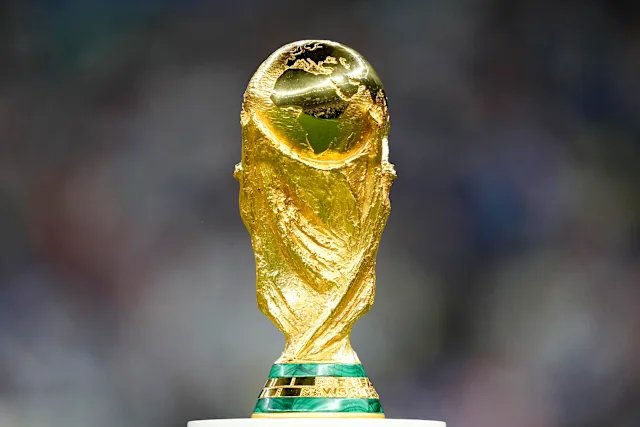
On a Sunday that was already being described, across thousands of miles of North American football coverage, as the most dramatic day of the 2026 World Cup group stage, Iran added the final act. Mohammad Mohebbi — the striker whose celebration in Iran's opening match had generated as much social-media traffic as the goal itself — converted to give Team Melli a 1-0 victory over Belgium at SoFi Stadium in Inglewood, California. The result sent Group G spiraling into genuine uncertainty and made June 21, 2026 a landmark date in the history of Asian international football.
On the same day, Saudi Arabia defeated Spain 1-0 in Atlanta. Three thousand miles apart, on opposite coasts of the United States, two AFC nations had beaten two of Europe's most established football powers within hours of each other. The football world stopped and stared at the standings. The world was watching. The message, delivered in identical scorelines separated by a continent, was the same: the old continental hierarchy is not what it was.
The Match at SoFi: Compact, Disciplined, Clinical
Iran's victory over Belgium was not fashioned from a position of territorial dominance. Belgium, under Domenico Tedesco, controlled large portions of the ball and created the kinds of chances — Romelu Lukaku holding up play, Kevin De Bruyne threading balls through narrow spaces — that have tormented defenses across European competitions for years. But Iran did what a well-coached, defensively organized team must do to beat a stronger opponent: they absorbed, stayed compact, stayed patient, and waited for the moment when the game could be won rather than trying to impose themselves on a match they were not equipped to win that way.
The Iranian defensive structure under head coach Amir Ghalenoei was, for the vast majority of the match, exactly what a tactical analyst would draw up on a whiteboard when asked how a compact team should defend against a possession-heavy opponent with dangerous central midfield runners. The four-man defensive block maintained its width and depth intelligently, never allowing De Bruyne the kind of space between the lines where he is at his most dangerous — the space that has enabled him to create career-defining moments for Manchester City and the Belgian national team across more than a decade. When De Bruyne received the ball in those areas, there was always an Iranian midfielder already moving toward him, cutting the next pass before it could be delivered.
The press was similarly well-organized. Iran's forwards — Mohebbi leading the line with energy and intelligence — did not try to win the ball high up the pitch against Belgium's experienced defenders. Instead, they created a compact mid-block that forced Belgium to build wide rather than through the center, reducing De Bruyne's influence and channeling Belgium's attacking play into the areas where Iran were best organised to defend. For a team with fewer resources, less depth, and considerably less tactical infrastructure than their opponents, the execution was a masterpiece of pragmatic football.
Mohebbi's Goal: The Clinical Endpoint to an Intelligent Plan
The goal that separated the teams arrived with the efficiency of a strike that had been engineered, not stumbled upon. Ramin Rezaeian — the 36-year-old full-back who had scored the equalizer in Iran's opening draw with New Zealand and who has now assisted in back-to-back World Cup games at an age when most professionals are retired — drove forward from his right-back position into space that Belgium's high defensive line had vacated. His cross found Mohebbi inside the six-yard box, arriving at exactly the right speed and the right angle for a composed finish. Belgium's goalkeeper Koen Casteels had no chance.
Mohebbi's celebration — calmer this time than the controversial gesture that had generated debate after the New Zealand match — reflected the composure of a striker who has found the kind of form at a World Cup that transforms careers. He is 26 years old, plays his club football in the Iranian Premier League, and has now scored at the 2026 World Cup in what might be the two most important games of his national team's tournament. The goal against New Zealand was a late equalizer that salvaged a draw. The goal against Belgium was a winner that handed Iran one of the most significant victories in their World Cup history.
Iran's World Cup history is not a short one — they have qualified for multiple tournaments since their debut in 1978 — but victories over European sides of Belgium's caliber have been rare. The list of significant Iranian wins at the World Cup is short, and every entry on it carries extraordinary weight in a football culture where the national team's performances are watched with an intensity that connects sport and national identity in ways that most European observers struggle to fully appreciate. This victory, against a team that came into the tournament with genuine knockout-stage ambitions, is by any measure one of the greatest in Iranian football history.
Belgium's Crisis: The Golden Generation's Last Stand Falls Short
There is an elegiac quality to Belgium's predicament at the 2026 World Cup, and it has been building for years. The 'Golden Generation' — De Bruyne, Lukaku, Eden Hazard (now retired), Thibaut Courtois, Toby Alderweireld, Jan Vertonghen — was supposed to deliver a major tournament title during its peak years from 2015 to 2022. It did not. The 2018 World Cup brought a third-place finish that was genuinely impressive but still left the fundamental question unanswered. The 2020 European Championship ended in the quarterfinals. The 2022 World Cup was a group-stage exit. Euro 2024 brought another early departure.
Now Belgium are in their second World Cup group in a row where elimination in the group stage is a realistic outcome. The squad that takes the field in 2026 is not the full Golden Generation — Hazard is gone, several of the peak-era veterans have retired or diminished — but De Bruyne is still here, Lukaku is still here, and the expectation of quality performance has not diminished with the passage of time. Against Iran, that expectation met a performance that was, at best, a pale reflection of Belgian capability.
De Bruyne, in particular, was below his best — not because of a loss of technical quality, which remains elite, but because Iran's defensive structure denied him the spaces where his quality becomes devastating. When a midfielder is asked to create in tight areas against a compact block, with no room to accelerate into and no diagonal pass option open, even the very best struggle. De Bruyne struggled. The statistics — his pass accuracy was below eighty percent for the match, well below his average — reflect the extent to which Iran's gameplan neutralized him rather than any diminishment in the player himself.
Lukaku, now 32, remains a formidable physical presence. He held up play effectively, won aerial battles, and created space for runs around him. But the service into him from the Belgian midfield was inconsistent, and in the moments when he did receive the ball in dangerous positions — twice in the second half, with clear sights on goal — Room-like saves from Iran goalkeeper Alireza Beiranvand denied him. Beiranvand, who has been one of the best goalkeepers in the AFC for the better part of a decade, was not asked to match Room's fifteen-save heroics but made three crucial stops at key moments. His performance was the essential complement to the outfield team's defensive discipline.
Group G: The Standings That Now Define Everything
| Team | Played | W | D | L | GF | GA | GD | Pts |
|---|---|---|---|---|---|---|---|---|
| Iran | 2 | 1 | 1 | 0 | 3 | 2 | +1 | 4 |
| Egypt | 1 | 0 | 1 | 0 | 1 | 1 | 0 | 1 |
| New Zealand | 1 | 0 | 1 | 0 | 2 | 2 | 0 | 1 |
| Belgium | 2 | 0 | 1 | 1 | 1 | 2 | -1 | 1 |
Note: Egypt and New Zealand have played one fewer match — their second group fixture is later on June 21. Their results will update this table significantly.
Iran's four points represent a commanding position that would likely put them into the Round of 32 regardless of their final group game. For Belgium, the mathematics are grim: they need their final group game result to go their way while hoping that the Egypt-New Zealand match does not produce a result that further complicates their path. A team that arrived in North America with aspirations of a deep knockout run now requires a positive outcome simply to survive the group stage.
The timing is pointed. Belgium's third-place finish at the 2018 World Cup was supposed to be the foundation for a trophy at the next tournament. Instead, four World Cups after their Golden Generation announced itself — Euro 2016, 2018 World Cup, 2022 World Cup, now 2026 — the answer to when Belgium wins a major tournament remains elusive.
Rezaeian at 36: The Elder Statesman Who Cannot Stop Scoring
The sub-narrative of Iran's first two matches that deserves its own paragraph is Ramin Rezaeian, who at 36 years old has operated as a driving attacking full-back through ninety minutes of World Cup football in two of the most physically demanding matches of the tournament. In the New Zealand draw, he scored. Against Belgium, he provided the assist for Mohebbi's winner. His energy levels — the explosive forward runs from right-back, the recovery speed to get back into position after each attack — would be impressive in a 26-year-old. In a 36-year-old competing at the World Cup, they represent a dedication to physical conditioning that merits serious analysis.
Rezaeian plays his club football at Shabab Al-Ahli in the UAE Pro League, and has been a consistent performer at the professional level for the better part of fifteen years. His longevity is not accidental — it is the product of the kind of meticulous attention to recovery and physical maintenance that enables high-performance athletes to compete at elite level well beyond the age when most of their peers have retired. At a World Cup where Cristiano Ronaldo at 41 is playing but struggling and Messi at 38 is glittering but managing his minutes, Rezaeian's full-throttle output at 36 is a different kind of testament to what professional dedication to physical maintenance can achieve.
Ghalenoei's Tactical Masterclass: Reading the European Big Team
Amir Ghalenoei has been Iran's coach since 2023, and his tactical fingerprints are all over the two results that have put Team Melli in command of Group G. The common thread across both the New Zealand draw and the Belgium win is the same: a deep defensive structure that concedes territory without conceding control, a compact mid-block that denies the opponent their preferred playing lanes, and a counter-attacking threat built on pace and directness that punishes European teams conditioned to expect possession from their Asian opponents.
The second element of Ghalenoei's approach that has been consistently effective is the adjustment within matches. Against New Zealand, Iran trailed and came from behind to equalize — demonstrating the resilience and tactical flexibility to change the game within its own framework. Against Belgium, they held their defensive shape for the duration without the opportunity requiring a significant in-game shift — demonstrating the mental fortitude to maintain a plan under sustained pressure for eighty-plus minutes. These are different problems requiring different solutions, and Ghalenoei has found effective responses to both.
The Iran squad contains players from a range of club environments — the domestic league, the Gulf leagues, and a few in European football — and welding them into a cohesive tactical unit has been Ghalenoei's primary challenge since taking the job. Against Belgium, the cohesion was visible in the way every player in the defensive block moved in coordination, the way the forward press was triggered simultaneously, the way the full-backs made their recovery runs without being instructed individually. That kind of collective discipline is built in training over months, and it showed.
The Day Asian Football Changed the Conversation
The full significance of June 21, 2026 will take time to fully process, but some preliminary conclusions are already clear. When two Asian nations beat two historically powerful European nations in the same tournament day — when Saudi Arabia defeated Spain in Atlanta while Iran defeated Belgium in Los Angeles — the global football conversation cannot simply absorb the results and move on without asking why, and what it means.
The structural answers are familiar: the investment in Asian football infrastructure over the past twenty years, the improvement in AFC qualification standards, the European competition exposure for Asian players that has raised tactical fluency across the board. But the psychological significance matters too, because football is partly a sport of belief, and belief has a way of compounding. The 2022 World Cup saw Saudi Arabia's historic upset of Argentina. The 2026 World Cup has now seen Saudi Arabia and Iran both beat European giants on the same day. Each result makes the next one more thinkable for the next generation of Asian players who grow up with these references.
Iran, specifically, has a football culture deep enough and old enough to sustain the weight of a result like this. The Iranian Premier League is one of the strongest in Asia. The national team draws from a diaspora of professional players across three continents. The passion for football among Iranian supporters is, by any measure, one of the most intense anywhere in the world. For that passion to be rewarded with a victory over Belgium at SoFi Stadium, in front of a crowd that included many Iranian-American supporters for whom the match carried personal and political as well as sporting dimensions, is a moment that will sit in the culture for a long time.
The Controversies Absent on This Night
Iran's World Cup appearances have not always been uncomplicated, and the 2026 edition carries background noise that cannot be entirely separated from the football. FIFA investigated reports of travel restrictions placed on certain Iranian supporters trying to attend matches in the United States, with Iran lodging a formal complaint before the tournament began, as Al Jazeera reported. The political context of an Iranian national team competing on American soil carries its own charge in 2026, given the relationship between the two countries.
Mohebbi's celebration in the New Zealand match — a hand-gesture that was widely interpreted as depicting a gun and which sparked enormous debate across Iranian and international social media — had also cast a shadow over the opening stages of Iran's campaign. Mohebbi subsequently clarified the meaning of the gesture, contextualizing it within a personal reference that was unrelated to the political interpretation many observers had applied. The debate subsided, but it had been an early reminder that Iranian players at a World Cup exist in a context where every gesture is scrutinized beyond the football.
On the night of June 21 at SoFi Stadium, however, the football was sufficient to fill the frame entirely. Iran beat Belgium. Mohebbi scored. Rezaeian assisted. Beiranvand saved what needed saving. Ghalenoei's plan worked. The scoreboard at the final whistle told a simple story in the simplest possible terms: Iran 1, Belgium 0.
The Training Lens: The Conditioning Behind a Giant-Killing
Upsets like Iran over Belgium are usually won without the ball. Defending a result means repeated defensive sprints, recovery runs, and pressing actions sustained for ninety-plus minutes — a brutal aerobic and repeat-effort demand. Teams pull it off only when their conditioning lets them keep their shape while tired, because organization collapses the moment legs go.
The same principle scales down to any athlete: the fitness you can access when fatigued is the fitness that counts. Interval training builds it, and showing up for that work consistently is the real challenge — which is why accountability features matter as much as the training plan itself.