World Cup 2026 Golden Boot Race: Messi and David Lead a Loaded Field
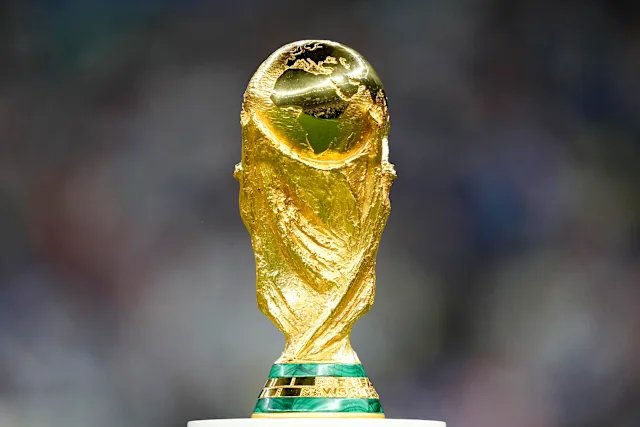
Ten days into the 2026 FIFA World Cup, the Golden Boot race is already one of the most compelling narratives the tournament has produced. Two players share the lead on three goals apiece: Lionel Messi, the 38-year-old defending champion writing one last chapter of footballing history, and Jonathan David, the 26-year-old Canadian striker whose hat-trick against Qatar announced him to a global audience that had perhaps underestimated what he is capable of. Behind them, a cluster of the world's most dangerous attackers sit on two goals each — Kylian Mbappé, Erling Haaland, Harry Kane, Vinicius Junior, and several others — all with two or more group-stage games still to play and every reason to believe the decisive stretch of the tournament will be their moment.
The individual award for the tournament's top scorer carries enormous prestige. Past winners include Sándor Kocsis (Hungary, 1954), Just Fontaine (France, 1958), Eusébio (Portugal, 1966), Gary Lineker (England, 1986), Davor Šuker (Croatia, 1998), Ronaldo (Brazil, 2002), Thomas Müller (Germany, 2010), James Rodríguez (Colombia, 2014), Harry Kane (England, 2018), and Kylian Mbappé (France, 2022). To win it is to leave a permanent mark on the history of the sport's greatest stage. To win it in the same summer you are chasing — or defending — the trophy itself would be among the most celebrated individual feats in football.
Here is the complete picture of the race, with a player-by-player breakdown of the leaders, the contenders, and the players positioned to make their move as the tournament enters its decisive phase.
The Joint Leaders
Lionel Messi — Argentina — 3 goals
The case for Messi needs no preface. His hat-trick against Algeria on June 16 — scored at age 38 years and 357 days, making him the oldest player ever to score a World Cup hat-trick, a record that broke the mark set by Cristiano Ronaldo — was one of the tournament's most visceral moments. Three goals, three different varieties of brilliance: a left-footed strike from distance, a composed tap-in that showed his positioning genius, and a precise bottom-corner drive that demonstrated why, even at 38, his shooting technique remains among the finest the game has ever produced.
The hat-trick moved Messi level with Miroslav Klose as the all-time leading scorer in World Cup history on 16 career goals. It also extended his record for goals scored at five separate World Cups — 2006, 2010, 2014, 2018, 2022, and now 2026 — a mark no other player in history has achieved. And it arrived, with impeccable symmetry, on his 200th international appearance for Argentina.
The question the Golden Boot race asks of Messi is simple: can he maintain this output across a full tournament as the opposition quality increases? Group-stage matches against Algeria offered space and time that knockout opponents will not. Against defensive teams who sit deep and compress the space Messi needs to receive and turn, goals become harder and the minutes more demanding. But the last four years — from his controlled performances for Inter Miami to the discipline of Argentina's 2026 build-up — suggest a player who has remade his game precisely around the template of doing less for longer and more in the moments that count. The Golden Boot is his to lose.
Jonathan David — Canada — 3 goals
If Messi's hat-trick was the romantic story, Jonathan David's was the tactical one. When Canada faced Qatar on June 18 in Vancouver, in front of a roaring home crowd experiencing the unique emotion of watching their country compete at a World Cup for the first time in their lifetimes, David produced a masterclass in the art of the modern centre-forward. Three goals, each arrived at through different means: one from a cutback in the penalty area, one from a first-time finish off a cross, one from a run in behind the Qatar defensive line that his movement had spent ninety minutes setting up.
David, 26, has spent the last three seasons quietly assembling one of the most impressive scoring records in European football. His seasons at Lille and subsequently at one of the continent's top clubs have demonstrated a striker who combines elite off-the-ball movement, reliable finishing technique, and the intelligence to operate in tight spaces as comfortably as he does on the shoulder of the last defender. At club level, those qualities are increasingly well-known. In Vancouver, on the biggest stage his sport offers, they were visible to the entire watching world for the first time.
As a co-host nation player, David carries particular significance in the Golden Boot race. Canada have never progressed beyond the group stage at a men's World Cup, and the burden of collective expectation sits on their tournament in a way it never has before. If David can maintain his form through the knockout rounds — if Canada can get there — he becomes a genuine threat to win this award outright. Three goals from one game is an extraordinary opening statement, and the remaining group stage and potential knockout games offer every opportunity for him to add to it.
The Two-Goal Cluster
Behind the co-leaders, a remarkable pool of talent has scored twice each in the opening rounds. What makes this cluster so compelling is not the uniformity of the number but the diversity of the circumstances: strikers who are just warming up, veteran champions with a point to prove, and a 25-year-old Norwegian who waited years for his World Cup debut and immediately showed why the wait was worth it.
Kylian Mbappé — France — 2 goals
Mbappé arrived in North America as the defending individual Golden Boot winner from 2022 and one of two genuine favourites for the 2026 version alongside Messi. His two goals in France's 3-1 win over Senegal on June 16 were, in keeping with his World Cup habit, not merely goals but records: per CBS Sports, Mbappé's brace moved him to 14 career World Cup goals, making him France's all-time leading scorer at the tournament — a record of extraordinary standing in a country with an extraordinary World Cup history.
What stands out about Mbappé's tournament start is the form of his team around him. France, under Didier Deschamps, have a supporting cast of depth that rivals any squad at this tournament: Michael Olise operating as the creative hub behind him, Ousmane Dembélé and Désiré Doué providing width, and a midfield capable of controlling possession for long periods. When France are functioning at their best, Mbappé receives the ball in the spaces his movement creates — and there is no defender at this tournament who can contain him one-on-one when he has a direct run at goal.
His path to the Golden Boot depends significantly on France's success. If Deschamps' side reach the latter stages of the tournament, Mbappé will have six, seven, perhaps eight games to build his tally. Against the world's best defences in the knockout rounds, his explosiveness and finishing quality remain — combined with the intelligence to drift into areas where the ball arrives at exactly the moment he needs it — the single most dangerous weapon any team in this tournament possesses.
Erling Haaland — Norway — 2 goals
The 2026 World Cup represents Erling Haaland's first appearance on football's grandest stage, and in the manner of someone who has spent his entire career making long-awaited moments look inevitable, he marked his debut with two goals in Norway's 4-1 victory over Iraq. The first, a back-post conversion of a low cross from David Møller Wolfe, was a textbook demonstration of striker positioning; the second, a tap-in following an extraordinary goalkeeping error, was the kind of goal only someone alert enough to press at every moment can score.
Haaland's stats at this tournament are already worth examining. According to Al Jazeera, his two goals in the Iraq match brought his career international tally to 57 goals in 51 appearances — a rate of scoring that, sustained across the last three years, has made him statistically the most prolific international scorer per game in the sport's modern era. No tournament before 2026 had given him the stage to display that output at its highest level. Having seen how quickly he adapted to the pressure, the global audience, and the physical demands of a World Cup match, there is very little reason to expect a slowdown.
The asterisk on Haaland's Golden Boot candidacy is Norway's group situation. Their 4-1 win over Iraq was excellent, but the group also contains Argentina — winners of their opener 3-0 against Algeria — and the prospect of a direct collision between Messi and Haaland in the group stage adds one of the tournament's most anticipated subplots to an already crowded entertainment schedule. If Norway can advance to the knockout rounds, Haaland on the full stage of a World Cup knockout match is one of the most compelling prospects in football.
Harry Kane — England — 2 goals
For Harry Kane, the 2026 World Cup carries a weight that only he fully understands. England's captain arrived in North America with the burden of his 2022 penalty miss — the match-deciding spot-kick against France in the quarterfinals — still fresh enough in public consciousness to occasionally overshadow the brilliance of what came before and after it. His two goals in England's 4-2 opening victory over Croatia moved him to 10 career World Cup goals for England, tying Gary Lineker's all-time record for England at the tournament — a landmark that, as Sky Sports noted, he has spent the last four years chasing and can now, in England's remaining games, break outright.
Kane's two goals — a penalty re-taken after a save (ordered for encroachment), then a towering header from a Declan Rice corner — demonstrated the full range of his contribution to England's attack: the intelligence in the box, the height and timing to dominate aerial duels, and the calmness under the pressure of a re-taken spot-kick that would have unsettled a less experienced footballer. Under Thomas Tuchel, who has given Kane a slightly freer roaming brief than some of his predecessors have allowed, England look capable of combining defensive organisation with explosive forward runs — and Kane, empowered to drop deeper and link play as well as finishing in the box, appears energised by the tactical latitude.
Vinicius Junior — Brazil — 2 goals
Brazil's tournament has not followed the script their squad quality might have suggested. A 1-1 draw with Morocco in their opener was a result that flattered no one, and the subsequent 3-0 win over Haiti — while comfortable — left the scale of their ambitions slightly uncertain. But Vinicius Junior, with two goals across those two matches, has confirmed what club football already knew: when he is in the mood, with the space to run, he is one of the most devastating forwards on the planet.
His goals have been precisely the sort that define his game: direct, physical, leaving defenders grasping at air before the ball is in the net. Brazil's tactical system, which asks Vinicius to combine a wide starting position with the freedom to cut inside or drive at full-backs, is designed to maximise the very attributes that make him dangerous. With two games played and the knockout rounds potentially offering a Brazil squad of enormous depth a path deep into July, Vinicius Junior is one of the most plausible Golden Boot winners this tournament has seen.
Kai Havertz — Germany — 2 goals
Germany's 7-1 demolition of Curaçao in their opening match was one of the tournament's most one-sided results, and Kai Havertz's two goals in that display placed him among the early leaders of the scoring charts. The German number nine — who spent years at Arsenal carrying the burden of a club that needed him to be something specific, before finding his optimal form in the freer role Germany's national team structure grants him — was efficient, well-positioned, and composed in front of goal in a manner that suggests a striker more settled in his identity than his earlier international career sometimes indicated.
The question for Havertz is one of context: Germany's second group-stage match, against Ivory Coast, offers a substantially tougher examination of his ability to score against organised resistance, and the knockout rounds — should Germany advance as expected — will test him further. But the quality is real, the system suits him, and a Germany side that scored seven goals in its opening match is precisely the kind of environment in which strikers accumulate goal tallies.
Others in Contention
The scoring chart at this stage of the tournament is unusually deep. Several other players carry two goals into the later rounds and cannot be discounted:
Cyle Larin (Canada, 2 goals): Canada's towering striker scored alongside David against Qatar and has shown the physical menace to trouble any defence. If Canada advance, Larin becomes a second threat alongside David that opponents must account for — which paradoxically may create more space for both.
Folarin Balogun (USA, 2 goals): The American striker's emergence in this tournament has been one of the most significant stories for the host nation. Two goals from two games, a presence that disrupts defensive lines, and the finishing quality to capitalise when chances arrive — Balogun is a player whose stock was already rising and whose World Cup performances are doing so further.
Ismael Saibari (Morocco, 2 goals): Morocco's performances have been one of the quiet tactical stories of the tournament, and Saibari's two goals for the Atlas Lions have established him as a significant forward threat in a team that is also one of the tournament's better defensive structures. The combination of goals and organisation makes Morocco dangerous.
Yasin Ayari (Sweden, 2 goals): Ayari's two goals in Sweden's 5-1 rout of Tunisia opened the tournament for him personally in compelling fashion. However, Sweden's subsequent 5-1 defeat to the Netherlands has complicated the group picture, and Ayari's ability to add to his tally will depend on Sweden's progress.
Matheus Cunha (Brazil, 2 goals): Brazil's supporting cast in attack includes Cunha, who has offered directness and finishing quality in two games. As a supplement to Vinicius Junior's threat, his goals have given Brazil multiple forward angles that opponents must address simultaneously.
Historical Context: How the Golden Boot Is Typically Won
A study of Golden Boot winners at recent World Cups illuminates a clear pattern: the award almost always goes to a player whose team reaches the semifinals or final, for the simple reason that more games equals more opportunities to score. The 2022 winner, Kylian Mbappé, scored 8 goals across France's run to the final. The 2018 winner was Harry Kane, who reached the semifinals with England. The 2014 winner was James Rodríguez, who reached the quarterfinals — his 6 goals still sufficient to win because no other player managed more across a deeper run.
The implication for the 2026 race is important: to win from three goals at this stage, a player needs either their team to go deep in the tournament or a scoring burst in the remaining group games and early knockout rounds that others cannot match. Messi and David both have that scenario in front of them if their teams advance; the two-goal cluster can reach three or four with a single strong performance.
What makes 2026 unusual is the scale of the tournament: 48 teams, a Round of 32, 64 total matches rather than 64 total matches in 2022. The expanded format means the winning team plays seven matches rather than seven — still seven, but the path to that seventh match now includes a Round of 32 against a team that has qualified through a much larger group stage. That additional match is an additional opportunity to score, and teams drawn against weaker Round of 32 opponents may find their strikers accumulating goals in games that feel, on paper, manageable.
| Player | Team | Goals | Games | Team Status |
|---|---|---|---|---|
| Lionel Messi | Argentina | 3 | 1 | Group I, 3 pts |
| Jonathan David | Canada | 3 | 2 | Group B, 4 pts |
| Kylian Mbappé | France | 2 | 1 | Group G, 3 pts |
| Erling Haaland | Norway | 2 | 1 | Group I, 3 pts |
| Harry Kane | England | 2 | 1 | Group J, 3 pts |
| Vinicius Junior | Brazil | 2 | 2 | Group C, 4 pts |
| Kai Havertz | Germany | 2 | 1 | Group E, 3 pts |
| Folarin Balogun | USA | 2 | 2 | Group D, 6 pts |
| Cyle Larin | Canada | 2 | 2 | Group B, 4 pts |
| Ismael Saibari | Morocco | 2 | 2 | Group C, 4 pts |
The Path to Glory: Who Is Best Placed to Win?
Assessing the Golden Boot from this vantage point requires balancing individual form against team trajectory — because the award, historically, is won by the striker whose team gives them the most opportunities across the full tournament.
Messi's candidacy is almost entirely dependent on Argentina's depth of run. If Scaloni's side reach the final — which their opening performance and squad quality suggest is realistic — Messi could play seven games. Seven games at even a modest scoring rate of one goal every two games would put him at six or seven goals for the tournament. That is almost certainly a winning total. The risk is the body: Messi at 38 needs management, and Scaloni will be balancing the need to preserve him against the competitive necessity of keeping him on the pitch. The hat-trick against Algeria suggests, for now, that the balance is correct.
Mbappé's candidacy is perhaps the most formidable on structural grounds. France have the deepest squad at this tournament, the most reliable system for creating scoring chances, and a manager who has shown repeatedly over the last eight years that he can get the best from his best player in the games that matter most. Mbappé scored eight goals in 2022 and three in 2018; the pattern of big-tournament performances suggests he tends to improve as the tournament deepens, which means two goals from one group game may be a significant underestimate of what he will eventually contribute.
Haaland's candidacy is the most exciting but the most uncertain. Norway are a strong team, better than their historical World Cup pedigree might suggest, but they face Argentina — and a Haaland-Messi collision in the group stage would be one of the most extraordinary individual encounters the tournament could offer. If Norway advance as group winners or runners-up, Haaland's ability to score in knockout football will be tested for the first time on this stage. His club record suggests there is nothing to fear. His international record suggests the same. But the World Cup is its own beast, and until he faces the knockout rounds, there will always be the question of whether this is the stage that finally matches the performance.
Jonathan David's candidacy is the wildcard. Canada are a host nation, energised by the occasion, backed by enormous home support, and led by a striker who has now shown he can perform when the stakes are highest. David's hat-trick against Qatar was not against elite opposition, but the quality of his movement and finishing — the intelligence of his positioning, the variety of the three goals — was the work of a genuinely elite striker. If Canada advance, David will face better defences, but a player of this quality who is in this form is not a player who stops scoring because the opponent gets harder. He may be the most underrated contender in the race.
The Fitness Factor
No discussion of the Golden Boot race is complete without acknowledging the one variable that the scoreboard cannot capture: fitness. This tournament is played across seven weeks in the heat and humidity of North American summer, across three countries covering thousands of miles of travel, with compressed rest periods between rounds. The first casualty of the tournament — Canada's Ismael Koné, stretchered off with a serious leg injury against Qatar — was a reminder that even the most elite athletes can be felled by the physical demands of high-intensity football on the biggest stage.
Messi's management team will be monitoring his fatigue carefully. Christian Pulisic, the USA's most important player and a direct competitor for attention in the group-stage narrative, has already missed a game with a calf injury. The physical toll of the tournament is not a subplot; it is one of the central stories, and the Golden Boot winner in 2026 will be as much the product of a training and recovery programme as of moments of individual brilliance.
The player in the race whose physical profile may be best suited to the demands of a deep tournament run is Haaland — at 25, in the physical peak of his career, and with a body that has been specifically conditioned for explosive, high-intensity repeated performance. But football is not a sport where the physically optimal always prevails, and in a race that includes Messi at 38 still scoring hat-tricks, the usual physical assumptions may need to be set aside.
Verdict: The Three Likeliest Winners
With ten days of football behind us and at least five or six weeks ahead, the Golden Boot race is genuinely open. But if forced to rank the three most plausible winners at this stage of the tournament, the analysis points to:
1. Kylian Mbappé: The defending champion, with the best squad around him, the most efficient system for creating chances, and a track record of delivering in the moments that define tournaments. His two goals from one match may end up being the most misleading opening statement in the race — an undercount of what a player of his calibre, in a team of this quality, will produce across seven matches.
2. Lionel Messi: The hat-trick already. The record. The complete absence of any evidence that age has diminished what matters most. If Argentina are still in the tournament in the second week of July, Messi will be scoring goals. The body is the only question, and the body has so far provided no cause for concern.
3. Jonathan David: At 26, in the form of his life, performing for a home nation that has never been to the knockout rounds, David represents the tournament's most compelling underdog narrative in the individual prize. Three goals from one game is the kind of start that winning Golden Boots are made of. The question is whether the stage and the pressure, rising as Canada's tournament runs deeper, elevates or diminishes him. The evidence of Vancouver suggests it elevates.
The race has begun. The tournament has weeks yet to run. Check back in.
The Training Lens: How Goalscorers Train for Speed and Power
The race for the Golden Boot is, physically, a race built on speed and power — getting to the ball first and finishing decisively under pressure. Those qualities come from a specific cocktail: heavy strength training for force, plyometrics for explosiveness, sprint work for mechanics, and skill practice deliberately done while fatigued so it holds up late in matches.
You can train every one of those at the amateur level with the right progression. AI-personalized training keeps that progression honest, nudging intensity up as you adapt so power keeps building instead of plateauing.