Ronaldo vs Messi at the 2026 World Cup: A Game-by-Game Analysis of the Last Duel
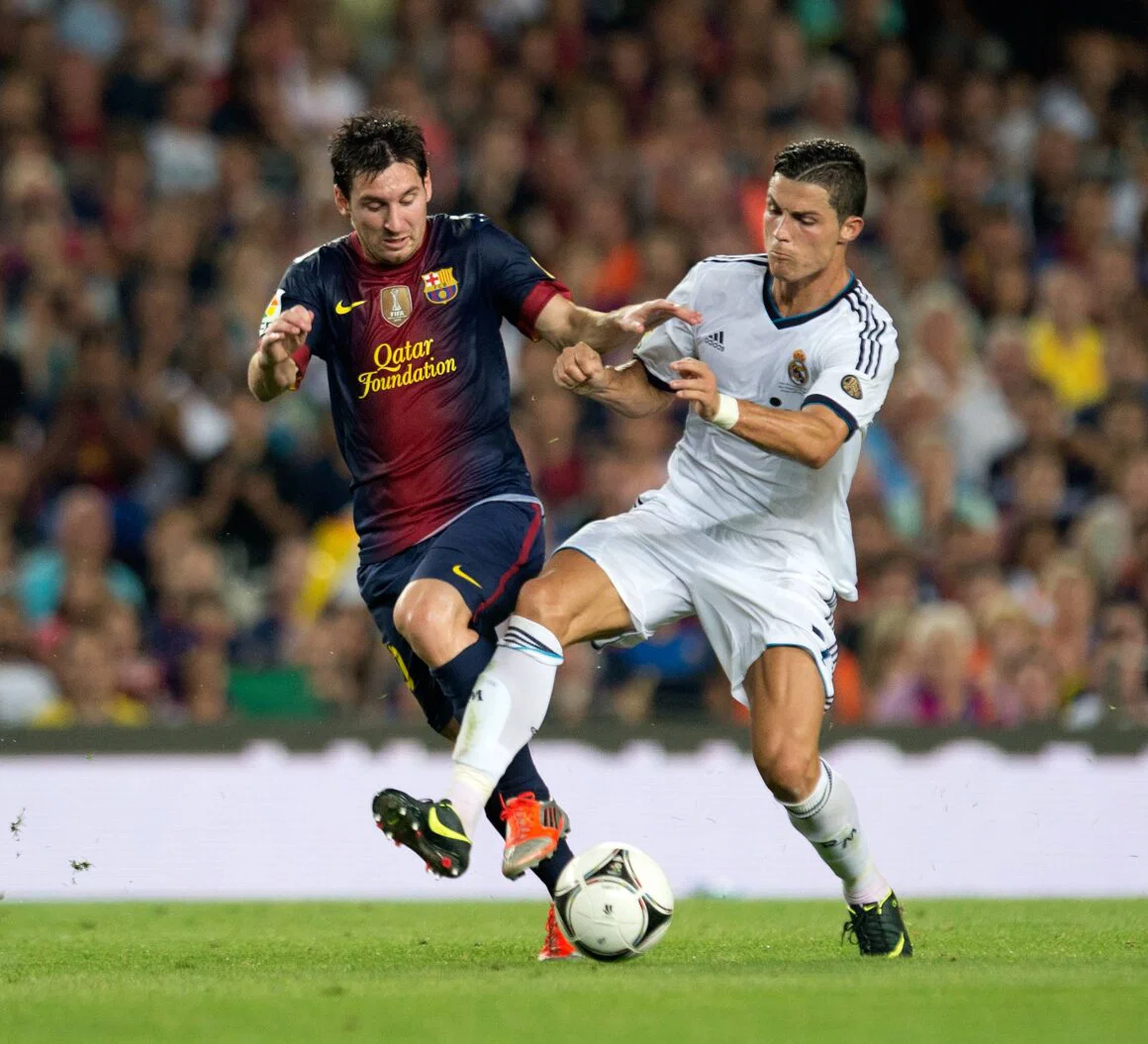
For nearly two decades, football has been argued in two syllables: Messi or Ronaldo. It is the defining sporting rivalry of the century — two players who dragged the game to heights it had never seen, who collected trophies and records like other men collect parking tickets, and who, by sheer simultaneous brilliance, forced a generation to pick a side. Now, in the summer of 2026, across the stadiums of North America, the argument is getting its final exam. This is almost certainly the last World Cup either man will play. And eight days in, their two opening statements have written a contrast so stark it reads like fiction.
On June 16, Lionel Messi, 38 years old, produced a hat-trick for the ages. On June 17, Cristiano Ronaldo, 41, played ninety minutes, missed his chances, and walked off goalless once more — extending a drought that has become its own grim subplot. One man looked like he could play forever. The other looked, for the first time, like a legend wrestling with the clock. This is the game-by-game story of how their final World Cup has begun, and what the data tells us about where it goes from here.
The Last Exam
Begin with the stakes, because they are enormous. Both Messi and Ronaldo are competing at their sixth World Cup — a shared record for tournament appearances by an outfield player that underlines just how absurdly long each has operated at the summit of the sport. Messi already has the one prize that eluded him for so long: he lifted the trophy in 2022, completing his collection and, in the eyes of many, settling the GOAT debate in his favor. Ronaldo, for all his Champions Leagues, his Euro 2016 triumph, and his record-shattering international goal tally, has never reached a World Cup final. This tournament is his last chance to add the one line missing from his résumé.
That asymmetry frames everything. Messi arrives unburdened, a defending champion playing with house money, free to enjoy a victory lap that could yet end with a second star. Ronaldo arrives with something still to prove and a body that, at 41, can no longer be willed into compliance the way it once could. The narratives could hardly be more different, and the first round of group matches did nothing to soften the divergence — if anything, it sharpened it into something almost cruel.
There is poetry in the symmetry of the numbers, too. Per the 2026 World Cup statistical record compiled by ESPN, Messi became only the second man in history to score at five different World Cups — the first being, of course, Cristiano Ronaldo. For more than fifteen years they have chased each other through the record books, each milestone one man set becoming a target for the other. In 2026, that chase is entering its final straight, and the gap between them — once measured in trophies and Ballons d'Or — is now being measured in something more elemental: who can still deliver when it matters most.
The Road In
Neither man arrived in North America as the player who once bent seasons to his will, but they arrived along very different trajectories. Messi, since his move to Major League Soccer with Inter Miami, has managed his minutes carefully, preserving his explosiveness for the moments that count. The criticism — that MLS is a retirement league, that he would arrive undercooked for elite competition — ignored a simple truth his career has proven again and again: Messi does not need ninety minutes of intensity to decide a match. He needs three or four seconds of it.
Ronaldo's road was bumpier. His move to the Saudi Pro League with Al Nassr kept his goal tally gaudy against weaker opposition, but the questions about his level against elite defenses had been growing louder for years. As Al Jazeera framed it ahead of Portugal's opener, this was billed as Ronaldo's last dance — a final shot at the global crown, with a talented Portugal squad built, for better or worse, around a 41-year-old captain who refuses to cede the spotlight. The build-up asked the question the tournament would immediately answer: could Portugal still be a Ronaldo team, or had the game moved on without him?
A Rivalry Across Six World Cups
To understand what 2026 means, you have to understand the twenty years that led here — because Messi and Ronaldo have run their World Cup careers in eerie parallel, debuting in the same summer and arriving, two decades later, at their final tournament together. Both first appeared at the 2006 World Cup in Germany as precocious talents on the rise: a teenage Messi flashing his promise for Argentina, a 21-year-old Ronaldo helping Portugal to a fourth-place finish. From that shared starting line, their paths through the sport's grandest event would twist in opposite directions before, improbably, converging again at the end.
The cruelest near-miss belonged to Messi. At the 2014 World Cup in Brazil, he dragged a functional Argentina side all the way to the final and was awarded the Golden Ball as the tournament's best player — only to lose to Germany in extra time, the trophy paraded past him on his way to collect a runner-up's medal. It was the defining heartbreak of his international career, and for years it was the stick used to beat him: brilliant for Barcelona, the argument went, but unable to deliver the one prize that mattered most for his country.
There were shared humiliations, too. At the 2018 World Cup in Russia, in one of the tournament's great coincidences, both men were eliminated on the very same day — Messi's Argentina undone by a teenage Kylian Mbappé and France, Ronaldo's Portugal felled by Uruguay, the two titans exiting the stage hours apart as the next generation announced itself. Then came 2022, and the great divergence. Messi authored a tournament for the ages in Qatar, scoring seven goals and finally lifting the trophy in an instant-classic final against France; Ronaldo, by contrast, was dropped to the bench, watched Portugal lose to Morocco in the quarterfinals, and walked down the tunnel in tears. One man completed his story. The other was left with his unfinished. That is the weight both carry into 2026 — and it explains why these openers landed the way they did.
Messi's Opening Act: Argentina 3-0 Algeria
It took seventeen minutes for Lionel Messi to remind the world that genius does not expire on a schedule. In front of roughly 70,000 at Kansas City's Arrowhead Stadium, the defending champions faced an organized, awkward Algeria side — exactly the kind of opponent that has tripped up holders before. Messi simply refused to let it happen. As Sky Sports and Al Jazeera reported, he broke the deadlock in the 17th minute with an unstoppable left-footed strike from distance, the kind of shot that looks routine in highlight reels and is, in reality, attempted by almost no one.
The second came on the hour mark — a composed, almost contemptuous finish that spoke of a player in complete control of the tempo of the game. And the third, with fourteen minutes remaining, was the connoisseur's goal: an exquisite strike into the bottom corner from the edge of the box, beyond the despairing dive of Algeria goalkeeper Luca Zidane — son of Zinedine, a quiet generational footnote folded into the night. Three goals, three different flavors of brilliance: power, poise, and precision. It was Messi's first-ever World Cup hat-trick, astonishingly, in his sixth and final tournament.
The records tumbled in a heap. The strike made Messi, at 38 years and 357 days, the oldest player to score a World Cup hat-trick — breaking, in a detail almost too neat to be true, Cristiano Ronaldo's previous record of 33 years and 130 days. He reached 16 career World Cup goals, drawing level with Germany's Miroslav Klose as the all-time leading scorer in the tournament's history. He surpassed Pelé's mark for career goal contributions at World Cups, his combined tally of goals and assists now standing at 24. And the hat-trick arrived, fittingly, on his 200th appearance for Argentina.
Beyond the numbers, the performance carried a psychological weight that should terrify the rest of the field. Holders are supposed to start slowly, to feel the burden of the target on their backs. Argentina, instead, looked relaxed, ruthless, and utterly assured — a team that knows exactly what it is and has, in its captain, a man playing with the freedom of someone who has nothing left to prove and everything left to enjoy. The hat-trick was not just three goals; it was a statement that the champions intend to defend their crown, and that the oldest player on the pitch may still be the best.
If there is a caveat — and good analysis always looks for one — it is the level of the opposition. Algeria are a solid side but not an elite one, and Messi will face sterner tests. Knockout football against a France or a Spain will not offer the same time and space. But a hat-trick is a hat-trick, and the manner of it — the variety, the composure, the sheer inevitability — suggested a player who has lost none of the qualities that matter and shed some of the ones (relentless pressing, ninety-minute intensity) that age takes first. Messi has built a late-career game perfectly suited to surviving, and thriving, at a World Cup.
Ronaldo's Opening Act: Portugal 1-1 DR Congo
Twenty-four hours and one tonal universe away, Cristiano Ronaldo's final World Cup began not with a roar but with a wince. Portugal, one of the genuine dark horses for the title, were held to a 1-1 draw by a fearless DR Congo — a result that ranks among the opening round's genuine shocks and that exposed, in ninety painful minutes, the central tension of Portugal's campaign.
It started perfectly. Inside six minutes, João Neves rose to head home a Pedro Neto cross, and Portugal — who had knocked the ball around with 84 passes in those opening six minutes — looked set to coast. Then the game turned. DR Congo, playing in their first World Cup since 1974, grew into the contest, and on the stroke of half-time Yoane Wissa headed in Arthur Masuaku's cross to level — the Leopards' first-ever World Cup goal, and a moment of history for Central African football. The point they earned was their first ever at a World Cup, snatched not from a minnow but from one of the tournament favorites.
And Ronaldo? He was at the heart of the frustration. The 41-year-old played all ninety minutes and had the chances to be the hero — most glaringly in the second half. In the 68th minute he dragged a shot wide right; in the 73rd, he did it again, shaking his head in disgust as the opportunity sailed past the post. According to ESPN's analysis of the match, Ronaldo finished with three shots (two wide), zero chances created, two progressive carries and two progressive passes — both among the lowest of any Portugal starter. For a player who built his legend on decisive moments, it was a portrait of a striker arriving at those moments a half-yard, and a half-second, too late.
The context makes it sting more. Ronaldo has now gone goalless in five consecutive World Cup matches, and — across World Cups and European Championships combined — ten consecutive games at major international tournaments without finding the net. His last goal from open play at a major tournament came nearly five years ago; his last World Cup goal of any kind was a penalty against Ghana in 2022. For the most prolific goalscorer in the history of men's international football, a man with more than 130 international goals, the drought has become a story that follows him onto the pitch, into every miss, every replay, every headline.
He did add one more record to his collection, though not the kind he wanted: by starting the match, Ronaldo became the oldest outfield player ever to start a World Cup game, surpassing the mark set by Canada's Atiba Hutchinson four years earlier. It is a record that honors his longevity while quietly underlining the very thing his critics seize upon — that he is, now, the oldest man on the field, and that the gap between what he was and what he is has never been wider.
Portugal's Ronaldo Problem, in Numbers
What elevates the DR Congo draw from a bad night to a genuine strategic crisis is the data, and the data is damning. Per ESPN's analysis, Portugal have averaged 2.8 goals per game when Ronaldo does not start, versus just 1.9 when he does, over the past two years. That is not a small gap. It is the statistical signature of a team that functions more fluidly without its most famous player — a heretical conclusion that Portugal's coaching staff has so far been unwilling to act upon.
The eye test backed the numbers. Portugal's bright early spell, all quick combinations and width, congealed once they had the lead, and they struggled to generate the kind of service that might have suited a poacher's instincts. Manager Roberto Martinez admitted as much afterward, conceding, in his words, that “after the first goal, we didn't reach the final third at the level we needed in order to provide service to the striker and make use of his movements.” It was a diplomatic way of saying the team and its talisman were not on the same wavelength.
Most telling of all was the substitution that didn't happen. With Portugal chasing a winner, Martinez withdrew midfielder Vitinha — one of the side's most creative players — rather than Ronaldo, despite having the in-form striker Gonçalo Ramos available on the bench. It was a decision that prioritized the legend over the team sheet, and it crystallized the dilemma that may define Portugal's tournament: how do you drop the greatest goalscorer your country has ever produced, even when the evidence suggests you should? Until Martinez answers that question, the suspicion will linger that Portugal are playing with eleven men and one monument.
Head to Head: The Numbers Side by Side
Lay the two opening performances next to each other and the contrast becomes almost comically lopsided. Messi: three goals, a hat-trick of records, a man-of-the-match performance in a comfortable win. Ronaldo: zero goals, two glaring misses, a sub-par statistical night in a deflating draw. One talisman dragged his team upward; the other, by the cold logic of the numbers, may have weighed his down.
Zoom out to their respective World Cup careers and the picture gains nuance, but the trajectory of 2026 still favors the Argentine. Messi now sits joint-top of the all-time World Cup scoring chart on 16 goals, with eight assists for good measure — a tally that captures his dual role as both finisher and creator. Ronaldo's World Cup goal tally, by contrast, has stalled, his eight career goals at the tournament a number that has not moved from open play in years. For all that their domestic and continental records are a genuine debate, the World Cup — the one stage that matters most to legacy — has increasingly become Messi's domain.
It is worth being precise about what these single games do and do not prove. One match is a small sample; Ronaldo could yet score four goals in his next two and rewrite the narrative, and Messi could yet fade against stronger opposition. But football is a sport of momentum and confidence, and the psychological starting positions could not be more different. Messi begins his knockout run buoyed by a record-breaking high; Ronaldo begins his under a cloud of doubt, with the pressure mounting and the data whispering that his team might be better off reimagined around him rather than for him.
The Tactical Contrast
Underneath the goals and the drought lies a deeper story about how two great teams have aged alongside their great men. Argentina have built a side that uses Messi precisely — a structure that does the running so he doesn't have to, that funnels the ball to him in the zones where he remains lethal, and that asks him to conserve and then detonate. It is a team designed around the player Messi is now, not the player he was a decade ago. That humility — the willingness to adapt the system to the diminished but still-devastating reality of an aging genius — is the quiet masterstroke of Argentina's World Cup project.
Portugal's tragedy is that they have not made the same adjustment. They remain, in instinct and in selection, a team built around the gravitational pull of Ronaldo's ego and reputation, even as his game has narrowed to that of a pure box striker who needs constant service to function. When that service dries up — as it did against DR Congo — Portugal are left with a passenger in the most expensive real estate on the pitch, and a bench full of options they seem reluctant to use. The richest attacking talent of any squad outside the very top favorites is being throttled by a refusal to evolve.
This is the deeper lesson of the two openers, and it transcends the individuals. Greatness in decline is not only about the athlete; it is about the institution around the athlete, and whether it has the courage to tell the truth. Argentina told themselves the truth about Messi and were rewarded with a hat-trick. Portugal are still flinching from the truth about Ronaldo, and were punished with a draw. The rest of the tournament may hinge on whether Roberto Martinez can find the nerve that his Argentine counterpart found long ago.
The Supporting Casts
No talisman wins a World Cup alone, and the squads around these two are a study in contrasts of their own. Argentina arrive as reigning champions with a settled, balanced spine that has barely changed since the triumph of 2022. Around Messi, manager Lionel Scaloni can call on a forward line led by the relentless Julián Álvarez and Lautaro Martínez, a midfield engine of Enzo Fernández, Alexis Mac Allister, and Rodrigo De Paul, and the steadying presence of goalkeeper Emiliano Martínez behind them. It is a team that knows exactly who it is — battle-tested, cohesive, and comfortable carrying the favorite's tag. Messi is the jewel, but he is set in a ring of genuine quality, and that is precisely why his diminished-but-deadly late-career game works so well.
Portugal's squad, on paper, may be even more talented — and that is the maddening part. Roberto Martínez can choose from Bruno Fernandes, Bernardo Silva, Vitinha, the brilliant young João Neves, Rúben Dias marshalling the defense, Nuno Mendes and João Cancelo at full-back, and an embarrassment of attacking riches in Rafael Leão, Pedro Neto, and the in-form Gonçalo Ramos. By most measures it is one of the deepest, most gifted pools at the entire tournament. The difference is cohesion and clarity of purpose. Where Argentina's system is built to maximize an aging superstar, Portugal's is bent into a shape that accommodates one — and the early evidence suggests those are not the same thing. The squad that should be liberated by its depth instead looks constrained by its loyalty. If Portugal find a way to unlock that talent, with or without Ronaldo at its center, they remain a genuine threat to go deep. If they do not, they will be remembered as the most gifted underachievers of 2026.
The Records Ledger
Even a tournament this young has already rewritten the history books around these two, and it is worth cataloguing the entries, because they tell their own story. From Messi's single match alone: first World Cup hat-trick of his career; oldest player ever to score a World Cup hat-trick (38 years, 357 days), erasing Ronaldo's name from that particular page; joint all-time top scorer in World Cup history on 16 goals, level with Klose; most career goal contributions in World Cup history at 24, passing Pelé; the oldest man to score multiple goals in a World Cup match, surpassing the great Roger Milla; second player ever to score at five separate World Cups; and a scoring streak now extended to five consecutive World Cup games. He has also now scored against eleven different World Cup opponents — more than any player in the tournament's history.
Ronaldo's ledger from his opener is thinner and more bittersweet: the record as the oldest outfield player to start a World Cup match, and the unwanted streaks — five straight World Cup games and ten straight major-tournament games without a goal. The symbolism is hard to ignore. On consecutive nights, Messi added a glittering record to his collection while simultaneously taking one off Ronaldo, and Ronaldo added a record that celebrates his endurance while underlining his struggle. Even the record books, it seems, are writing the rivalry's final chapter with a heavy hand.
What Comes Next
The group stage is not finished, and both men have unfinished business. Messi's Argentina, top of Group J after the Algeria win, face Austria and Jordan in their remaining fixtures — a favorable run that should see the champions through comfortably and offer Messi further opportunities to pad his tally and sharpen his rhythm before the knockouts bite. The danger for Argentina is complacency, not opposition; with qualification likely to be secured early, the question becomes how hard manager Lionel Scaloni pushes his 38-year-old talisman when rest may be the more valuable currency.
Ronaldo's Portugal have the harder road and the greater urgency. They sit in Group K behind Colombia, who lead with three points after winning their opener, alongside DR Congo and Uzbekistan. Portugal will likely need to win their remaining games to be sure of topping the group and avoiding a treacherous Round of 32 draw. That raises the stakes on the Ronaldo question with every passing day: if the goals do not come, will Martinez finally turn to Gonçalo Ramos, or will loyalty to the legend continue to outweigh the logic of the data? Portugal's tournament — and perhaps Ronaldo's legacy — may turn on the answer.
There is also the tantalizing possibility, however remote the bracket makes it, of one final meeting. Messi and Ronaldo have never faced each other at a World Cup; their rivalry, for all its richness, was waged in club football and in parallel international campaigns that never quite intersected on this stage. For the two to collide in a knockout match in their final tournament would be a gift from the football gods too perfect to expect — but in a 48-team World Cup with an expanded knockout bracket, the path, however unlikely, exists. The mere possibility is enough to make a neutral dream.
Beyond the World Cup: The Wider Ledger
It is worth zooming out, because the World Cup, for all its weight, is only one chapter of a much larger book. Across their full careers, Messi and Ronaldo have authored numbers that may never be approached again. Messi holds a record eight Ballons d'Or to Ronaldo's five; Ronaldo stands as the all-time leading goalscorer in the history of men's international football, with a tally north of 130 goals that dwarfs everyone who came before him. Between them they have won more than a decade of the sport's individual prizes, dominated the Champions League, and rewritten the scoring charts of multiple leagues and countries. To watch either is to watch an outlier so extreme that the usual yardsticks bend.
Their honors diverge in instructive ways. Messi's collection is now complete: the World Cup of 2022, multiple Copa América titles, the Champions Leagues, the Ballons d'Or — there is no longer a meaningful gap on his shelf. Ronaldo's is staggering but pointed: Champions Leagues across different clubs, league titles in England, Spain, and Italy, and the crowning international achievement of Euro 2016, when he limped off injured in the final and watched Portugal lift the trophy anyway. The one prize that has always eluded him is the World Cup — and that absence is precisely why 2026 carries such desperate significance for him, and why a goalless opener stings far beyond a single dropped point. For Messi, this tournament is a bonus. For Ronaldo, it is the last page of an otherwise finished masterpiece, still waiting for its final sentence.
The Legacy Question
It would be a mistake to let two games — one sublime, one sobering — settle a debate that two decades could not. Cristiano Ronaldo's career remains one of the most staggering feats of sustained excellence the sport has ever witnessed: the goals, the longevity, the relentless reinvention, the trophies across four different leagues. A goalless night against DR Congo does not erase any of it, and to reduce him to a drought is to miss the mountain for a single stone. He has earned the right to chase his dream to its final whistle, and to be judged on the whole, not the coda.
And yet legacies are written in moments, and World Cups are where the brightest ink is kept. Messi, by lifting the trophy in 2022 and now by producing a record-shattering hat-trick at 38, has steadily annexed the one battleground on which the GOAT debate is most often decided. The 2026 tournament has, so far, only widened that particular gap. If it ends with Messi adding a second star while Ronaldo exits without ever reaching a final, the historical verdict — for those who weigh the World Cup most heavily — will feel close to sealed.
But that is the beauty and the cruelty of this stage: it is not over. Ronaldo has built his entire career on answering doubt with defiance, on scoring the goal nobody believed was still in him. The drought makes the redemption arc more compelling, not less. Somewhere in the heat of a North American summer, there may yet be one more iconic Ronaldo moment — a header, a free kick, a knee-slide to a silenced crowd — waiting to remind everyone why we argued about him in the first place. The story is still being written, and both men still hold the pen.
The Science of Lasting This Long
There is one more thread worth pulling, and it is the one that interests us most at ROID. Strip away the rivalry and the records, and what Messi and Ronaldo are doing in 2026 is, at its core, a biological marvel. To compete at the elite level of the world's most demanding sport at 38 and 41 — ages at which the overwhelming majority of professional footballers are long retired — is a testament not just to talent but to two decades of obsessive work on the unglamorous foundations of performance: recovery, sleep, nutrition, load management, and the relentless maintenance of a body fighting the steady gravity of time.
The difference in their openers is, in part, a difference in how they have adapted to that gravity. Messi has remade his game around efficiency — fewer sprints, smarter positioning, energy hoarded for the decisive seconds. Ronaldo, whose entire identity was built on explosive athleticism, faces the harder reinvention, because the very attribute that made him is the one that fades first. Watching them is a master class in the truth every aging athlete eventually confronts: that longevity is not about refusing to change, but about changing intelligently — training the body you have now, not the one you used to have.
It is a lesson that scales all the way down from a World Cup stadium to a local gym. The principles that keep a 41-year-old striker on the biggest stage in sport — consistency, recovery, honest self-assessment, and a willingness to adapt the plan to the body — are the same ones that let any committed person keep training, keep improving, and keep showing up long after motivation alone would have quit. Greatness, in the end, is less about the highlight than about the decades of quiet discipline that make the highlight possible.
The Verdict, For Now
Two games is a prologue, not a conclusion. But what a prologue it has been. In the space of twenty-four hours, the two greatest players of their generation offered the world a perfect distillation of where their final World Cup stands: Messi, ageless and ascendant, rewriting records with a smile; Ronaldo, defiant but diminished, wrestling with a drought and a team unsure how to carry him. The rivalry that defined an era is ending not in symmetry but in contrast — and that contrast is, in its own way, the most compelling story of the tournament so far.
There is a month of football still to come, and both men have the talent, and the history, to upend everything written here. Messi could falter against the elite; Ronaldo could find the goal that reignites his campaign and his legend. We will be watching every touch. Because whatever happens between now and July 19, we are witnessing the last act of the greatest rivalry football has ever known — and last acts, as both men know better than anyone, are where legends are made.
This article reflects the tournament through June 19, 2026, with each side having played one group-stage match. It will be updated as Messi and Ronaldo's campaigns unfold.
The Longevity Lens: Two Careers Built on Recovery and Discipline
Ronaldo and Messi meeting at the 2026 World Cup, deep into their late thirties and beyond, are the two most extreme case studies in athletic longevity the sport has ever produced. Neither is still here on talent alone. Both are famous for the unglamorous half of elite sport: obsessive sleep, carefully managed nutrition, year-round strength work to defend the explosive power age attacks first, and a refusal to skip the boring days.
That's the real, transferable lesson — longevity is built from daily habits and recovery, not genetics. It's the system ROID is built to support: health tracking that surfaces your recovery, and accountability that keeps the daily work going long after motivation fades. Careers that last are built one consistent, well-recovered day at a time.