Guide
Peptides for Weight Loss: The GLP-1 Era, Explained
By Alen Yaco ·
Medical disclaimer. This is educational journalism, not medical advice. Several compounds discussed here are prescription-only or not approved for human use at all. Nothing below is a recommendation to start, stop, source, or dose any drug. Talk to a licensed clinician before making decisions about your health. ROID is a fitness app, not a pharmacy or a medical provider.
"Peptide" became a weight-loss buzzword for one reason: the most effective obesity drugs ever made are peptides. Semaglutide and tirzepatide are short chains of amino acids that imitate the gut hormones your body already uses to tell your brain it is full. In 2025 this single drug class generated around $63 billion in sales, and semaglutide now draws roughly twenty times the search volume of the next-most-searched peptide, according to 2026 keyword tracking. When people type "peptides for weight loss," this is almost always what they mean — even if they do not yet know it.
This guide is deliberately evidence-first. The weight-loss peptide conversation is split between two worlds that rarely get distinguished: rigorously trialed, FDA-approved medicines on one side, and a fast-growing gray market of compounded and "research-use-only" vials on the other. Treating those as the same thing is the single most expensive mistake a reader can make. We will keep them separate throughout.
What "peptides for weight loss" actually means
A peptide is just a short chain of amino acids — the same building blocks as protein, only smaller (we cover the chemistry in depth in what are peptides). Your gut naturally releases peptide hormones after a meal. One of them, glucagon-like peptide-1 (GLP-1), travels to the brain and pancreas and helps orchestrate the feeling of having eaten enough. The problem is that natural GLP-1 is broken down within minutes. The breakthrough was engineering peptide drugs that survive for days and do the same job continuously.
So when this article says "weight-loss peptides," it means the incretin class: GLP-1 receptor agonists and their newer dual and triple cousins. Everything else marketed for fat loss — the AOD-9604s and "fragment" peptides of the supplement world — sits far lower on the evidence ladder, and we will get to why.
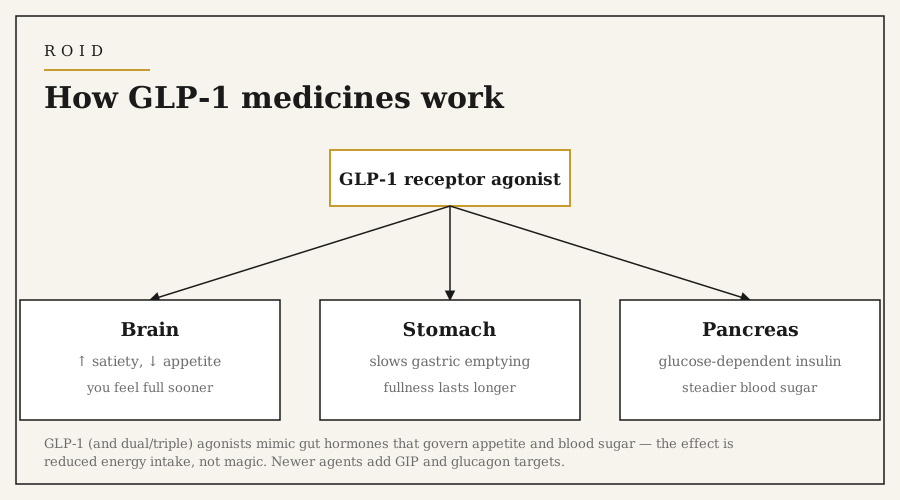
How GLP-1 drugs actually work (and what that implies)
There is a persistent myth that these drugs "melt fat" or "boost metabolism." They do not. Their mechanism is almost entirely about energy intake, and understanding that changes how you should use them.
They act in three main places. In the brain, they amplify satiety signaling — you feel full sooner and stay full longer, and the constant background hum of food cravings (what users call "food noise") quiets down. In the stomach, they slow gastric emptying, so a normal-sized meal physically sits longer and you have less appetite for the next one. In the pancreas, they enhance insulin release in a glucose-dependent way, which is why they began life as type 2 diabetes drugs and only later proved to be powerful for weight.
The practical implication is blunt: the entire effect runs through eating less. That is why outcomes are best when the drug is paired with adequate protein and resistance training, and why the weight tends to return when the drug stops and appetite rebounds. A GLP-1 is a powerful appetite tool, not a metabolic cheat code — and tools work best in a system.
The efficacy ladder: semaglutide, tirzepatide, retatrutide
The most important pattern in this field is that efficacy climbs as drugs hit more receptors. First-generation drugs target GLP-1 alone. Tirzepatide adds a second target, GIP. The experimental front-runner, retatrutide, adds a third, glucagon. More targets, more weight lost — at least so far.
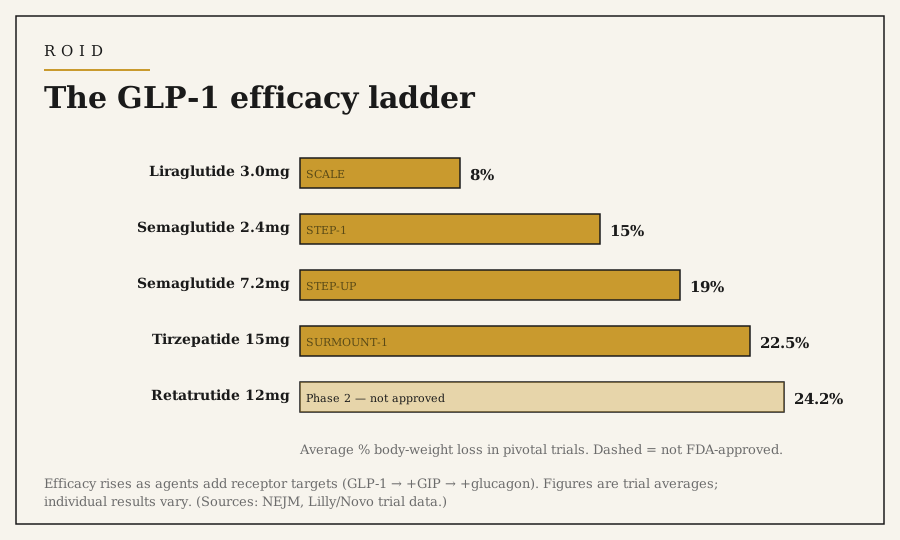
| Drug | Brand | Targets | Avg. weight loss | Status (2026) | Key trial |
|---|---|---|---|---|---|
| Liraglutide | Saxenda | GLP-1 | ~8% | Approved | SCALE |
| Semaglutide 2.4mg | Wegovy | GLP-1 | ~15% | Approved | STEP-1 |
| Semaglutide 7.2mg | Wegovy HD | GLP-1 | ~19% | Approved/expanding | STEP-UP |
| Tirzepatide 15mg | Zepbound | GLP-1 + GIP | ~22.5% | Approved | SURMOUNT-1 |
| Retatrutide 12mg | — | GLP-1 + GIP + glucagon | ~24–29% | Not approved (Ph. 3) | TRIUMPH |
A few numbers worth internalizing. In SURMOUNT-1, tirzepatide at the top dose produced 22.5% average body-weight loss at 72 weeks, and more than a third of participants lost a quarter of their body weight — territory previously reserved for bariatric surgery. Semaglutide's SELECT trial went further than the scale: it showed a 20% reduction in major cardiovascular events, making it the first obesity medicine to prove it prevents heart attacks and strokes, not just shrinks waistlines. That cardiovascular result is arguably more important than any weight figure, because it reframes these drugs as cardiometabolic medicine rather than cosmetic.
Retatrutide is the one to watch. Phase 2 data showed roughly 24% loss at 48 weeks, climbing toward 29% at higher doses and longer durations — but it is not FDA-approved, with Phase 3 results expected through 2026. Any retatrutide sold today is, by definition, not a legitimate pharmaceutical product. Hold that thought.
The catch nobody markets: you lose muscle too
Here is the part the telehealth ads skip. When you lose weight rapidly through appetite suppression, a meaningful fraction of what comes off is lean mass — muscle and organ tissue — not just fat. Across the obesity-medicine literature, lean tissue can account for roughly a quarter to 40% of total weight lost when no countermeasures are taken.
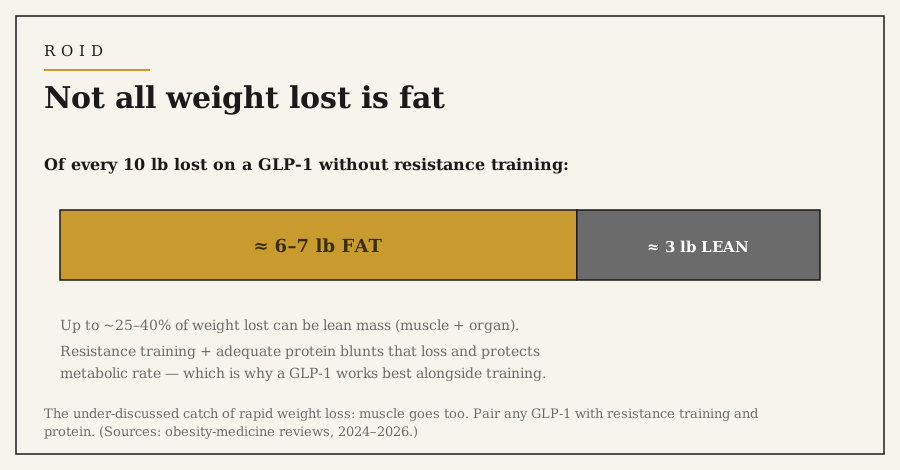
This matters for three reasons. Muscle is metabolically active, so losing it lowers the calories you burn at rest, which makes long-term maintenance harder. Muscle is also the substrate of strength, function, and healthy aging — losing it in your 40s or 50s is not a cosmetic footnote. And muscle loss is largely preventable: the two countermeasures with the strongest evidence are eating enough protein (commonly cited targets land near 1.6 g per kg of body weight per day) and doing resistance training two to four times a week.
This is the honest fitness angle, and it is why a weight-loss drug and a training app are complements, not competitors. If you are using a GLP-1, the smartest thing you can do is treat it as a window to rebuild habits: lift, hit your protein, and track the trend. Logging meals against a target is far easier when your appetite is suppressed and portions are smaller — our free calorie tracker and the broader free AI fitness app exist precisely to keep protein and training on track while the drug handles appetite. The drug controls the input; training protects what you do not want to lose. For the app side of that system — training, protein, and shot tracking, compared honestly — see our best GLP-1 fitness apps roundup.
Side effects and who should be careful
The dominant side effects are gastrointestinal: nausea, constipation, diarrhea, and occasional vomiting, usually worst during dose escalation and easing over time. Most people tolerate slow titration; a minority cannot. Rarer but serious concerns include pancreatitis, gallbladder problems (rapid weight loss raises gallstone risk independent of the drug), and a theoretical thyroid-tumor signal seen in rodents that carries a boxed warning, which is why a personal or family history of medullary thyroid carcinoma is a contraindication. These drugs are also not for use in pregnancy.
None of this is a reason to avoid them — for many people with obesity or type 2 diabetes the benefit is life-changing and now includes proven cardiovascular protection. It is a reason these are prescription medicines that require clinical supervision, with lab work and a real medical history behind them.
The gray market: compounded and "research" GLP-1
This is where readers get hurt. Because branded GLP-1s have been expensive and frequently in shortage, an enormous secondary market emerged: compounded semaglutide and tirzepatide from compounding pharmacies, and outright "research-use-only" vials sold online with a wink. A study of the direct-to-consumer compounded market documented just how large and loosely regulated this channel has become.
The distinction matters enormously. Legitimately compounded medicine, made by a licensed pharmacy for an individual patient, is a real and sometimes appropriate pathway. But "research-use-only" peptides ordered from a website are a different animal: there is no FDA oversight of their manufacturing, which means real-world variability in purity, dose, and even whether the vial contains what the label claims. Dosing errors from reconstituting your own vials have sent people to emergency rooms. The 2026 regulatory churn — covered in detail in what are peptides — has only added confusion, because reclassification changes what pharmacies may compound; it does not turn a gray-market vial into an approved, tested drug.
The rule of thumb is simple: a peptide's evidence and a specific product's safety are two different questions. Semaglutide has superb evidence. A random vial labeled "semaglutide" from an unverified seller has none of that evidence transferred to it.
What about the other "weight-loss peptides"?
Search far enough and you will find peptides marketed for fat loss that are not GLP-1 drugs at all — fragments and analogs with names that sound scientific. The honest summary is that their human evidence ranges from thin to nonexistent, and several that once generated hype failed in trials or never ran proper ones. When a product promises GLP-1-like results from something that is not a GLP-1, the burden of proof is on the seller, and that proof is almost always missing. The evidence pyramid is the tool to use here: ask which tier a claim comes from before you spend a dollar.
Cost, access, and the "forever" question
Two practical realities shape real-world use. First, cost: branded GLP-1s have run several hundred dollars a month without insurance, which is what drove people to the gray market in the first place; pricing and coverage are shifting quickly, so this is worth checking at the time you read this. Second, and more important, the durability question. Because the mechanism is appetite suppression, stopping the drug typically brings appetite — and often much of the weight — back. Trials that withdrew the drug saw substantial regain. That is not a moral failing of the patient; it is pharmacology. It reframes these as potentially long-term medicines for a chronic condition, the way blood-pressure drugs are, and it is the strongest argument for using the weight-loss window to build training and nutrition habits that persist whether or not the drug does.
The honest bottom line
GLP-1 peptides are the real thing: the most effective and best-evidenced weight-loss drugs ever developed, now with proven cardiovascular benefit. They are also prescription medicines with real side effects, a muscle-loss catch that demands resistance training and protein, a durability problem that demands habit change, and a dangerous gray market orbiting them. If you are considering one, do it through a clinician, not a checkout page — and treat it as the appetite half of a system whose other half is training and nutrition you actually control. For that half, start with the free calorie tracker, build the routine in the free AI fitness app, and read the companion guides on peptides for muscle and recovery and what peptides are.
Sources
Frequently asked questions
Which peptide is best for weight loss?
By trial evidence, the ranking is retatrutide (≈24–29% average loss, but not yet FDA-approved), then tirzepatide/Zepbound (≈22.5%), then semaglutide/Wegovy (≈15%, and the only one with proven cardiovascular benefit). 'Best' depends on what is approved, what your clinician recommends, and your health history — not just the headline percentage.
Do you gain the weight back after stopping peptides?
Usually a substantial amount, yes. GLP-1 drugs work by suppressing appetite, so when you stop, appetite and often much of the weight return — trials that withdrew the drug showed significant regain. This is why they are increasingly viewed as long-term medicines for a chronic condition, and why using the weight-loss window to build durable training and nutrition habits matters so much.
Are compounded or 'research-use-only' weight-loss peptides safe?
They carry real risk. Research-use-only vials have no FDA manufacturing oversight, so purity, dose, and even identity can vary, and self-reconstitution dosing errors have caused harm. Legitimately compounded medicine from a licensed pharmacy for an individual patient is a different, more controlled pathway. The drug's strong evidence does not transfer to an unverified product.
Can you build muscle while on a GLP-1?
You can protect and even build muscle, but you have to work at it, because rapid weight loss strips lean mass as well as fat (up to ~25–40% of the total without countermeasures). The evidence-backed countermeasures are eating enough protein (often cited near 1.6 g/kg/day) and resistance training 2–4 times a week. A GLP-1 handles appetite; training and protein protect muscle.
Are weight-loss peptides legal?
FDA-approved GLP-1 drugs (Wegovy, Zepbound, Ozempic, Mounjaro) are legal with a prescription. Retatrutide is not approved, so any sold now is not a legitimate pharmaceutical. 'Research-use-only' peptides are not legal to sell for human consumption. Note also that GLP-1s and many peptides are banned in elite sport under the WADA code — covered in our muscle and recovery guide.