All Three Host Nations Are Thriving: Inside the USA, Canada, and Mexico's World Cup Campaigns
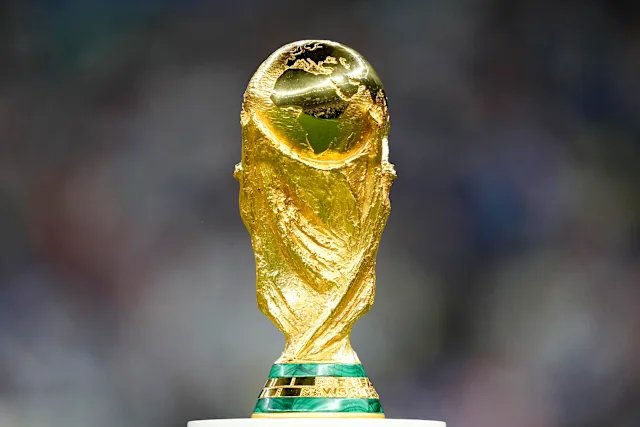
The 2026 FIFA World Cup is the first tournament in nearly a century to be co-hosted by three nations. When FIFA awarded the hosting rights to the United Bid — a joint proposal from the United States, Canada, and Mexico — the announcement triggered both excitement and immediate questions about whether three nations in three different football cultures, at three different stages of development as footballing powers, could each contribute meaningfully to the tournament while also competing seriously within it. The concern was not logistical; it was competitive. What if one or more of the hosts were eliminated from the group stage by a superior visiting team, leaving empty emotions and half-filled home stadiums for the knockout rounds?
Ten days in, that concern has been comprehensively answered. All three host nations are alive in their groups, and all three have produced the kind of results that transform a football tournament into a cultural event. The United States have won Group D with a perfect six points. Mexico have matched that achievement in Group A, qualifying for the knockout rounds from their second game. And Canada — in their first men's World Cup since 1986, and the first to genuinely matter to a nation now watching breathlessly — have won their first ever World Cup game in the most dramatic and emphatic fashion possible: a 6-0 demolition of Qatar that included a hat-trick from Jonathan David and wrote itself into the history of Canadian sport before half-time had even arrived.
This is the story of how the 2026 World Cup's three home teams have turned their group stages into something extraordinary.
Canada: A Nation's First Win, and the Night Everything Changed
For Canadian football supporters, the date June 18, 2026, will carry the weight that landmark dates carry in every sport: the moment before and the moment after. Canada had been to one previous men's World Cup — 1986, in Mexico — and had left without scoring a single goal across three group-stage defeats. Thirty-six years of absence followed, years during which Canadian football built an academy infrastructure, produced a generation of professional players, and watched the women's national team win an Olympic gold medal in 2021. But the men's World Cup, the prize that defines the sport globally, had eluded them.
On the evening of June 18, at BC Place in Vancouver, in front of a sold-out crowd that included families who had waited their entire lives for this moment, Canada played Qatar. It was their second group game — after a 1-1 draw with Switzerland in their opener — and the need to win was clear. What followed was not merely a win. It was an announcement.
Cyle Larin opened the scoring in the early minutes, his physical presence and close-range finishing quality establishing the tone for a Canadian performance that was direct, energetic, and relentless. Jonathan David — already known in Europe as one of the most clinical forwards in club football — added the second, and then the third, and then, after Qatar had been reduced to nine men by two red cards (defender Homam al Amin and midfielder Assim Madibo both dismissed in a catastrophic second-half collapse), the fourth in a period of playing that had the stadium in a state of collective disbelief. David's hat-trick — completed with three goals of different types, each demonstrating a different aspect of his quality — was the centrepiece of a result that finished 6-0 and that Sky Sports described as Canada's first World Cup win, made in the biggest fashion the moment could have demanded.
Per the Opta Analyst's statistical breakdown, the 6-0 victory was the biggest winning margin by a CONCACAF team in men's World Cup history — a record that Canada can claim as their own in the sport's permanent ledger. Qatar, to be fair, were a team in visible disarray from the moment the red cards arrived: down to nine men, with their tactical structure destroyed and their goalkeeper under relentless pressure, the final scoreline was a product of circumstance as much as of pure quality differential. But the manner in which Canada performed even before the dismissals — the organisation, the pressing, the intelligent use of width, and the clinical finishing — suggested a team that would have won regardless of the red cards, even if the margin might have been smaller.
The shadow across the celebration was a serious one. Ismael Koné, one of Canada's most energetic and technically gifted midfielders, was stretchered off in the second half with what appeared to be a significant leg injury. Manager Jesse Marsch confirmed afterwards that Koné would need assessment before his availability could be determined. The loss of Koné is meaningful: his ability to win the ball, carry it through the middle third, and create the space that Canadian forwards need to function is a quality the squad would feel acutely if it were absent in the knockouts. The coming days will determine the extent of the damage.
Canada's Group B Standings (after 2 matches):
| Team | P | W | D | L | GF | GA | GD | Pts |
|---|---|---|---|---|---|---|---|---|
| Canada | 2 | 1 | 1 | 0 | 7 | 1 | +6 | 4 |
| Switzerland | 2 | 1 | 1 | 0 | 5 | 2 | +3 | 4 |
| Bosnia | 2 | 0 | 1 | 1 | 2 | 5 | -3 | 1 |
| Qatar | 2 | 0 | 1 | 1 | 1 | 7 | -6 | 1 |
Canada sit level with Switzerland on four points, with goal difference separating them at the top. The final group game will determine which side tops Group B and which side advances as runners-up — and, critically, what kind of draw they receive for the Round of 32. For a nation experiencing its first World Cup campaign in forty years, the emotional arithmetic is straightforward: advance, and the tournament becomes what Canadian football has been building toward. Fail, and the legacy of the 6-0 win must sustain itself through the long gap to the next tournament.
Jonathan David: Canada's Moment, the World's New Name
The hat-trick against Qatar deserves its own section, because it was not merely a performance — it was an introduction. Jonathan David, 26, has spent the last four years being one of European club football's most reliably excellent strikers while somehow remaining underappreciated outside the circles of people who watch Ligue 1 carefully. His goal-scoring rate has been extraordinary; his ability to perform in significant moments has been consistent; his technical quality — first touch, movement, finishing with both feet — is the signature of a player operating at the top of his craft.
The three goals against Qatar showed all of it. The first was a product of movement: David read the angle of Cyle Larin's run, positioned himself at the far post before the cross arrived, and converted with a touch that was so composed it looked rehearsed. The second was a direct run in behind the defensive line — the kind of goal that requires precise timing of the forward's movement and absolute certainty in the finishing — that Qatar's remaining ten defenders were powerless to prevent. The third, which completed the hat-trick, was the most technically accomplished: a first-time finish off a cutback that required the certainty of touch that separates elite finishers from good ones. Three goals, three different types of quality.
As CBC reported in their live coverage of the match, the stadium reacted to the hat-trick ball as Canadian crowds have rarely reacted to anything in football before. The noise at BC Place was described by multiple sources as among the loudest crowd moments in Canadian sporting history. For a country that has produced great moments in hockey and lacrosse and basketball — where Raptors' championship nights echo down office hallways for years — to have football produce a moment of this scale and emotional weight is something different. It is a sign of how far the sport has come in Canada, and of how much this World Cup means.
USA: Six Points, a System That Works, and a Star in Waiting
The United States' campaign has been covered in detail in our separate article, but its significance within the host-nation narrative deserves emphasis here. The USMNT won Group D with six points from six, beating Paraguay 4-1 and Australia 2-0. They did so despite losing their captain and most experienced player — Christian Pulisic — to a calf injury ahead of the Australia game. And they did so while simultaneously introducing to the world a centre-forward, Folarin Balogun, who has responded to the biggest stage of his career with the composure and quality of a player who was always going to belong there.
The broader significance of the USA's campaign for the host-nation narrative is this: American football supporters arriving at these games — and the crowds at USA matches have been extraordinary in scale and volume — are experiencing the sport in a way they have never experienced it before. At previous World Cups held in the United States (1994), the scale of the tournament's success was felt primarily by the organisers and the visiting supporters from other countries. In 2026, the home team is winning, and the cultural effect is different. The sport is not merely being performed for an American audience; it is being performed by an American team that is performing well. That distinction is everything.
Alex Freeman's second goal against Australia — calm, precise, taken with the certainty of someone who had dreamed this moment since childhood — was the kind of goal that creates footballers. In the years after this tournament, some number of young Americans who watched that goal will decide to pursue professional football with a conviction they might not otherwise have found. The compounding effect of host nation success on the development of the sport in that country is one of football's most reliable historical patterns. In 1994, the USA's run to the knockout rounds and the attendant excitement of the tournament created the conditions for MLS to launch and for youth football to expand dramatically. In 2026, with the country's football infrastructure already far more developed than it was thirty years ago, the effect could be even more profound.
Mexico: Clinched, Composed, and Carrying the Weight of History
Mexico's tournament has a different emotional texture from those of its two co-hosts. Where Canada's campaign is the story of a nation discovering a version of itself it never fully saw before, and the USA's is the story of a football culture announcing its maturity, Mexico's 2026 World Cup is the story of a footballing power carrying the weight of decades of heartbreak into its best possible setting and attempting, at last, to transcend it.
The heartbreak in question is specific and painful: Mexico's notorious quinto partido — fifth game — curse. Since 1986, Mexico have reached the knockout rounds of every World Cup for which they qualified, only to fall in the Round of 16 (now the Round of 32 in the expanded format) every single time. The quarter-final has always been one game too far. The 2026 co-hosting offered Mexico not merely a home advantage but a generational opportunity: a chance to play knockout football in front of their own fans, in their own country, and break a hex that has haunted Mexican football for four decades.
Their group-stage campaign has been exactly what was required. A 2-0 win over South Africa in their tournament opener on June 11 demonstrated the efficiency and tactical control that manager Jaime Lozano has cultivated over two years: the press was sharp, the finishing clinical, and the defensive shape compact enough to frustrate a South African side that showed ambition without the quality to match it. The second game, on June 18, brought a 1-0 win over South Korea — a more difficult opponent, tactically organised and physically competitive — that clinched Group A for the hosts with a game still to play.
Six points from two games. Group A won. Qualification confirmed.
Mexico's Group A Standings (after 2 matches):
| Team | P | W | D | L | GF | GA | GD | Pts |
|---|---|---|---|---|---|---|---|---|
| Mexico | 2 | 2 | 0 | 0 | 3 | 0 | +3 | 6 |
| South Korea | 2 | 1 | 0 | 1 | 2 | 3 | -1 | 3 |
| Czechia | 2 | 0 | 1 | 1 | 2 | 3 | -1 | 1 |
| South Africa | 2 | 0 | 1 | 1 | 1 | 2 | -1 | 1 |
Mexico's campaign has been functional rather than spectacular — six points and a clean defensive sheet is the ideal group-stage return, but the manner of the goals and the overall performance level has prompted some domestic debate about whether Lozano's side has found its best form yet. The counterargument, voiced by those who have studied tournament football closely, is that the group stage in this expanded 48-team format is about accumulating points while minimising risk — and Mexico, who have more experience at World Cup group stages than either of their co-hosts, understand that calculus better than almost anyone.
For the knockout rounds, Mexico's question is the same one it has always been: can they win when it matters, in a single-elimination format, against opponents who have prepared specifically to deny them? Their domestic crowd — the Azteca in Mexico City, the Estadio Akron in Guadalajara, the iconic venues that will host the later rounds — will provide the kind of noise and energy that genuinely affects football matches. But it is players, not atmospheres, who win knockout games, and Mexico will need their best performers to find the level that the history books have always denied them.
The Atmosphere: What Hosting Three Nations Looks and Feels Like
Beyond the results, the 2026 World Cup has already produced scenes of collective celebration that could not have been choreographed by the most ambitious organising committee. At BC Place in Vancouver, the Canadian national anthem produced tears in the stands before kick-off. At MetLife Stadium in New Jersey and AT&T Stadium in Dallas, the roar when the United States scored was indistinguishable from the noise of the Super Bowls and college football games those venues were built for. In Mexico City and Guadalajara, the colours and noise of an El Tri crowd doing what El Tri crowds have done for generations — conjuring an atmosphere that visiting teams have described, for decades, as the most intimidating they have experienced — were amplified by the additional weight of a home World Cup.
The logistical challenge of running a 48-team tournament across three countries covering thousands of kilometers was enormous, and FIFA's preparation attracted its share of pre-tournament criticism. But the tournament itself — the football, the crowds, the atmosphere, and the stories — has, through ten days, validated the ambition of the host bid. Three nations, three cultures, three football stories, all converging on the same summer with the same dream: to be the team still standing when the final whistle blows on July 19.
What Comes Next for Each Host
Canada must navigate their final group game against either Bosnia or Qatar — whichever finishes the group — knowing that a win tops Group B and potentially offers a more favourable knockout draw. Koné's fitness is the central concern; his availability for the Round of 32 could determine whether Canada can sustain their momentum through a knockout game against a higher-ranked opponent.
USA face Turkey in the Round of 32 on June 25, with Pulisic's fitness the headline question. The system has proven it can function without him — the Australia game confirmed that definitively — but his presence in the knockout round would make the USMNT a substantially more dangerous attacking proposition. Pochettino has six days to make the call.
Mexico play out their final group game with qualification already secured — an opportunity to give fringe players their World Cup experience while resting the key performers for what Lozano hopes will be a long knockout run. The quinto partido looms at the Round of 32, an opponent and a date still to be determined. Forty years of history will bear down on that ninety minutes with a pressure no other footballing situation can quite replicate.
For all three, the group stage has delivered everything their supporters could have wanted. The tournament's second act — the knockout rounds, where every mistake is the last one and every win carries the team forward to new territory — begins next week. All three hosts will be in it.
The Legacy Being Built
Beyond the results and the scorelines, the 2026 World Cup is doing something that football tournaments at their best always do: it is building a legacy that extends past the weeks of competition. In Canada, the 6-0 win over Qatar has already generated the kind of media saturation and youth programme interest that the Canadian Soccer Association has spent a decade trying to manufacture artificially. When Jonathan David completed his hat-trick, something shifted in the relationship between Canada and football — a sport that has always competed for attention in a country with deeply ingrained alternative sporting loyalties. That shift does not disappear when the tournament ends. It compounds.
In the United States, the conversation is beginning to change in ways that are difficult to quantify but easy to feel. The young players coming through the US youth development system — the generation who grew up watching Pulisic play in the Champions League and are now watching Freeman and Balogun score World Cup goals — are making decisions about their athletic futures in real time. Some of them are choosing football. The World Cup, hosted at home, producing wins for a team that plays recognisably modern, high-quality football, is the greatest recruitment tool American soccer has ever had.
In Mexico, the weight of history is heavy enough that winning feels different. The quinto partido curse is not simply a sports statistic; it is a national conversation that surfaces every four years with the inevitability of tax season and the emotional intensity of something more profound. The 2026 co-hosting is Mexico's best opportunity in forty years to break that conversation open and replace it with something new. Whether Jaime Lozano's side can do what no Mexico team has managed since 1986 — win in the Round of 16 and reach a quarter-final — will determine the tournament's legacy in a country that has put its full emotional investment into the next few weeks.
Three nations. Three stories. One summer. The tournament has barely begun.
The Training Lens: Training in Heat and Across Time Zones
A World Cup spread across the United States, Canada, and Mexico in summer is a physiology challenge: searing heat in some host cities, altitude in others, and players crossing multiple time zones between matches. Heat acclimatization takes one to two weeks of gradual exposure, and hydration plus electrolyte balance becomes a genuine performance variable, not an afterthought.
Recreational athletes hit the same wall every summer. Easing into hot-weather training and dialing in hydration and fueling makes the difference — and keeping your nutrition logging honest helps you actually meet those needs instead of guessing at them in the heat.