No Pulisic, No Problem: USMNT Wins Group D and Punches Into the Knockouts
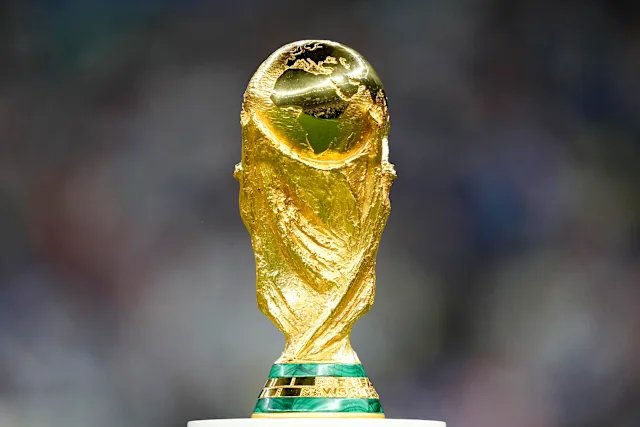
There is a version of the 2026 FIFA World Cup that unfolds in ways its host nation's supporters would not have dared dream. When the United States Men's National Team entered the tournament, the expectations were elevated but cautious: a home crowd, a new generation of players, and a manager in Gregg Berhalter's successor — now Mauricio Pochettino — who had spent two years building a system designed to compete with the world's best. The hope was for a deep run. The question was whether the squad had the depth to survive the injuries, the fatigue, the pressure, and the intensity of a tournament played across three countries in the heat of a North American summer.
The answer, through two group-stage matches and six points from six, is an emphatic yes. More significantly, the group stage has already provided the tournament's most instructive subplot about this USMNT generation: when the most famous name in the squad goes down with a calf injury and cannot play, the team does not merely cope — it wins 2-0 with a clean sheet, confirming that the depth Pochettino has built over two years of patient construction is real, tested, and genuinely formidable.
The United States have won Group D. They are in the knockout rounds. And they have done it without their captain.
Match One: USA 4-1 Paraguay
The tournament opener for the USMNT came on June 12 at a sold-out stadium pulsing with the particular electricity of a home crowd that understood exactly what was at stake — not just a football match, but a statement of intent from a country still building its relationship with the sport it was hosting. Paraguay, a well-organised South American side with the direct physical style and tactical discipline that makes them difficult to break down, were the first test. They were overwhelmed.
The United States won 4-1, and the margin understated the control. Christian Pulisic, still fit and ferocious in this first match, was at the heart of everything dangerous — pressing, creating, and carrying the ball through lines with the directness that makes him so difficult to defend against when he is sharp. But what emerged over the ninety minutes was not a story about the captain but about the system around him. Folarin Balogun, the centre-forward, was outstanding: his movement between the lines, his ability to receive with his back to goal and spin his marker, and his finishing under pressure placed him among the players of the opening round of Group D fixtures and established him as one of the tournament's early stars.
Per ESPN's player ratings from the Paraguay match, Balogun and Pulisic were rated joint-highest among the USA starters — a distribution of credit that captured the reality of a team that has identified two players as its primary weapons but has built the system so that neither is essential to the other's success.
The 4-1 victory was the USA's first World Cup group-stage result of this quality in a generation, and it set a tone for the rest of the group that placed the pressure squarely on Australia and Paraguay to chase.
The Pulisic Injury
Between the Paraguay win and the Australia match came the news that dominated the tournament's storylines for five days. Christian Pulisic — the USA's most experienced player, its captain, the man whose performances in 2022 had written some of the defining moments of the USMNT's Qatar campaign — sustained a calf injury in training and was ruled unable to start the Australia game. The severity was initially characterised as a week-to-week situation, with the door left open for a return in the knockout rounds, but his absence for a group-defining second match raised immediate and justified concern.
The response from the camp was calm, as NBC News reported ahead of the match. Pochettino named Ricardo Pepi in Pulisic's position, bringing in a striker with a different profile — more physical, less reliant on dribbling, better in the air — and adjusted the system's wide responsibilities accordingly. The message was clear: the squad was deep enough to absorb the absence. Two hours later, the scoreline confirmed it.
Pulisic's calf injury is, at this stage, the primary concern for the USMNT's knockout ambitions. If he returns for the Round of 32 on June 25, the team that already won a group with six points gets their most creative player back. If the injury keeps him out longer, the depth that won the Australia game without him will be tested further — though the evidence of that game suggests the test is one this squad can pass.
Match Two: USA 2-0 Australia — No Captain, No Problem
The story of the second match against Australia is a story about depth, system, and the collective intelligence of a squad that has been told repeatedly it cannot survive its star player's absence and has responded by surviving comfortably. It is also, specifically, a story about two players who seized the opportunity created by Pulisic's calf.
The first goal, after just eleven minutes, came from an unlikely source: Australian defender Cameron Burgess, who misjudged the flight of a cross from Folarin Balogun and turned the ball into his own net. Own goals of this type — where the credit belongs as much to the quality of the cross as to the error — are a genuine reflection of attacking quality, and Balogun's delivery was precisely the kind of ball that forces central defenders into impossible choices. The goal was Balogun's second involvement in a USA strike across the two group games, confirming his emergence as the genuine forward threat this USMNT generation has been searching for.
The second goal was more straightforwardly spectacular. Alex Freeman — a young wide midfielder who entered the tournament as one of the squad's less celebrated players but has rapidly become a story in his own right — received a deflected shot from Sergiño Dest and, with the composure of someone who has practised this exact scenario ten thousand times in training, finished past the Australian goalkeeper. Per NPR's coverage of the match, Freeman's goal was the quality moment of a disciplined but ultimately comfortable USA performance.
Australia, who had beaten Turkey 2-0 in their opener and arrived in this match with three points and genuine ambitions of group progression, could find no way through a USA defensive structure that was organised, athletic, and well-drilled in the press that Pochettino's system demands. The 2-0 result was the kind of clean-sheet performance that wins tournaments — not because of individual brilliance, but because of collective excellence, every player fulfilling their role, the system functioning as designed.
With Turkey's 0-1 defeat by Paraguay on the same matchday, the United States' group-stage victory was confirmed. Six points from six, no goals conceded, three points ahead of both Australia and Paraguay in second and third. Group D winners. Round of 32 guaranteed.
Group D Final Standings
| Team | P | W | D | L | GF | GA | GD | Pts |
|---|---|---|---|---|---|---|---|---|
| USA | 2 | 2 | 0 | 0 | 6 | 1 | +5 | 6 |
| Australia | 2 | 1 | 0 | 1 | 2 | 2 | 0 | 3 |
| Paraguay | 2 | 1 | 0 | 1 | 2 | 5 | -3 | 3 |
| Turkey | 2 | 0 | 0 | 2 | 0 | 2 | -2 | 0 |
Turkey are eliminated. Australia and Paraguay contest second place heading into the final group game, with both teams still alive for the knockout rounds. The USA, regardless of what happens in their remaining group fixture, will enter the Round of 32 as Group D winners — a status that typically yields a more favourable draw than second place and confirms Pochettino's side as one of the more accomplished group-stage teams in the tournament.
The Emergence of Folarin Balogun
The most significant individual story of the USMNT's group campaign is the emergence of Folarin Balogun as a genuine world-class centre-forward on the evidence of this tournament. Born in New York and raised in England before making the decision to represent the United States internationally, Balogun has spent the last three seasons quietly becoming one of the more effective forwards in European club football. His spell at Reims was remarkable; his subsequent years have confirmed the trajectory.
At the World Cup, the trajectory has met the occasion. Two goals, two outstanding performances, and a consistent ability to play the kind of centre-forward role — receiving, holding, turning, finishing — that a team built for positional play requires from its number nine. His movement has been a particular pleasure: the timing of his runs, the precision of his positioning as crosses are delivered, and the speed with which he reads the intention of the player on the ball and adjusts his starting position accordingly. These are the details of an elite striker, and on this stage, against this opposition, Balogun has displayed them all.
For the USA's knockout run, Balogun's form is not a luxury — it is a necessity. Pulisic's creativity is irreplaceable in a different way, but the goals have to come from somewhere, and Balogun has established himself as the most reliable source. When the two are on the pitch together, the combination of Pulisic's direct running and Balogun's movement in the box creates the kind of two-pronged attacking threat that high-level defensive organisations are required to split their attention to address. That combination is the USA's primary weapon heading into the knockout rounds.
Pochettino's System: What Makes It Work
Mauricio Pochettino arrived at the USMNT job with a philosophy built on two decades of club management at the highest level: intense pressing, positional structure, and an emphasis on the collective over the individual that makes his teams difficult to break down and dangerous in transition. What he has done with this USMNT — which has more individual quality than any previous generation of American footballers — is channel that quality into a system that amplifies it.
The USA's press in the Australia game was among the most impressive aspects of their performance. It begins with Balogun setting the press from the front, closing the Australian goalkeeper's distribution options, and triggers a coordinated compression of the space that forces hurried decisions and turnovers in dangerous areas. Against Australia's relatively direct build-up, the press worked efficiently: multiple times in the first forty-five minutes, the USA won the ball high and converted the recovery into a direct opportunity on goal.
The defensive structure is equally well-organised. Sergiño Dest, operating as the right-sided full-back in a four, has been excellent in both phases: attacking with quality along the right channel when possession allows, and covering the defensive space with the intelligence of someone who understands the positional demands of the modern full-back role. His assist for Freeman's goal — a deflected drive that ended in the net — understated a contribution that was significant throughout the ninety minutes.
The Historical Context: USA at World Cups
The United States' footballing relationship with the World Cup is one of the most interesting in the tournament's history: a country where football competes for cultural space with sports that have decades of institutional priority, which has nevertheless produced extraordinary World Cup moments at increasingly frequent intervals. The 2002 quarterfinal run, which took the USA past Portugal and Mexico before falling to Germany, remains the high-water mark. The 2014 and 2022 rounds of sixteen reached the same destination and stopped at the same wall. The dream has always been the quarterfinal and beyond; the reality has been consistent progress, but always short of the final stages.
This edition of the tournament is different from its predecessors in one critical respect: the United States are hosting it. Home advantage at a World Cup is not merely psychological — the crowd noise, the friendly timezones, the reduced travel — it is logistical, structural, and cultural. American players who grew up watching the national team reach the round of sixteen will play these games in stadiums where the entire noise of the building is behind them, in cities they know, on pitches they have trained on for years. The advantage is real, and it has already manifested in the performance of the group stage: six points, six goals, one conceded, the group won.
The United States has never won the World Cup. In 2026, they have the quality, the system, the home advantage, and the momentum to go further than any previous American generation. Whether they can break through to the final stages — whether Pochettino's system can outlast the world's best defences in knockout football — remains the question. The evidence of the group stage says the experiment is working. The knockout rounds will determine whether it is enough.
What Comes Next: Round of 32 vs Turkey
Turkey's elimination from Group D means the United States will face them in the Round of 32 on June 25. This is, on the evidence of the group stage, a favourable draw: Turkey have lost both their group matches, scored zero goals, and showed little evidence in those games that they can compete with a USA side that has the tactical structure, individual quality, and momentum of a team that has peaked at the right moment.
That said, knockout football has its own mathematics, and a Turkish side with nothing to lose is not the same proposition as a Turkish side managing a group-stage campaign. Pochettino will prepare his players for a match that demands even more defensively than the group stage offered — because knockout football compresses errors and magnifies them, and a single mistake in a nil-nil game can end a tournament.
The primary selection question for Pochettino heading into June 25 is Pulisic's fitness. If the calf responds to treatment across the next six days and the captain is available — even off the bench, even for sixty minutes — the USMNT gain a dimension of creativity and directness that no other player in the squad can fully replicate. If he is not fit, Pepi remains the replacement and the system continues to function without him, as the Australia game proved. Either way, the USA enter the knockout rounds with six points, a clean sheet, a winning system, and an emerging striker who has taken the tournament by the collar. The 2026 World Cup dream is intact.
The Broader Picture: American Soccer in 2026
To appreciate what this group-stage campaign represents, it helps to zoom out from the tournament results to the broader arc of American soccer. A generation of players who grew up watching Landon Donovan and Clint Dempsey — who decided to become professional footballers because they saw those men compete and believed it was possible — are now the players that the generation after them is watching. The academies and development systems that barely existed thirty years ago have produced Pulisic, Balogun, Dest, and Freeman. The Major League Soccer landscape, which was once dismissed as a retirement league and is now a serious developmental environment that clubs around the world monitor carefully, has contributed to the base that makes this squad possible.
Hosting the World Cup was supposed to be the moment American soccer announced its arrival at the global summit. Six points from the group stage, without the captain, is the announcement. What follows — in the knockout rounds, in the Round of 32, and potentially beyond — is the conversation. America is watching. And for the first time in the country's footballing history, the world is watching America back.
The Fitness Dimension: Performance Under Tournament Conditions
One of the quieter stories of the USMNT's group campaign is how well the squad has managed the physical demands of a World Cup played across three countries in June heat. The USA's matches have been played in Kansas City, Dallas, and New York — a broad geographic spread that in previous tournaments would have meant extended travel, disrupted sleep, and the kind of fatigue that accumulates across the first two weeks of a tournament and expresses itself in the third.
Pochettino's staff have been meticulous about recovery. The team's sleep and nutrition protocols, developed in partnership with the federation's sports science staff, reflect the best available evidence on what elite athletes need between high-intensity matches to perform at their peak in the next one. The visible result of that care is a squad that appears, through two matches, to be improving rather than declining as the tournament progresses. The Australia performance — more organised, more composed, and more defensively secure than the Paraguay match — suggested a team that is building momentum rather than managing fatigue.
Christian Pulisic's calf injury is a reminder that no preparation programme eliminates the physical risk of elite football played in tournament conditions. But the USA's response to his absence — not a collapse, not a reorganisation born of panic, but a calm continuation of the same system with a different name in the number ten role — speaks to the depth of Pochettino's preparation and the collective intelligence of a squad that has been drilled to understand not just their own role but the role of the player next to them. That understanding is what allows a system to function when one of its most important components is absent. And in the knockout rounds, where every match is a potential last game, that depth of understanding may be the most important variable of all.
The Training Lens: Peaking for a Tournament the Way a National Team Does
A side that arrives at a World Cup in form is the product of periodization — structuring months of training so peak fitness lands on the dates that matter, rather than burning out in the build-up. It's a deliberate rhythm of loading and recovery, increasingly guided by performance data rather than feel alone.
The same framework works for any goal with a date on it — a race, a season, a test. AI-powered training brings that periodized structure to everyday athletes, sequencing your work so you're sharpest when you need to be instead of randomly fit.