World Cup 2026 Group Standings: The Full Picture After Ten Days
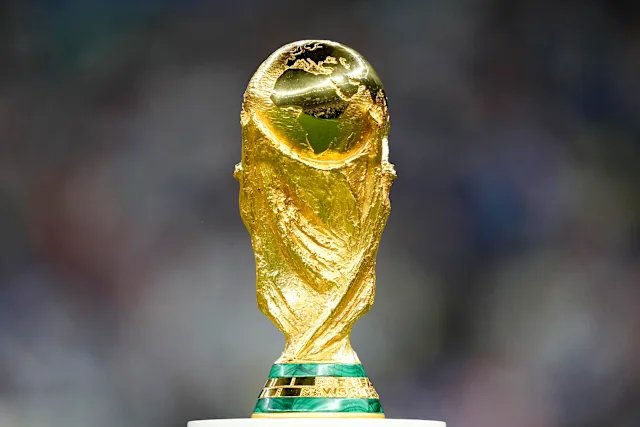
The 2026 FIFA World Cup is ten days and thirty-eight matches old. Two nations have already qualified for the knockout rounds — the United States and Mexico, both on six points, both group winners. Two nations have already been eliminated — Turkey from Group D and Haiti from Group C. And across the other ten groups, the points tables tell the stories of tournaments within the tournament: narrow leads, desperate calculations, and the knowledge that a single result in the final group game can reshape everything.
This is a complete breakdown of the group-stage standings as of June 20, 2026 — the confirmed, confirmed-pending-today's-results picture of where every team stands, who needs what, and which matches in the coming days will determine the shape of the knockout rounds.
Groups A–F: Two Matches Played Each
The first six groups are the furthest advanced. Most teams in these groups have played two of their three group-stage matches, and the contours of who is likely to advance are already visible — though, as always in tournament football, the final group game carries its own unforgiving arithmetic.
Group A
Mexico are through. The co-hosts won their opener 2-0 against South Africa on June 11 and followed it with a 1-0 victory over South Korea on June 18 to claim six points and first place in the group with a game to spare. Manager Jaime Lozano's side has been efficient if not spectacular, their defence impenetrable and their forward play precise enough to generate the goals the group required.
| Team | P | W | D | L | GF | GA | GD | Pts |
|---|---|---|---|---|---|---|---|---|
| Mexico | 2 | 2 | 0 | 0 | 3 | 0 | +3 | 6 |
| South Korea | 2 | 1 | 0 | 1 | 2 | 3 | -1 | 3 |
| Czechia | 2 | 0 | 1 | 1 | 2 | 3 | -1 | 1 |
| South Africa | 2 | 0 | 1 | 1 | 1 | 2 | -1 | 1 |
With Mexico already through, South Korea lead the race for second place on three points, but Czechia and South Africa — who drew 1-1 with each other on June 18 — remain in contention. The final group game will see South Korea play one of those two sides and likely determine second place. South Korea's superior goal difference gives them an advantage, but in the compressed mathematics of the group stage, a single result can close any gap.
Group B
Canada and Switzerland are the joint leaders, both on four points, separated by goal difference after opposite opening matches: Canada drew with Bosnia and won 6-0 against Qatar; Switzerland drew with Qatar and hammered Bosnia 4-1. Both sides have shown their ceiling — and for Canada, that ceiling is very high — but neither has fully convinced across two games that their best performance is sustainable against elite opposition.
| Team | P | W | D | L | GF | GA | GD | Pts |
|---|---|---|---|---|---|---|---|---|
| Canada | 2 | 1 | 1 | 0 | 7 | 1 | +6 | 4 |
| Switzerland | 2 | 1 | 1 | 0 | 5 | 2 | +3 | 4 |
| Bosnia & Herzegovina | 2 | 0 | 1 | 1 | 2 | 5 | -3 | 1 |
| Qatar | 2 | 0 | 1 | 1 | 1 | 7 | -6 | 1 |
The final group game between Canada and Switzerland will determine group placement and, potentially, the knockout draw. Canada's Jonathan David hat-trick against Qatar was one of the tournament's signature moments; Switzerland's 4-1 demolition of Bosnia demonstrated their own attacking quality. This final group fixture is, on current evidence, a genuinely competitive game between two sides who believe they can go deep in the tournament.
The storyline that shadows Canada going into that game is Ismael Koné's injury — the midfielder was stretchered off against Qatar with a serious leg problem, and his availability for the Switzerland fixture and the knockout rounds is uncertain. Switzerland will see Canada's weakened midfield as an opportunity, and the tactical battle in that area of the pitch could determine which side tops the group.
Group C
Brazil and Morocco share first place, both on four points, having shared a 1-1 draw in their opening match and then won their second fixtures convincingly: Brazil beat Haiti 3-0 on June 19; Morocco beat Scotland 1-0 on the same day. Haiti are eliminated — the first team officially out of the 2026 World Cup. Scotland's loss to Morocco leaves them in third place, still alive on three points, but with a difficult final game to navigate.
| Team | P | W | D | L | GF | GA | GD | Pts |
|---|---|---|---|---|---|---|---|---|
| Brazil | 2 | 1 | 1 | 0 | 4 | 1 | +3 | 4 |
| Morocco | 2 | 1 | 1 | 0 | 2 | 1 | +1 | 4 |
| Scotland | 2 | 1 | 0 | 1 | 1 | 1 | 0 | 3 |
| Haiti | 2 | 0 | 0 | 2 | 0 | 4 | -4 | 0 |
Group C is one of the tournament's most interesting remaining storylines. Brazil and Morocco will meet in what is effectively a battle for group supremacy in their final match — a direct confrontation between the two sides that drew 1-1 in the opening round and have each demonstrated the defensive solidity and forward quality to trouble any team in the tournament. If Scotland win their game against Haiti (who are eliminated and have no reason to play for a result), Scotland could potentially leapfrog one of the top two on goal difference if the Brazil-Morocco match ends in another draw. The permutations are precise and unlikely, but in tournament football, precisely those permutations have a habit of materialising.
Brazil's Vinicius Junior (2 goals) and Matheus Cunha (2 goals) have been the forward threats; Morocco's Ismael Saibari (2 goals) and the defensive organisation that has characterised their play since 2022 have been the other story. This final group game, whenever it comes, is one of the most anticipated matches of the group stage.
Group D
USA are through, Turkey are out. The Americans won both games — 4-1 Paraguay, 2-0 Australia — without conceding a goal to either of their opponents from open play, and their clean defensive record across two matches is one of the tournament's better defensive statistics. Australia and Paraguay both sit on three points and face each other in the final group game with second place, and a Round of 32 spot, at stake.
| Team | P | W | D | L | GF | GA | GD | Pts |
|---|---|---|---|---|---|---|---|---|
| USA | 2 | 2 | 0 | 0 | 6 | 1 | +5 | 6 |
| Australia | 2 | 1 | 0 | 1 | 2 | 2 | 0 | 3 |
| Paraguay | 2 | 1 | 0 | 1 | 2 | 5 | -3 | 3 |
| Turkey | 2 | 0 | 0 | 2 | 0 | 2 | -2 | 0 |
The Australia-Paraguay match is a straightforward elimination game: the loser is out, the winner advances alongside the USA into the Round of 32. Paraguay, who lost 4-1 to the United States, have a goal difference problem that makes a draw insufficient — they need a win. Australia, who drew against the USA (2-0 loss) while showing more quality in certain phases than the result suggested, will back themselves to advance if they play to their potential. The match carries the compressed drama that makes group finales in expanded tournaments particularly compelling.
Group E
Group E is the tournament's most open after the second round. Germany and Ivory Coast have both played one match each and share three points apiece: Germany won 7-1 against Curaçao on June 14, Ivory Coast won 1-0 against Ecuador on the same day (a late goal from Amad Diallo securing a result that surprised many observers who expected Ecuador to be more competitive). Ecuador and Curaçao are both on zero points. The second matches — Germany vs Ivory Coast, Ecuador vs Curaçao — are being played today, June 20, and will reshape the group significantly.
| Team | P | W | D | L | GF | GA | GD | Pts |
|---|---|---|---|---|---|---|---|---|
| Germany | 1 | 1 | 0 | 0 | 7 | 1 | +6 | 3 |
| Ivory Coast | 1 | 1 | 0 | 0 | 1 | 0 | +1 | 3 |
| Ecuador | 1 | 0 | 0 | 1 | 0 | 1 | -1 | 0 |
| Curaçao | 1 | 0 | 0 | 1 | 1 | 7 | -6 | 0 |
The Germany-Ivory Coast match being played today is one of the group stage's defining fixtures: a potential top-of-the-group direct meeting between two sides that have each shown they can score freely (Germany) and organise defensively (Ivory Coast). The result will separate the two Group E leaders and determine which side enters the final group game with the advantage of a points lead.
Group F
Netherlands and Sweden played today — and the result is the day's headline. The Dutch destroyed Sweden 5-1 in Houston in a performance so authoritative that it immediately redrew the map of who is considered a serious contender to win this tournament. Brian Brobbey scored twice, Cody Gakpo added a double, and Crysencio Summerville wrapped it up in stoppage time. Sweden's Anthony Elanga replied with a consolation in the 59th minute. Netherlands move to four points; Sweden hold three from their opening 5-1 win over Tunisia.
| Team | P | W | D | L | GF | GA | GD | Pts |
|---|---|---|---|---|---|---|---|---|
| Netherlands | 2 | 1 | 1 | 0 | 7 | 3 | +4 | 4 |
| Sweden | 2 | 1 | 0 | 1 | 6 | 6 | 0 | 3 |
| Japan | 1 | 0 | 1 | 0 | 2 | 2 | 0 | 1 |
| Tunisia | 1 | 0 | 0 | 1 | 1 | 5 | -4 | 0 |
Japan and Tunisia play their second group match on June 21. Japan's one point from their draw with the Netherlands is a decent starting position — they are good enough to beat Tunisia — and a win there would leave them on four points and create a tense final day in Group F. Sweden's three points mean they remain in strong contention for second place, but they will need to avoid defeat in the final group game against either Japan or Tunisia to guarantee advancement.
Groups G–L: One Match Played Each
The latter six groups are one round behind — each team has played only one group game, and the picture is correspondingly open. Here is what we know:
Group G
France's 3-1 win over Senegal on June 16 — Kylian Mbappé scoring twice — immediately established them as the group's early favourite. Belgium and Egypt drew 1-1 on June 15. France lead with three points; Belgium and Egypt share one point each; Senegal are bottom with zero.
| Team | P | W | D | L | GF | GA | GD | Pts |
|---|---|---|---|---|---|---|---|---|
| France | 1 | 1 | 0 | 0 | 3 | 1 | +2 | 3 |
| Belgium | 1 | 0 | 1 | 0 | 1 | 1 | 0 | 1 |
| Egypt | 1 | 0 | 1 | 0 | 1 | 1 | 0 | 1 |
| Senegal | 1 | 0 | 0 | 1 | 1 | 3 | -2 | 0 |
France appear likely group winners; the battle for second between Belgium and Egypt is the group's secondary storyline. Belgium, rebuilding after their golden generation has wound down, carry the expectation of a squad that includes several elite club-level performers. Egypt, competing in their first World Cup since 1990, carry the passion of a nation that has waited decades for this moment.
Group H
Austria's 3-1 win over Jordan on June 16 was the group's opening statement — the Austrians looked clinical and well-organised, their Bundesliga spine providing the physical intensity and tactical discipline to dominate a Jordan side who competed but couldn't match the quality. Spain drew 0-0 with Cape Verde on June 15 — a result that already has Spanish media asking questions about Luis de la Fuente's setup.
| Team | P | W | D | L | GF | GA | GD | Pts |
|---|---|---|---|---|---|---|---|---|
| Austria | 1 | 1 | 0 | 0 | 3 | 1 | +2 | 3 |
| Spain | 1 | 0 | 1 | 0 | 0 | 0 | 0 | 1 |
| Cape Verde | 1 | 0 | 1 | 0 | 0 | 0 | 0 | 1 |
| Jordan | 1 | 0 | 0 | 1 | 1 | 3 | -2 | 0 |
Spain's 0-0 draw against Cape Verde is the group's early surprise. The reigning European champions — who won Euro 2024 with a style of football that many called the most elegant seen in a major tournament in twenty years — were held without a goal by a Cabo Verde side who defended with exceptional discipline. Spain's Pedri, Gavi, and Yamal were individually dangerous but collectively unable to find the combination play that defines the best version of this team.
Group I
Group I has produced the group stage's most anticipated collision: Argentina and Norway share the top on three points each after winning their respective first games (Argentina 3-0 Algeria; Norway 4-1 Iraq). The direct match between Lionel Messi's Argentina and Erling Haaland's Norway is one of the tournament's most-anticipated fixtures — a collision of the two joint-Golden Boot leaders, the two tournament favourites, and two of the sport's most compelling individual narratives.
| Team | P | W | D | L | GF | GA | GD | Pts |
|---|---|---|---|---|---|---|---|---|
| Argentina | 1 | 1 | 0 | 0 | 3 | 0 | +3 | 3 |
| Norway | 1 | 1 | 0 | 0 | 4 | 1 | +3 | 3 |
| Algeria | 1 | 0 | 0 | 1 | 0 | 3 | -3 | 0 |
| Iraq | 1 | 0 | 0 | 1 | 1 | 4 | -3 | 0 |
The Argentina-Norway match — Messi vs Haaland on the World Cup stage — is already generating attention that matches any fixture in the tournament's history. It is a game between two players who carry the most individual expectations of anyone at the tournament, two teams who believe they can win the whole thing, and two footballing philosophies — Argentina's experienced, tactically sophisticated collective versus Norway's high-energy pressing and physical directness — that could not be more different in their design.
Group J
England's 4-2 win over Croatia on June 17 was the night that settled several debates at once about Thomas Tuchel's young Three Lions. Harry Kane scored twice (tying Gary Lineker's England World Cup goals record), Jude Bellingham added a second-half goal that put the game beyond reach, and Marcus Rashford wrapped it up with a late finish. The margin was slightly flattering — Croatia scored twice from their first two shots on target, and England's defensive vulnerabilities were visible throughout — but the four-goal output was genuine evidence of an attacking team capable of putting serious numbers on anyone.
| Team | P | W | D | L | GF | GA | GD | Pts |
|---|---|---|---|---|---|---|---|---|
| England | 1 | 1 | 0 | 0 | 4 | 2 | +2 | 3 |
| Colombia | 1 | 1 | 0 | 0 | 3 | 1 | +2 | 3 |
| Croatia | 1 | 0 | 0 | 1 | 2 | 4 | -2 | 0 |
| Panama | 1 | 0 | 0 | 1 | 0 | 1 | -1 | 0 |
Note: Colombia are shown here as Group J based on available results. Standings pending confirmation of final group assignments for all teams.
Group K
Portugal's 1-1 draw with DR Congo on June 17 was the group's first significant story. Cristiano Ronaldo played ninety minutes, missed two clear chances, and left the pitch goalless as the Central African nation — in their first World Cup since 1974 — secured a historic point. Colombia's 3-1 win over Uzbekistan established them as the early group leader alongside Portugal, with Colombia ahead on goal difference.
| Team | P | W | D | L | GF | GA | GD | Pts |
|---|---|---|---|---|---|---|---|---|
| Colombia | 1 | 1 | 0 | 0 | 3 | 1 | +2 | 3 |
| Portugal | 1 | 0 | 1 | 0 | 1 | 1 | 0 | 1 |
| DR Congo | 1 | 0 | 1 | 0 | 1 | 1 | 0 | 1 |
| Uzbekistan | 1 | 0 | 0 | 1 | 1 | 3 | -2 | 0 |
The Portugal-Ronaldo question — whether Roberto Martínez starts him, whether the team functions better with or without him — will be the group's defining tactical story heading into the second round of games. ESPN's analysis after the DR Congo draw noted that Portugal score more goals per game without Ronaldo in the starting lineup, a statistic that the manager has so far declined to act upon. The second group match will test whether he continues to defer to loyalty or to the data.
Group L
Group L opened with two draws: Saudi Arabia 1-1 Uruguay on June 15, Iran 2-2 New Zealand on June 15. The perfectly balanced early standings — all four teams on one point, zero goals between them after goals scored and conceded cancel out — make Group L the most genuinely open group in the tournament after the first round.
| Team | P | W | D | L | GF | GA | GD | Pts |
|---|---|---|---|---|---|---|---|---|
| Saudi Arabia | 1 | 0 | 1 | 0 | 1 | 1 | 0 | 1 |
| Uruguay | 1 | 0 | 1 | 0 | 1 | 1 | 0 | 1 |
| Iran | 1 | 0 | 1 | 0 | 2 | 2 | 0 | 1 |
| New Zealand | 1 | 0 | 1 | 0 | 2 | 2 | 0 | 1 |
Uruguay, the pre-tournament favourite to top this group, will have expected more from their Saudi Arabia draw. Darwin Núñez was available, Rodrigo Bentancur anchoring the midfield — and yet the point was shared with a side ranked significantly lower. Saudi Arabia, who have been developing their football at remarkable pace since their 2022 World Cup win over Lionel Messi's Argentina, showed the disciplined defensive organisation that made that result possible.
The Qualified, the Eliminated, the Contenders
Already qualified for the Round of 32:
-
Mexico (Group A, 6 pts)
-
United States (Group D, 6 pts)
Already eliminated:
-
Turkey (Group D, 0 pts)
-
Haiti (Group C, 0 pts)
On the brink of qualification (need one more win or equivalent):
-
Brazil (Group C, 4 pts)
-
Morocco (Group C, 4 pts)
-
Netherlands (Group F, 4 pts)
-
Canada (Group B, 4 pts)
-
Switzerland (Group B, 4 pts)
In danger (one loss away from elimination):
-
Ecuador (Group E, 0 pts)
-
Curaçao (Group E, 0 pts)
-
Tunisia (Group F, 0 pts)
-
Algeria (Group I, 0 pts)
-
Iraq (Group I, 0 pts)
-
Uzbekistan (Group K, 0 pts)
-
Croatia (Group J, 0 pts)
-
Panama (Group J, 0 pts)
-
Jordan (Group H, 0 pts)
The Key Matches of the Coming Days
The next ten days will resolve every group's standings and determine the full bracket for the knockout rounds. The fixtures most likely to define the tournament's shape:
Germany vs Ivory Coast (June 20): The group E leaders collide. A German win effectively ends the group as a competition; an Ivory Coast win makes the final round genuinely tense. A draw helps neither side.
Argentina vs Norway (tbc): When Messi meets Haaland, the Golden Boot race and the Group I standings will both be reshaped by ninety minutes of football. The world's two most anticipated individual players at this tournament, meeting in a group-stage match that will feel like a final.
Brazil vs Morocco (tbc): The Group C leaders, who drew 1-1 in the opening round, meet again. One side will likely win the group; the other may still advance but with less favorable knockout positioning.
Canada vs Switzerland (tbc): A direct confrontation between the Group B leaders. Jonathan David vs the Swiss defence. Jesse Marsch's system vs Murat Yakin's organisation. And, underneath it all, the weight of Canada's footballing history pressing down on ninety minutes that could send them to the Round of 32 as group winners.
England vs Colombia or Croatia (tbc): England's tournament will truly begin when they face a serious opponent. Croatia, who showed defensive solidity even against England's four goals, remain the most dangerous side the Three Lions might face in the group's final round.
Portugal vs DR Congo or Colombia (tbc): The question of whether Cristiano Ronaldo scores — or gets replaced — will dominate the pre-match coverage and the post-match analysis of whatever Roberto Martínez decides in Portugal's second group game.
The Shape of the Knockout Rounds
The 2026 World Cup format introduces a Round of 32 — the knockout stage now begins with 32 teams rather than 16, meaning an additional match for every side that advances from the group. That extra game is both opportunity and risk: an opportunity to build momentum against lower-ranked opposition, and a risk of exiting before the quarter-finals if complacency or fatigue takes hold.
Based on current group standings, the likely top seeds for the knockout rounds include Mexico, USA, France, Brazil, Netherlands, and Argentina — a collection of teams whose combined quality makes the second half of this tournament as compelling as the first. The darker horses — Morocco, Canada, Austria, England — have earned their places in that conversation through group-stage performances that demonstrated genuine tournament pedigree.
The expanded format was FIFA's most controversial structural decision: forty-eight teams competing in a World Cup for the first time ever, with twelve groups instead of eight and a Round of 32 that did not exist four years ago. The fear was that the group stage would be diluted by a proliferation of weak teams and one-sided matches. The reality — ten days in — is a tournament producing results of sufficient quality and uncertainty that the expanded format appears to be adding storylines, not subtracting them.
The group stage is not over. The standings will change. The qualified list will grow. The eliminated list will grow longer. And somewhere in the results of the next ten days, the bracket that will determine the 2026 World Cup champion will take shape. Check back in.
The Training Lens: Recovering Between Back-to-Back Matches
What the group stage really tests is recovery. Players turn around for another ninety-minute effort every three or four days, and the teams that fade are usually the ones that recover worst — not the ones that train least. Sleep, nutrition timing, and managing total load are what let a body repeat hard efforts without breaking down.
Amateur athletes face a smaller version of the same problem every training week. Tracking recovery rather than guessing at it is the fix: when health tracking shows you're under-recovered, you can adjust before fatigue turns into injury or burnout.