Final Kick Drama: Türkiye 3-2 USMNT in the Match That Wasn't Supposed to Matter
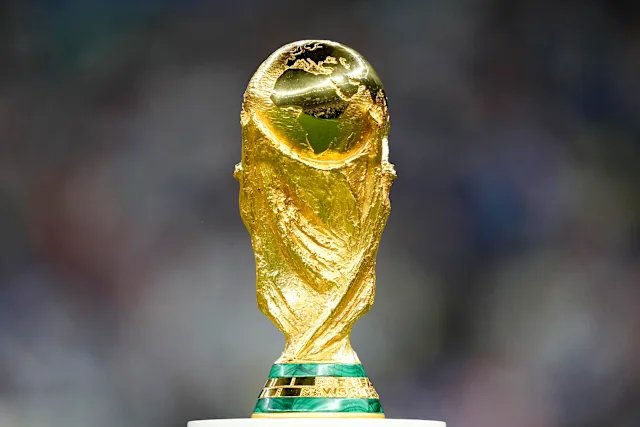
At 98 minutes and some change, with a corner being cleared — or rather, not cleared — Kaan Ayhan stabbed the ball home from close range and Türkiye had their only victory of the 2026 World Cup. The scoreboard said what it needed to say. Türkiye 3-2 United States. And then, almost immediately, it stopped mattering — because the US had already won Group D, already punched their ticket to the Round of 32, and already knew they would be meeting Bosnia and Herzegovina in Santa Clara on July 1.
That context made for one of the strangest atmospheres of a World Cup so far: a match played at full competitive intensity by the team that needed the win (Türkiye, eliminated but unwilling to go quietly) and at approximately 70 percent of squad strength by the team that didn't (the USMNT, whose manager Mauricio Pochettino rotated ten starters and had one eye firmly on the knockout stage). And yet, for ninety-eight-plus dramatic minutes, it was genuinely compelling — a window into Türkiye's real quality, a stress test for the American fringe, and a match that ended with one of the more bizarre injury subplots the tournament has produced.
Here is everything that happened, and what it means.
Pochettino Rotates — Almost Everyone
The selection choices announced before kick-off at SoFi Stadium confirmed what had been expected: Pochettino was using this match to rest his first eleven and give opportunities to players who had been watching from the bench through the Paraguay and Australia wins. Christian Pulisic, the captain and talisman, started on the bench. So did virtually every starter from those two performances.
The eleven that took the field represented a meaningful drop in collective quality, but Pochettino's logic was transparent and sensible. Tournament football at a 48-team World Cup — where the group stage demands three games in roughly ten to twelve days — presents a physiological puzzle that every coaching staff must solve. Play your strongest lineup in all three group games, and you arrive at the knockouts carrying accumulated fatigue in your key players' legs. Rotate intelligently, and you arrive fresher — at the cost of taking a result-on-the-night risk that, with qualification already secured, carries almost no meaningful downside.
Pochettino made the obvious call. What followed was a reminder that the obvious call does not always feel comfortable when it is actually playing out.
Trusty Opens the Scoring — Immediately
For three minutes, it looked like this would be the easy win a rotated lineup sometimes conjures up through sheer relaxation. Auston Trusty, the defender, met Sebastian Berhalter's corner delivery with a powerful close-range left-foot strike to put the US ahead almost before the stadium had settled.
Trusty's goal was a well-taken finish in the kind of set-piece situation coaches drill for weeks in training: early corner delivery, a runner arriving late at the near post, and a clean contact that gave the goalkeeper no chance. For Trusty, it was a vindication of the kind — a player who has spent his USMNT career waiting for the big moments and converting when given one.
Arda Güler Turns the Game
Seven minutes later, the reason Türkiye's tournament was always going to be watchable regardless of results got on the ball and reminded everyone exactly why. Arda Güler, the 21-year-old Real Madrid midfielder, orchestrated a two-man combination with Baris Alper Yilmaz that carved through the American defensive line with almost contemptuous ease. Güler finished the move himself to level at 1-1.
It was a goal that said as much about Güler as anything in his group-stage campaign. Still only 21 and already established as one of the most technically refined playmakers in European club football, Güler has been the one consistent bright spot in a Türkiye side that has won just this single game across the tournament. Where his teammates looked uncertain and disjointed, Güler looked like he belonged on a bigger stage — the kind of player who makes international football feel small when he is on form.
The 10th-minute equalizer set the tone for what was to come. Güler would go on to be credited with a hand in all three Türkiye goals, a one-man performance that should have been the story of the night before the scoreline rendered it a footnote.
Kökçü Puts Türkiye Ahead
The second Turkish goal arrived before the half-hour mark and reflected the growing imbalance between a Türkiye side playing for pride and an American squad that, while competitive, was missing several layers of quality its starting lineup would have provided. Orkun Kökçü converted from close range in the 31st minute, finishing off a move that Güler had started — the midfielder threading a pass through the American midfield that put Kökçü in behind before the US defense could recover.
Half-time came with Türkiye leading 2-1, Güler having already produced the equivalent of two assists before the break, and the American substitutes warming up along the touchline with varying degrees of urgency.
Berhalter Levels — and the Crowd Reawakens
Whatever the Americans had discussed at half-time, it produced an immediate and striking response. Four minutes into the second half, Sebastian Berhalter — the son of former USMNT head coach Gregg Berhalter, now writing his own chapter in the family's football story — unleashed a strike that gave the goalkeeper no chance and leveled the match at 2-2.
It was the kind of goal that briefly transformed the atmosphere, quieted the Turkish supporters, and reopened questions that had seemed settled. With Pulisic now introduced around the hour mark, there was a moment where the USMNT looked like they might actually go on and win a game they were not supposed to need to win. The American spirit, which has made this tournament memorable even before the knockouts begin, was once again visible.
Ayhan's Final Touch — and the Trusty Subplot
The 90th minute arrived with the score level. What happened next was the kind of chaotic, injury-complicated sequence that feels scripted only in retrospect. Auston Trusty — the same player whose third-minute header had given the US the lead — went down injured in the closing stages. The Americans had by that point exhausted their substitution allowance, meaning they finished the match with an effectively impaired defender who could not be replaced.
Güler, still conducting the show, received the ball in stoppage time and executed a nutmeg on Pulisic that summarized his entire evening: a technically perfect moment of individual skill at the worst possible time for the United States. He found space on the right wing and delivered into the box, where the scramble that followed never found a decisive American boot. Kaan Ayhan, a 31-year-old defender not noted for his goal-scoring, poked the ball home with what proved to be one of the last contacts of the match.
Türkiye 3-2. The final whistle followed shortly after, and a stadium that had arrived expecting a muted occasion left with a genuine World Cup memory.
The Full Match Timeline
| Minute | Goal | Scorer | Assist | Score |
|---|---|---|---|---|
| 3' | USA | Auston Trusty | Sebastian Berhalter (corner) | USA 1-0 TUR |
| 10' | TÜR | Arda Güler | B.A. Yilmaz | USA 1-1 TUR |
| 31' | TÜR | Orkun Kökçü | Arda Güler | USA 1-2 TUR |
| 49' | USA | Sebastian Berhalter | — | USA 2-2 TUR |
| 90+8' | TÜR | Kaan Ayhan | Arda Güler | USA 2-3 TUR |
What This Means for July 1
In practice: very little, and a little bit of something. The loss itself is inconsequential — the US finishes first in Group D regardless, and the path to the Round of 32 was never in question. But there are meaningful details to carry forward into the Bosnia and Herzegovina match.
The first is the positive: the majority of Pochettino's first-choice lineup will arrive at Santa Clara having rested an entire group-stage match. Pulisic, who played limited second-half minutes here, is physically fresh. The spine of the team that beat Paraguay and Australia — established, coherent, and now tournament-tested — will come back for the knockout stage effectively as if they sat out a game, because they essentially did.
The second is the note of caution: Trusty's injury. The nature and severity of the knock he picked up in stoppage time was not immediately clear in the post-match, and with only five days until the Bosnia game, the medical staff will have a compressed assessment window. Losing Trusty to injury for the Round of 32 would create a gap in the defensive lineup that Pochettino will need to address.
Bosnia and Herzegovina arrive in Santa Clara as first-time knockout-stage qualifiers at just their second World Cup appearance, having finished third in Group B with four points. Their squad is led by the veteran defender Sead Kolasinac and the remarkable Edin Džeko — who, at 40 years old, remains Bosnia's record cap holder and all-time leading scorer with 73 international goals. There is also a peculiar footnote: Esmir Bajraktarević, one of Bosnia's attacking players, was born in Appleton, Wisconsin, making this an opponent with deep American roots regardless of the badge on the shirt.
Bosnia will arrive as massive underdogs with nothing to lose — a combination that historically produces some of the tournament's most uncomfortable knockout-round moments. The USMNT will be favored, but Pochettino and his players know better than to treat that status as a guarantee.
The Training Lens: What the Science Says About Managing Tournament Load
Beneath the drama of a 3-2 scoreline lies a question that sports scientists and performance coaches grapple with throughout every major tournament: how do you balance competitive intensity across a compressed calendar without arriving in the knockout rounds with a physiologically depleted squad?
The demands of elite soccer across a three-game group stage are severe. Each 90-minute match at this level involves players covering 10–13 kilometers of total distance, with 800–1,200 high-speed running meters (above 19.8 km/h) and 150–250 sprint efforts. Muscular damage accumulates after each match; glycogen stores require 48–72 hours for full replenishment under ideal nutrition and recovery conditions; and the central nervous system carries its own fatigue load that does not always appear on post-match scans but absolutely shows up in decision-making speed and reactive agility.
In a 48-team World Cup, top teams in comfortable groups now have an effective choice that did not exist before the expansion: sacrifice the third game's result in exchange for physiological freshness heading into the knockouts. Modern GPS and wearables-based load monitoring, now standard at the elite level, give coaching staffs the data to make this decision with precision. Pochettino's staff would have had distance-covered totals, sprint counts, heart-rate recovery curves, and subjective fatigue scores for every player after the Australia win — and the rotation decision on Thursday night almost certainly reflected those numbers as much as any tactical analysis.
The deeper insight for anyone training consistently — not just elite tournament players — is the same principle in miniature. Progressive overload is how you improve, but accumulation without recovery is how you regress or get injured. Knowing when to push and when to pull back, and having the data to make that call honestly, is what separates athletes who improve over time from those who plateau or break down. You can track the same recovery signals that elite coaches use — resting heart rate, sleep quality, subjective readiness — inside ROID's health monitoring features, which are built precisely to help you see the load you are carrying before it becomes a problem. The workout accountability tools then help you act on what you find: not as a permission slip to skip sessions, but as a guide to doing the right session at the right intensity on the right day.
Pochettino's rotation on June 25 was not timidity. It was sports science applied at the highest level. The real test of whether the decision was correct comes in Santa Clara on July 1 — when fresh legs and a full-strength lineup will need to back up the calculation with a result.
Sources
- Türkiye 3-2 USA match recap — NBC Sports
- U.S. falls to Turkey 3-2 on goal in final seconds; Americans advance anyway — NBC News
- Turkey defeats the U.S. 3-2 in final World Cup group match — NPR
- Türkiye 3-2 USA — FIFA Match Centre
- USA vs. Bosnia and Herzegovina confirmed for Round of 32 — CBS Sports
- Who is Bosnia and Herzegovina? Cheat sheet for the USMNT's Round of 32 foe — NBC Sports
- World Cup 2026 results, standings and schedule — Yahoo Sports / ESPN