World Cup 2026: The Story So Far — Inside the Biggest Tournament Ever Played
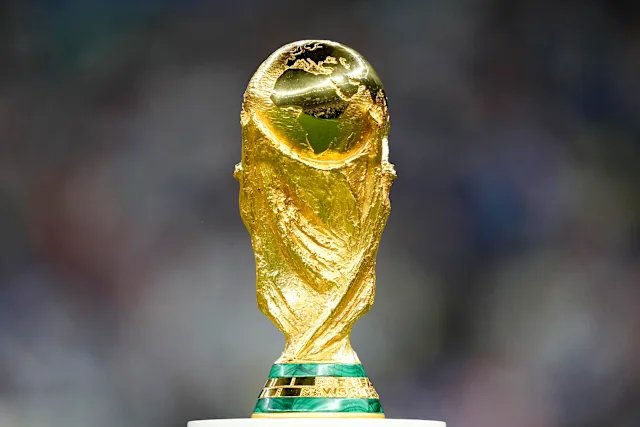
Eight days in, and the 2026 World Cup has already outgrown every superlative we brought to it. It is the largest, the longest, the most geographically sprawling, and arguably the most chaotic edition of football's signature event ever staged. Forty-eight teams. Three host nations. Sixteen cities across roughly four million square miles. One hundred and four matches crammed into thirty-nine sweltering summer days. When the referee blew the first whistle at the Estadio Azteca on June 11, he did not just start a football match — he triggered the most ambitious logistical undertaking in the history of the sport.
This is the story of how it has unfolded so far: the goals, the upsets, the records, the debutants who refused to read the script, and the off-field storms — meteorological and political — that have shadowed the action. It is, by any honest measure, a tournament unlike any that came before it. Here is everything that has happened, and everything you need to understand why it matters.
A Tournament Reimagined
To grasp the scale of 2026, start with the arithmetic. From 1998 to 2022, the World Cup was a 32-team competition decided across 64 matches. This edition, per FIFA and tournament records compiled by Wikipedia, expands to 48 teams sorted into 12 groups of four, producing 104 matches — a 63% increase in fixtures. The top two from each group advance automatically, and they are joined by the eight best third-placed teams, creating an entirely new knockout tier: the Round of 32.
That single structural change ripples through everything. A team can now finish third in its group and still lift the trophy. The margin for a slow start has widened, but so has the punishment for complacency — with eight third-placed qualifiers, goal difference and fair-play points have become live currency from the very first whistle. As Britannica's tournament guide notes, the format rewards teams that can both survive a brutal group and find another gear deep into a longer, more attritional bracket.
The hosting arrangement is just as unprecedented. For the first time, three nations share the World Cup: the United States carries the bulk with 11 host cities, Mexico contributes three, and Canada two. The United States will stage the lion's share of the knockout rounds, but the symbolism of the distribution matters. Mexico becomes the first country to host or co-host the men's World Cup three times (1970, 1986, 2026); Canada hosts the men's tournament for the first time; and the United States returns as a host for the first time since the watershed summer of 1994.
The venues themselves read like a tour of the continent's great cathedrals of sport. The opening match was staged at Mexico City's storied Estadio Azteca — the only stadium to feature in three different World Cups — while the final, on July 19, will be held at MetLife Stadium in East Rutherford, New Jersey. The semifinals are split between AT&T Stadium in Dallas and Mercedes-Benz Stadium in Atlanta. Other host grounds include SoFi Stadium in Los Angeles, Lumen Field in Seattle, Arrowhead Stadium in Kansas City, Hard Rock Stadium in Miami, Lincoln Financial Field in Philadelphia, Gillette Stadium in Boston, Levi's Stadium in the San Francisco Bay Area, NRG Stadium in Houston, BMO Field in Toronto, BC Place in Vancouver, and the Estadios BBVA and Akron in Monterrey and Guadalajara.
It is a footprint that turns the World Cup into something closer to a continental odyssey than a tournament. Teams and travelling supporters will cross multiple time zones, three currencies, and two international borders. The romance of that scope is real. So, as we will see, are its costs.
How They Got Here: The Road to 48
The 48 nations gathered in North America arrived via the most expansive qualification cycle football has ever run. Every confederation was handed a larger slice of the pie, and the result is the most genuinely global field in the sport's history — the first World Cup, per tournament records, in which all six confederations enjoy guaranteed representation.
The allocations tell the story of a redrawn map. UEFA, European football's governing body, sent 16 teams — Austria, Belgium, Bosnia and Herzegovina, Croatia, the Czech Republic, England, France, Germany, the Netherlands, Norway, Portugal, Scotland, Spain, Sweden, Switzerland, and Turkey. Africa's CAF received its largest-ever allotment of 10, including debutant Cape Verde alongside Algeria, DR Congo, Egypt, Ghana, Ivory Coast, Morocco, Senegal, South Africa, and Tunisia. Asia's AFC claimed nine berths, among them first-timers Jordan and Uzbekistan and a returning Iraq. South America's CONMEBOL sent six — Argentina, Brazil, Colombia, Ecuador, Paraguay, and Uruguay — while CONCACAF's six included the three hosts plus Haiti, Panama, and Caribbean debutant Curaçao.
Perhaps the most poignant beneficiary of expansion was Oceania. For the first time, the OFC received a guaranteed direct place, claimed by New Zealand — at world ranking No. 85, the lowest-ranked side in the entire field, and a nation that previously had to survive a treacherous intercontinental playoff just for a chance. That single guaranteed slot is the clearest emblem of what 48 teams was designed to do: give every corner of the football world a credible path to the game's biggest stage.
The New Rules of the Game
A reimagined format was not the only thing FIFA changed for 2026. The tournament has introduced a raft of law tweaks aimed at speeding up play, curbing time-wasting, and protecting both players and officials. Goalkeepers now face a stricter eight-second limit on holding the ball; throw-ins and goal kicks are governed by a five-second visual countdown; and substituted players must exit within roughly ten seconds or serve a brief delay, closing a favorite loophole for late-game game management.
Player welfare and on-field conduct have been addressed too. A player who receives medical treatment must now leave the field for a minimum period before returning, discouraging tactical injuries. VAR's review authority has been expanded. And in a notable disciplinary shift, referees can issue red cards for covering the mouth during confrontations — a measure aimed at abusive language — and for players or officials who leave the field in protest. Layered atop all of it are the mandatory three-minute hydration breaks in each half, a concession to the heat that has become, as we will see, the tournament's defining environmental story. Taken together, the changes amount to the most aggressive rules overhaul the World Cup has carried into a single edition in years.
The Opening Act: Mexico, the Azteca, and Three Red Cards
Some openers whisper. This one detonated. On June 11, before a roaring, sun-drenched crowd in Mexico City, the co-hosts faced South Africa in a curtain-raiser that delivered both a comfortable home victory and a genuine slice of World Cup history. Mexico won 2-0, but the scoreline barely hints at the drama. Julián Quiñones struck inside the opening ten minutes — the first goal of the entire tournament — and Raúl Jiménez doubled the lead in the second half to settle a fixture that had grown increasingly fractious.
What made the night unforgettable was the discipline, or lack of it. The match produced three red cards, leaving South Africa to finish with nine men — the first time a World Cup opener has featured three dismissals. For Mexico, the symbolism ran deeper than three points. It was the nation's eighth appearance in a World Cup opening match and, remarkably, their first ever win in one, having previously lost five and drawn two. To break that streak at home, at the Azteca, in front of a nation that has waited four decades to host again, was the kind of script even Mexican telenovelas might reject as too on-the-nose.
As PBS and CNN reported from Mexico City, the atmosphere was the point as much as the result. A stadium that has hosted Pelé and Maradona lifting World Cups roared a new generation into the tournament. The football was scrappy; the occasion was monumental.
The Hosts Hold Their Nerve
If a co-hosted World Cup needed its three home nations to start well to keep momentum and ticket-buying belief alive, it got its wish. Mexico did not stop at the opener. They followed it with a 1-0 win over South Korea to clinch Group A and a place in the Round of 32 with a game to spare — a composed, professional double that quieted the chronic anxiety that trails every Mexican campaign.
The United States, under the studied calm of manager Mauricio Pochettino, produced perhaps the most eye-catching host performance of the group stage. The USMNT opened with a dazzling 4-1 dismantling of Paraguay, then backed it up with a disciplined 2-0 win over Australia to top Group D and secure knockout qualification. For a program that has spent years oscillating between hype and disappointment, the early returns suggest a team finally playing with the conviction its talent demands. Pochettino's fingerprints — aggressive pressing, fluid transitions, a settled spine — are visible.
Canada, the least heralded of the three hosts, has been quietly thrilling. After a 1-1 draw with Bosnia and Herzegovina, the Canadians erupted for a 6-0 demolition of Qatar, one of the most emphatic results of the opening round. Striker Jonathan David has been central to it, sitting joint-top of the tournament's scoring charts. For a nation hosting its first men's World Cup, Canada has refused to be a ceremonial participant.
Three hosts, three strong starts. It is precisely the launch FIFA and the organizers needed — and it has injected the early tournament with the kind of partisan electricity that only home crowds can generate.
The Giants Stir
Every World Cup ultimately bends toward its superstars, and 2026 has wasted no time handing them the stage. The defining individual moment so far belongs, fittingly, to Lionel Messi. In what is almost certainly his final World Cup, the Argentine captain rolled back the years with a hat-trick in a 3-0 win over Algeria in Argentina's Group J opener. The performance did more than announce the holders' intentions; it drew Messi level with Germany's Miroslav Klose as the joint-leading goalscorer in World Cup history on 16 goals. At 38, chasing a record many assumed was beyond him, Messi has made the sentimental story the literal headline.
He is not the only marquee name finding form. France's Kylian Mbappé announced himself with a brace, and Norway's Erling Haaland — playing in his first World Cup after years of agonizing near-misses for his country — answered with a brace of his own on the same day. The collision of generations is one of the tournament's great subplots: Messi and Cristiano Ronaldo in likely farewells, Mbappé and Haaland in their imperious primes, and a chasing pack of younger talents desperate to use the sport's grandest platform as a coronation.
Among the favorites, the early form guide is uneven in fascinating ways. Brazil opened with a 1-1 draw against a stubborn Morocco before finding their rhythm in a 3-0 win over Haiti. Germany announced themselves with ruthless intent, thrashing debutants Curaçao 7-1 in a statement of attacking depth. France, Spain, England, and Portugal all arrived among the favorites — but as the group stage has repeatedly demonstrated, a place among the pre-tournament elite has guaranteed nobody an easy evening.
The Romance of the Debutants
If the expansion to 48 teams had a thesis, it was this: widen the door, and football's geography will reward you with stories the old format never had room for. Eight days in, that thesis is looking vindicated. Four nations are competing at a World Cup for the very first time — Cape Verde (Cabo Verde), Curaçao, Jordan, and Uzbekistan — and they have not come merely to make up the numbers.
Cape Verde, an Atlantic archipelago of roughly half a million people, authored the tournament's most romantic upset of the opening round. Drawn against a Spain side many tipped to win the whole thing, the Blue Sharks dug in for a historic 0-0 draw, with goalkeeper-led resistance and disciplined organization frustrating one of the world's most decorated squads. For a nation that only clinched qualification by beating Eswatini in October 2025, holding Spain to a stalemate was a result that rewrote what their footballers believed possible.
The other debutants have shown their own steel. Uzbekistan, long one of Asian football's perennial nearly-men, proved resilient against Colombia. Jordan, appearing on the World Cup stage for the first time, felt the 3-1 scoreline against Austria flattered their opponents and did not reflect the balance of a game they competed in throughout. Curaçao — a Caribbean island nation with a population smaller than many host cities — endured a chastening 7-1 lesson from Germany, but their mere presence is a milestone that expansion made possible.
Beyond the four true debutants, the tournament has welcomed a clutch of long-lost names back to the biggest stage. DR Congo and Haiti returned for the first time since 1974; Iraq reappeared after a 38-year absence dating to 1986; and Austria, Norway, and Scotland all featured for the first time since France 1998. Each carries decades of frustrated history into 2026. This is the human dividend of a bigger field — not the lopsided scorelines the skeptics predicted, but a broader, richer cast of national stories given their moment.
Upsets, Stumbles, and the Great Leveling
The fear with a 48-team World Cup was dilution: too many mismatches, too many dead rubbers, too little jeopardy. The reality of the first eight days has been close to the opposite. The favorites have been made to sweat, and the gap between the established powers and the rest has looked narrower than the rankings suggest.
Spain's draw with Cape Verde was the marquee stumble, but it had company. Portugal — built around the talismanic Cristiano Ronaldo in his own World Cup farewell — were held to an uncomfortable result against a spirited DR Congo, one of the opening round's genuine shocks. Belgium, perennially burdened by the weight of their golden generation's unfulfilled promise, were pegged back by Egypt. Switzerland, having looked imperious in a 4-1 win over Bosnia and Herzegovina, had earlier been forced to share the points with Qatar, who snatched their first-ever World Cup point with a late equalizer.
Even where the favorites won, they were rarely allowed to coast. Scotland edged Haiti but were pushed throughout. The Netherlands and Japan traded blows in an absorbing 2-2 draw — a result that says as much about Japan's continued ascent as it does about Dutch frailty. Sweden, meanwhile, offered the group stage's most emphatic attacking statement outside of Germany, dispatching Tunisia 5-1.
The cumulative effect has been a tournament with an unusually flat hierarchy. Per tournament statistics through 32 matches, the football has been productive — 96 goals at an average of three per game — but it has also been competitive in a way that rebukes the pre-tournament hand-wringing. The expansion has not drowned the drama. If anything, it has multiplied it.
Group by Group: A Snapshot
With the group stage past its halfway mark in several sections, here is where the 12 groups stand, drawn from CBS Sports' running standings and match reports.
Group A belongs to Mexico, who became the first team to seal qualification. The co-hosts took maximum points from wins over South Africa (2-0) and South Korea (1-0). South Korea recovered from that defeat by beating the Czech Republic 2-1 and sit second; the Czechs and South Africa, who drew 1-1, are left fighting for a third-place lifeline.
Group B has been a tale of two co-leaders. Canada and Switzerland sit level on four points apiece after each followed an opening draw with an emphatic win — Canada thumping Qatar 6-0, Switzerland dispatching Bosnia and Herzegovina 4-1. Qatar's lone point, a late equalizer against the Swiss, and Bosnia's struggles leave both chasing.
Group C is a heavyweight logjam. Brazil and Morocco, who drew 1-1 in a tight opener, are tied on four points; Brazil eased past Haiti 3-0, while Morocco edged Scotland 1-0. Scotland, who beat Haiti 1-0 in their opener, remain mathematically alive. It is exactly the kind of tight, every-goal-matters group the new format was built to reward.
Group D is firmly in American hands. Pochettino's United States topped the section with maximum points from wins over Paraguay (4-1) and Australia (2-0). Australia's 2-0 defeat of Turkey keeps them in contention for a runner-up or third-place berth, while Turkey — beaten 1-0 by Paraguay — have found goals hard to come by.
Group E opened with a thunderclap: Germany announced their intentions by hammering debutants Curaçao 7-1, the most lopsided result of the tournament so far. Ivory Coast edged Ecuador 1-0 in the group's other opener, leaving four teams still very much in the race with two rounds to play.
Group F has been all about goals. Sweden produced a statement 5-1 win over Tunisia, while the Netherlands and Japan served up an end-to-end 2-2 draw that underlined Japan's status as Asia's standard-bearer. With Sweden leading and the Dutch and Japanese sharing the spoils, the section remains delicately poised.
The later groups (G through L) are still finding their shape, with most sides having played a single match — but they have already produced the tournament's biggest names and biggest shocks. Argentina launched Group J with Messi's 3-0 masterclass over Algeria. Spain were stunned by debutants Cape Verde in a goalless draw, and Portugal were held by a fearless DR Congo. France, with Mbappé among the scorers, and Norway, inspired by a Haaland brace, made statements of their own; Belgium were pegged back by Egypt; and Austria saw off Jordan 3-1 in a game the debutants felt they deserved more from. As these groups complete their fixtures over the coming days, the full bracket — and the eight third-placed qualifiers — will finally snap into focus.
The Heat Is On
And yet the most discussed feature of the 2026 World Cup may not be a player, a goal, or a result. It is the weather. A North American summer was always going to test a sport built for temperate European winters, and the early rounds have turned a long-simmering concern into the tournament's defining off-field crisis.
The data is stark. According to analysis cited by TIME and climate researchers, roughly a quarter of the tournament's matches could be played in potentially dangerous heat, and as many as 14 of the 16 host stadiums could exceed the critical 28°C wet bulb globe temperature (WBGT) threshold — the point at which strenuous outdoor exertion becomes hazardous. A September 2025 report titled "Pitches in Peril," published by the non-profits Football for Future and Common Goal, found that 10 of the 16 venues face a "very high risk" of extreme heat stress.
The grounds most exposed are those without air conditioning or a closed roof — Miami, Monterrey, Philadelphia, Kansas City, Boston, and the New York/New Jersey metropolitan area among them. As NPR and Bloomberg have mapped in detail, the midday and afternoon kick-offs that suit European broadcast windows are precisely the slots when the American sun is most punishing — a collision of commercial logic and player welfare that has put FIFA on the defensive.
FIFA's countermeasures are real but contested. The governing body has mandated three-minute hydration breaks in each half, installed cooling infrastructure for players and fans, adapted work-rest cycles, and bolstered medical readiness. Several venues feature retractable roofs and climate control, and eight stadiums with artificial turf were converted to natural grass for the tournament. But the global players' union, FIFPRO, has repeatedly warned that heat conditions must take precedence over commercial considerations, pressing for longer half-time intervals, more frequent breaks, and a willingness to move kick-offs to cooler hours. The debate cuts to a tension at the heart of the modern game: who the schedule is really built for.
The Storm Off the Pitch
The weather has not been the only source of turbulence. The 2026 World Cup arrived freighted with political and commercial controversy, and the early days have kept several of those storylines alive.
The most persistent grievance among supporters has been FIFA's embrace of dynamic ticket pricing — a model, more familiar from concerts and airlines, in which prices float with demand. Fans and consumer advocates have criticized the system for inflating costs and pricing out the ordinary supporters the tournament claims to celebrate, a charge documented in coverage of the tournament's commercial operations.
More fraught still has been the geopolitical backdrop. U.S. immigration and visa policies generated diplomatic friction in the build-up, with questions over how freely fans and even some qualified teams' supporters could travel to matches. Iran's participation became a flashpoint amid regional conflict, and FIFA itself drew criticism from human rights organizations over the decision to honor U.S. President Donald Trump with a "FIFA Peace Prize" at the draw ceremony. None of these controversies has stopped the football, but together they form a backdrop that the tournament has not been able to fully escape — a reminder that an event this large is never only about the game.
There has been sporting heartbreak woven through the absences, too. Italy — four-time world champions — failed to qualify, becoming the first former winner to miss three consecutive World Cups, a staggering decline for one of the sport's aristocrats. Costa Rica missed out for the first time since 2010, and Cameroon, Denmark, Poland, Serbia, Wales, Nigeria, Peru, and Chile all watched from home. Expansion let many in; it could not save everyone.
By the Numbers
Strip away the narrative and the raw figures tell their own story of a tournament operating at unprecedented scale. Through the first 32 matches, players have produced 96 goals — an average of exactly three per game, a healthy, entertaining return that suggests the expanded field has not blunted the spectacle.
The attendance numbers are staggering. A cumulative 2,076,293 spectators had passed through the turnstiles across those 32 fixtures, an average of 64,884 per match — testament both to the cavernous capacities of North America's NFL stadiums and to the appetite for the sport across the host nations. The race for the Golden Boot, meanwhile, features a poetic early leaderboard: Lionel Messi and Canada's Jonathan David share top spot on three goals apiece, the elder statesman and the host-nation hero neck and neck.
Those figures hint at the tournament's true scale as an economic and cultural event. Sixteen cities have effectively been turned into month-long festivals, their hotels, transit systems, and fan zones absorbing a tide of international visitors; the broadcast operation beams the action to audiences across dozens of countries and languages. A World Cup has always been more than a football tournament — it is a temporary capital city of the sport, assembled and dismantled in the span of a summer. In 2026 that city simply happens to span an entire continent, with three flags flying over it instead of one. The early attendance returns suggest the appetite has more than matched the ambition.
Layered atop those totals is a thick stack of historic firsts: the first World Cup hosted by three nations; the first contested by 48 teams; the first in which all six confederations are guaranteed representation; and a tournament that has already delivered the first World Cup opener with three red cards. Records are not merely being broken in 2026 — entire categories of them are being invented.
The Road Ahead
What comes next is where the new format earns its keep. The group stage continues through late June, with every side playing three matches and the arithmetic of qualification — top two, plus the eight best third-placed teams — keeping even middling records alive. That novel safety net has changed in-game psychology: managers are calculating not just whether they can win a group, but whether a narrow defeat still leaves the door to the Round of 32 ajar.
From there, the bracket unfurls into the longest knockout run the World Cup has ever staged. The Round of 32 gives way to the familiar Round of 16, the quarterfinals, the semifinals in Dallas and Atlanta, and finally the showpiece at MetLife Stadium on July 19. A team that goes all the way will play eight matches across nearly six weeks, in punishing heat, crisscrossing a continent. Endurance — physical, mental, and logistical — will be as decisive as talent. The champions of 2026 will have earned the title in the most literal sense the tournament has ever demanded.
The contenders are taking shape. Argentina, with Messi conducting, carry the holders' aura and a generation hungry to send their captain out on top. France look every inch a juggernaut. Germany have rediscovered their teeth. Brazil are warming into the tournament. Spain, even after the Cape Verde scare, retain a frightening ceiling. England and Portugal lurk. And history warns us, as it always does, to leave room for the team nobody is talking about yet.
The Contenders, Weighed
Pick the field apart and a handful of teams separate themselves — though in a tournament this long and this hot, depth and durability may matter as much as star power. Argentina remain the team to beat, not only because they are the reigning champions but because Messi has rediscovered a vintage that makes them irresistible going forward. The question is whether their spine can survive eight matches in this climate.
France look frighteningly complete: pace, power, and in Mbappé a forward operating at the absolute summit of the game. They have the squad to rotate through the heat without dropping off, which in 2026 may be the single most valuable asset a contender can own. Germany, written off by some after years of underachievement, have rediscovered an attacking ruthlessness that the 7-1 evisceration of Curaçao put on full display. Spain, even after the Cape Verde scare, possess a midfield no one relishes facing and a ceiling that remains among the highest in the field.
Brazil are the eternal riddle — blessed with more individual talent than almost anyone, yet still searching for the cohesion to convert it, as their draw with Morocco hinted. England and Portugal both carry golden-generation expectation and golden-generation scar tissue; for Portugal, the added weight of a Ronaldo farewell could be fuel or burden. And then there are the lurkers — the Netherlands, Croatia, Uruguay, Morocco (semifinalists last time and fearless again), and an improving United States dreaming on home soil. If the first eight days have taught us anything, it is that the distance between these tiers is smaller than the seedings claim.
The Athlete's Tournament
There is a thread running beneath all of this that belongs to anyone who has ever pushed their body to its limit — and it is the thread that interests us most at ROID. The 2026 World Cup is, more than any before it, a test of human resilience under load. Players are being asked to perform at the absolute peak of their sport in heat that sports-medicine experts have flagged as genuinely dangerous, across more matches, more travel, and more time zones than any squad in history.
That is the elite, televised version of a question every committed athlete eventually faces: how do you keep performing when recovery, hydration, sleep, and load management stop being optional and become the whole game? The hydration breaks, the work-rest cycles, the obsessive monitoring of recovery between fixtures — these are not footnotes to the football. At this tournament, they are the difference between a player who finishes strong in the 90th minute of a July semifinal and one who fades in the heat of a June afternoon. The science of staying in the fight is, quietly, one of 2026's central characters.
It is a fitting lesson from the world's biggest stage. Greatness is rarely about a single moment of brilliance; it is about being able to summon brilliance again and again, when the body is begging you to stop. The 48 teams chasing the trophy in North America this summer understand that better than anyone. So does every person who laces up and trains when it would be easier not to.
The Verdict, For Now
Eight days is not a tournament. It is a prologue. But what a prologue. The 2026 World Cup gambled on bigness — more teams, more cities, more matches, more everything — and the early returns suggest the gamble is paying off in the only currency that matters: drama. The hosts have delivered. The legends have answered. The minnows have bitten. The heat and the politics have lent the whole thing an edge of genuine jeopardy.
There is a long, hot, unpredictable month still to come, and the new format guarantees that the story will keep twisting. Group deciders, the eight-team scramble for third-place lifelines, the first-ever Round of 32, and a knockout gauntlet that will test legs and lungs as much as nerve — all of it still lies ahead. We will be watching every minute of it. For now, the verdict is simple: the biggest World Cup ever conceived has, against the doubts, also become one of the most compelling. The world has assembled in North America — and the world is putting on a show.
This article will be updated as the tournament progresses. Last updated June 19, 2026.
The Training Lens: What a World Cup Teaches About Training Smart
Step back from the individual results and a pattern emerges: the teams thriving deepest into the tournament are the ones managing load and recovery best, not simply the ones training hardest. At elite level, more is not better — better is better. The smart programs peak on time, recover deliberately, and treat fatigue as data rather than weakness.
That is the whole philosophy behind training intelligently rather than just enthusiastically. AI-personalized training backed by health tracking brings the same approach to everyday athletes — pushing when you're ready, easing when you're not, so progress compounds instead of stalling in burnout.
Sources
-
Mexico wins 2-0 over South Africa in opening match — PBS NewsHour
-
2026 FIFA World Cup daily schedule and results — Yahoo Sports
-
Messi leads FIFA Power Rankings after hat trick — World Soccer Talk
-
Messi Chases History as Cape Verde Stuns the World Cup — Eastern Eye
-
Cape Verde clinches historic first qualification — Al Jazeera
-
Extreme Heat Is Putting 2026 World Cup Athletes at Risk — TIME
-
How extreme weather and heat could affect players — Al Jazeera
-
See which World Cup matches are most threatened by hot weather — NPR
-
Extreme Heat Threatens Teams in US, Mexico Stadiums — Bloomberg