Eloy Room's 15-Save Miracle: The Greatest Goalkeeping Performance in World Cup History
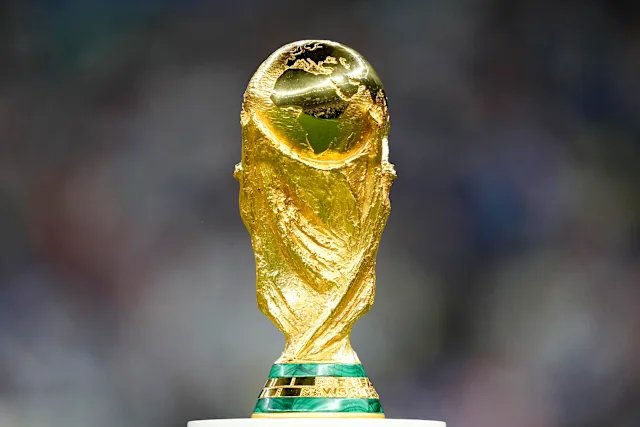
There are individual performances at World Cups that live outside the usual categories — too singular for statistics to contain, too human for highlights to fully convey. Gordon Banks against Pelé in 1970. Tim Howard's sixteen saves for the United States against Belgium in 2014. And now, in a quieter venue but with a weight of national significance every bit as enormous, Eloy Room of Curaçao making fifteen saves against Ecuador at Arrowhead Stadium in Kansas City — the most by any goalkeeper in ninety minutes of a World Cup match since records began in 1966.
Ecuador 0-0 Curaçao. When the full-time whistle sounded, the Curaçao players rushed to their goalkeeper as if the result were a victory. In the terms that matter to a nation of 160,000 people participating in only their first-ever FIFA World Cup, it was something very close to one. The Blue Wave had earned their first point in tournament history. Room, 37 years old and playing his club football in the second division of American soccer, had done the impossible so many times in ninety minutes that it stopped feeling impossible and started feeling like something else entirely: inevitable, destined, the stuff of sporting mythology in the making.
Ecuador's Dominance: The Numbers That Make Room's Night Comprehensible
To understand how extraordinary Room's performance was, you first have to understand how impossible his position was. Ecuador entered the match as heavy favourites — a South American side with World Cup pedigree, genuine quality in attack through Enner Valencia and his supporting cast, and the kind of continental confidence that comes from competing in the heat of CONMEBOL qualification. Curaçao entered as what they are: a tiny Caribbean island competing in only their inaugural World Cup, making up for the gap in resources and tradition with organisation, courage, and, as it turned out, one extraordinary goalkeeper.
The statistics tell the story of Ecuador's dominance in the starkest terms. Over ninety minutes, Ecuador created 3.05 expected goals — a number that, in any normal match, translates with near certainty into two or three goals. They managed fifteen shots on target, which is, according to records dating back to 1966, the most by any team in a World Cup match against a side that kept a clean sheet. Ecuador's strikers were not taking bad shots or speculative efforts from distance; they were fashioning clear chances, shooting from dangerous positions, and finding a goalkeeper who refused to allow a single one through.
The 0-0 scoreline that emerged from those circumstances — from a match where Ecuador had 3.05 xG against Curaçao's 0.48, where Ecuador's shot count was more than double their opponents', where virtually every expected probability model would have given Ecuador at least a 90 percent chance of scoring — is not a result. It is a statistical impossibility made real by one man.
Room by Room: The Saves That Made History
Fifteen saves in ninety minutes works out to one every six minutes — a rate of intervention that describes not a goalkeeper in a routine match but a goalkeeper in the grip of something transcendent. The nature of those saves varied across the full range of goalkeeping skill: the straightforward stop that becomes difficult through volume and concentration; the reflex save from close range where the conscious mind has no time to process the shot; the diving effort to the bottom corner that requires perfect technique and complete trust in the body's trained response; the commanding claim under a high ball with defenders and attackers converging.
The save that most captured the night's spirit came in the second half when Ecuador's Valencia — their most experienced striker, a man who has terrorised South American defences for fifteen years — drove a shot from twelve yards out toward the top right corner. It was a well-struck, accurately directed effort that would have beaten the majority of World Cup goalkeepers on a normal night. Room pushed it over the bar with his fingertips in a movement so quick and so precise that it seemed to belong to a different order of reflexes. Valencia stared at the ground. Room bounced back to his feet and immediately re-set his position, as if the save were not miraculous but simply the next item on a list.
That composure — the psychological steadiness that allowed Room to make save fifteen with the same focus as save one — may have been the most remarkable aspect of an already remarkable night. Goalkeepers are uniquely vulnerable to the kind of cognitive pressure that accumulates when the team around you is under sustained bombardment, when the net behind you seems to be being pulled by gravity every time a shot arrives. Room showed no visible sign of that pressure. Between saves, he communicated with his defenders, organized the wall for free kicks, and talked his back four through the positioning adjustments that kept Ecuador from converting their corner-kick deliveries. He was not just the last line of defence; he was the organizing intelligence behind the entire defensive structure.
Who Is Eloy Room? The Biography Behind the Performance
The full story of how Eloy Room arrived at Arrowhead Stadium to make World Cup history requires a short biography, because it is not the story of a footballer destined for the summit. Room was born in Nijmegen, in the Netherlands, and came through the academy system at Vitesse. He received one cap for the Netherlands at under-20 level before making the decision to commit his international future to Curaçao — the island in the Caribbean Netherlands where his family roots lie — through FIFA's eligibility process. His senior debut for Curaçao came in 2015, and he has been the first-choice goalkeeper ever since.
At club level, Room has had a journeyman career that covers several countries and competition levels. He won the KNVB Cup with Vitesse in the 2016-17 season — a genuinely significant domestic honour in Dutch football — before moving through spells at Cercle Brugge in Belgium and Columbus Crew in Major League Soccer. His current club is Miami FC, in the USL Championship, which is the second division of American soccer. That last detail is worth sitting with: the man who just made fifteen saves at a World Cup is not competing in the highest professional leagues of his sport. He is, by the commercial measures of the game, a marginal professional. By the sporting measure of what he produced on June 20, he is something else entirely.
Room himself, with the kind of irony that suggests a man comfortable with the absurdity of sport, joked afterward that he deserved a statue on the island for what he had done. As ESPN reported, he was smiling when he said it, but the residents of Willemstad would not find the suggestion laughable. In a nation of 160,000 people, a moment of this magnitude is not a sports result. It is a national event.
The Tim Howard Comparison: Greatness in Defeat and in History
The comparison CBS Sports drew between Room and Tim Howard's legendary 2014 performance is inevitable and instructive. Howard made sixteen saves — one more than Room — in the United States' 2-1 defeat to Belgium in Salvador, Brazil, a match that was ultimately lost but that generated one of the most celebrated individual goalkeeper performances in American sports history. Howard's night was defined by the volume and quality of his saves in a losing cause, in a match where the scoreline eventually turned against him. The difference with Room is that his night ended not in defeat but in triumph — a clean sheet that actually stood, a point that actually counted.
In that sense, Room's performance is even more significant in terms of outcome, if not in pure volume (fifteen saves to Howard's sixteen). Howard is celebrated for a heroic futility — the man who stood against a tide that was too strong to hold. Room achieved what Howard could not: he held the tide. The point Curaçao earned is real, it will sit in the record books alongside their other results, and it was earned through ninety minutes of goalkeeping that the sport has not seen at this level in sixty years of statistical records.
The Howard-Room comparison also speaks to a broader truth about goalkeeping heroism at World Cups: it tends to emerge from the smallest teams, because those are the teams that face the most concentrated periods of sustained pressure and need the most from their last line of defence. This is not coincidental. When a nation builds a World Cup team around a defense-first structure designed to compensate for the attacking quality of a stronger opponent, the goalkeeper becomes the fulcrum of the entire tactical plan. Room's performance against Ecuador was the fullest possible expression of that design: Dick Advocaat's team defending deep, trusting Room to deal with what came through, and Room dealing with everything.
Curaçao: A Nation on the World Stage
The context of what Curaçao's first World Cup point means to their 160,000 citizens goes beyond the football field in ways that deserve acknowledgment. Curaçao is a constituent country of the Kingdom of the Netherlands, located in the southern Caribbean Sea off the coast of Venezuela. It is one of the smallest populations to have ever qualified for a FIFA World Cup. Their path to the 2026 tournament was itself a minor miracle of regional football — navigating the CONCACAF qualification process, one of the world's most unpredictable and demanding regional qualifying systems, against significantly larger footballing nations.
To arrive at this first World Cup and hold Ecuador — a perennial South American qualifier with multiple tournament appearances and genuine regional pedigree — scoreless for ninety minutes is an achievement that will resonate across the island for generations. Football at the international level is, among many other things, a mechanism for small nations to announce their existence to a watching world. Curaçao, for ninety minutes in Kansas City, announced themselves in the loudest possible way, and Room was the voice they used.
Dick Advocaat, the veteran Dutch manager who has taken charge of Curaçao's World Cup campaign, built his defensive gameplan around Room's abilities and the team's collective organisation with the clarity of a man who knows his squad's strengths and has no illusions about its limitations. Advocaat has managed at the highest levels of European club football — Rangers, PSV, Zenit, and multiple other top-flight clubs — and his presence as Curaçao's coach is both a tribute to the island's ambition and a source of genuine tactical credibility. His setup against Ecuador — deep defensive block, compact shape, no ambition to play through the Ecuadorian press — was not defeatist. It was realistic. And it worked.
The Record in Context: What 15 Saves Means Statistically
Since the FIFA World Cup began tracking detailed save statistics in 1966, no goalkeeper had made fifteen saves in a ninety-minute match before Room's performance against Ecuador. The previous record was held by various goalkeepers in matches where the defensive team faced sustained pressure, with most high-save performances coming in close matches where the team that absorbed the most shots won on the counter-attack. Room's fifteen saves in a 0-0 draw — with no counter-attack goals to provide relief, simply pure goalkeeping to hold the line — is without precedent.
The xG data adds another layer. Ecuador's 3.05 xG represents the difference between what Room allowed (zero goals) and what the expected model predicted would happen based on the quality and location of Ecuador's shots (approximately three goals). That is a single-match over-performance against expected goals of 3.05 — one of the highest recorded for any goalkeeper in a World Cup match. In other words, Room did not just stop a lot of shots; he stopped shots that the model said should go in, and he did it with a consistency across ninety minutes that suggests the performance was not a statistical outlier driven by luck but a genuine reflection of an exceptional night.
| Metric | Ecuador | Curaçao |
|---|---|---|
| Goals | 0 | 0 |
| Shots on Target | 15 | 3 |
| xG | 3.05 | 0.48 |
| Saves (Room) | — | 15 |
| Possession (%) | 67 | 33 |
| Corners | 11 | 2 |
Ecuador's Frustration and What Comes Next
For Ecuador, the draw was a damaging result in the context of Group E. Going into the final round of group matches, they will need a positive result against Germany — the other team in the group, and the one that came from behind to beat Ivory Coast on the same night — to have any realistic hope of progression. Germany, already through to the Round of 32, will have the luxury of resting players and experimenting, but they are not the kind of team that concedes qualification matches carelessly, and Nagelsmann's squad has just demonstrated a remarkable capacity for late-game winning.
Ecuador's frustration is compounded by the nature of their failure against Curaçao — not a failure of effort or organisation or desire, but a failure of the fundamental requirement of football: getting the ball into the net. When you create 3.05 xG and fail to score, the honest conclusion is that you met an extraordinary goalkeeper on an extraordinary night, and that the probability of repeating the performance against Germany is low. Ecuador will score eventually. But the point dropped here may cost them dearly.
The Wider Significance: Football's Capacity for the Unexpected
Room's performance carries one final meaning that transcends the specific match and the specific tournament. In an era of football that is increasingly dominated by data, expected-goals models, and the predictive analytics that attempt to reduce the game to its statistical essence, a goalkeeper making fifteen saves and holding a 3.05-xG opponent scoreless is a reminder that football remains stubbornly, magnificently, irreducibly human. The models said Ecuador would score three goals. Room said otherwise. The models were technically right about everything except the thing that mattered most: the actual score.
There is something bracing about that. The best goalkeeping in World Cup history — the kind that sets a record that has stood since 1966 — cannot be predicted or modeled or anticipated. It arrives when a specific person, with a specific set of trained reflexes and a specific psychological makeup, encounters a specific set of challenges in a specific ninety minutes and responds to all of them with a perfection that the statistics can measure but not explain. Room deserves his statue. Curaçao deserves their point. And football deserves the reminder that it is still, at its heart, a game of human beings capable of doing things that numbers cannot contain.
The Training Lens: Reaction Speed and Agility, at Any Age
Eloy Room anchoring Curacao's defense in his mid-thirties is a reminder that goalkeeping prizes qualities most training ignores: reaction time, short-range agility, and explosive lateral movement. These respond to reactive drills and mobility work — but they also depend heavily on sleep and recovery, since reaction time is one of the first things to degrade when an athlete is under-recovered.
That recovery dependence is exactly why tracking it pays off. When health tracking shows how sleep and fatigue move your readiness, you can time your sharpest, most reactive sessions for the days you'll actually get the most from them — at any age.