Japan 4-0 Tunisia: The Samurai Blue Write History in World Cup's 1,000th Match
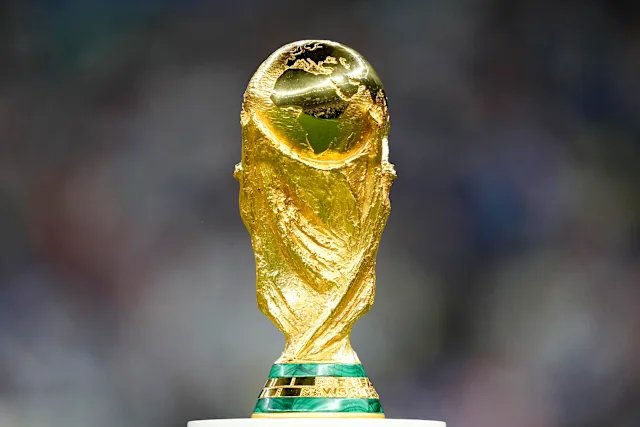
The 1,000th match in the history of the FIFA World Cup deserved a performance commensurate with the occasion. It got one. Japan, the Samurai Blue, arrived at Estadio BBVA in Monterrey on June 21 and delivered the most dominant victory by an AFC team in the tournament's modern history — a 4-0 dismantling of Tunisia that moved them onto four points in Group F, confirmed the Tunisians' elimination, and established Japan as arguably the most complete team from outside the traditional continental powers at this tournament. History was duly written, and Daichi Kamada, Ayase Ueda, and Junya Ito were the ones holding the pen.
To call this a statement win understates it. Japan became the first Asian confederation team to score four goals in a single World Cup game — a milestone that reflects not just a good night but a structural shift in global football power that has been building for the better part of a decade. They did it with pace, tactical intelligence, relentless pressing, and a striker in Ueda who was, for ninety minutes, operating in a different tier from anyone else on the pitch. Tunisia, and Hervé Renard's ambitious project, was dismantled with a thoroughness that will take time to fully absorb.
The 1,000th Match: A Stage and Its Actors
There is something fitting about the World Cup's milestone 1,000th game being played in Monterrey, a city that has hosted the tournament across multiple editions and that represents the kind of deep footballing culture this expanded 48-team tournament is designed to celebrate. Mexico, Canada, and the United States collectively host the grandest edition of the sport's greatest event, and a thousand matches — spanning from the inaugural 1930 tournament in Uruguay to this June evening in Nuevo León — chart the full evolution of the game from regional experiment to global religion.
The number itself is staggering. One thousand World Cup matches, stretched across 92 years, involving 80 different nations, played across 21 host countries. The record books attached to those thousand games are as overwhelming as the history: highest-scoring matches, greatest upsets, most goals by a single player, fastest red cards, most consecutive clean sheets. To mark the 1,000th game with a 4-0 win by an Asian team over an African team, in a Latin American stadium, with supporters from around the world packed into the stands — that is the World Cup in its fullest expression, a genuinely global game being contested on a genuinely global stage.
Japan had no intention of letting the occasion pass quietly. Manager Hajime Moriyasu, who has now overseen one of the most sustained periods of quality in the Samurai Blue's history, named the lineup most Japanese supporters expected — a high-energy, high-press structure built around a compact midfield diamond and Ueda as the solitary forward. Against Tunisia's 4-3-3, the setup was almost perfectly calibrated.
The Goals: Four Flavors of Execution
Daichi Kamada opened the scoring after just four minutes, and the timing — barely enough time to settle into the seat — set the tone for everything that followed. The goal was simple in outline but precise in execution: a quick exchange of passes through the Tunisian midfield press, a lay-off from Ao Tanaka, and Kamada arriving into the six-yard box at the moment the ball was cut back, finishing instinctively from close range before the defense could reset. Four minutes, 1-0, and Tunisia were already chasing a game that would never come back to them.
The second goal arrived in the 30th minute and was Ayase Ueda at his most complete. The Brighton striker — whose club form at the Premier League level has made him one of the most watched forwards in Asian football — received the ball with his back to goal on the edge of the area, held off his marker with a strength that belied his frame, twisted to face goal, and struck a right-footed shot that found the bottom corner. It was not a simple chance. Ueda manufactured it from nothing, against a physically competitive defender, in a tournament match. That is what separates the very good strikers from the elite ones, and for ninety minutes against Tunisia, Ueda was operating as an elite one.
Japan's third, from Junya Ito in the 69th minute, was arguably the goal of the game in terms of pure craft. The Reims winger — quick, technically sharp, and capable of the unexpected — collected a diagonal ball on the left side of the Tunisian penalty area, beat his full-back with a single movement, and curled a right-footed effort into the far corner with the kind of finish that looks composed and deliberate and is, in reality, a display of extraordinary technical precision under competition conditions. It brought the stadium to its feet. It also effectively ended the match as a contest.
Ueda's second, in the 83rd minute, was a different kind of goal entirely. A deep cross from the right flank, a late run into the near post, and a firm header that gave Tunisia's goalkeeper no chance. The headed finish in international football — under crowd noise, in a World Cup match, with a marker fighting for position at the near post — is a skill that separates specialists from generalists, and Ueda proved himself a specialist of the highest order. He now has two goals in this single World Cup game and has established himself as the tournament's most dangerous Asian forward.
Tactical Breakdown: Why Japan Were So Dominant
The scoreline invites a question: was this a Japan masterclass, a Tunisia failure, or some combination of the two? The honest answer, supported by the pattern of play across ninety minutes, is that it was principally the former — Japan were exceptional in their organization, transition speed, and positional intelligence from the opening whistle to the final one.
Moriyasu's setup against Tunisia exploited a specific vulnerability: the Tunisians' 4-3-3 shape tends to leave the central defensive midfield exposed when pressed high from both sides simultaneously. Japan's press is one of the most coordinated in international football — built on shared positional references, enormous collective fitness levels, and a timing that cuts off passing lanes before they open rather than after. Against this press, Tunisia's attempts to play through midfield broke down repeatedly, turning over possession in dangerous areas and gifting Japan the transitional opportunities where they are at their most dangerous.
Kamada, operating in the number-10 role just behind Ueda, was the press trigger — the player whose movement set the rest of the system into gear. When Kamada pressed the Tunisian centre-back with the ball, it triggered a coordinated response from the two wide forwards, compressing the passing options and forcing Tunisia either to go long (where Japan's aerial ability is underrated) or to play quickly under pressure (where the turnover risk was high). Tunisia went long often enough, but Japan's central defensive pair — composed and disciplined all night — won the majority of those aerial duels comfortably.
The transition moments were particularly sharp. Japan's recovery from an attacking position to a compact defensive shape averaged, by any visual estimation, well under five seconds. Tunisia's attempts to counter-attack, and there were a handful of promising openings in the first forty minutes before the match was settled, found themselves absorbed by a defensive screen that had re-formed before the Tunisian attackers could build momentum. That kind of defensive discipline in the transition, combined with the high-octane forward press in possession, is the double burden that makes Japan so difficult to play against.
Ueda's Case for the Golden Boot
Before the tournament began, the conversation around the Golden Boot was dominated by a handful of familiar names — Messi (who has since backed up the expectation with a hat-trick), Jonathan David of Canada, Kylian Mbappé of France. Ayase Ueda's name appeared lower down the lists, priced at long odds by the bookmakers and treated as a respectable but not-quite-elite contender. After his brace against Tunisia, that conversation will need revising.
The Brighton forward now has two World Cup goals in his first competitive tournament match, having come through the opener goalless. His movement throughout the Tunisia game was exactly what analysts see in the best modern forwards: intelligent runs off the ball, willingness to press from the front, ability to hold up play with his back to goal, and clinical finishing from multiple angles and with both feet. The headed goal in the 83rd minute added another dimension to an already complete portrait. Ueda is not the most naturally explosive forward at this tournament, but he may be the most rounded — the one who gives his team the most for the full ninety minutes regardless of whether the service is ideal.
With Japan likely through to the Round of 32, Ueda will have three, four, potentially five more games on the grandest stage in the sport to add to his tally. If his level against Tunisia is his benchmark, the Golden Boot conversation will become a mainstream one by the time the knockouts begin.
Tunisia's Elimination and Renard's Reflection
The 4-0 defeat effectively ends Tunisia's involvement in the 2026 World Cup before their final group game against either Netherlands or Sweden. Hervé Renard, the French coach who has become one of the most respected operators in African football through stints with Zambia, Ivory Coast, Morocco, and Saudi Arabia, will leave Monterrey with considerable personal credit but a tournament campaign that never found its footing.
Tunisia's opening match had not yet delivered a result (based on the information available), but the tactical issues exposed against Japan — the midfield press vulnerability, the defensive compactness under transition pressure — suggest an underlying fragility that Renard's setup could not fully solve. The Tunisian squad contains genuine quality: Anis Ben Slimane has been one of the Championship's most creative midfielders, while the forward line has pace and directness. But the game against Japan revealed the gap that still exists between a well-coached, well-organised AFC side operating at full intensity and a team from outside the top continental powers.
Renard deserves respect for making Tunisia competitive at this level. Three World Cup appearances in recent years — 2018, 2022, 2026 — represent a consistency that many African nations would envy. The 4-0 scoreline against Japan is not a reflection of Tunisia's overall level so much as a reflection of how good Japan were on this particular night.
Japan and the AFC: The Bigger Picture
To fully appreciate Japan's performance, zoom out to the wider context of Asian football at this tournament, because the story is a significant one. On the same day that Japan were beating Tunisia 4-0 in Monterrey, Saudi Arabia were defeating Spain 1-0 in Atlanta and Iran were beating Belgium 1-0 in Los Angeles. Three AFC nations beating strong opposition in the same twenty-four-hour window — two of those opponents (Spain and Belgium) among the pre-tournament favourites — is not a coincidence. It is a pattern.
The reasons behind the pattern are structural. The AFC has invested heavily in the development of a more rigorous qualification process, the Asian Champions League has raised the competitive floor across club football, and a generation of players from Japan, South Korea, Australia, Saudi Arabia, Iran, and beyond are now competing in the top European leagues — not on the fringes, but in genuine starting roles at Champions League clubs. Kamada plays at Lazio. Ueda plays at Brighton. Junya Ito competes at a high level in France. This European exposure brings a tactical fluency that previous generations of Asian World Cup squads often lacked.
Japan specifically have benefited from a long-term development philosophy that prioritises technique and intelligence over physicality. The Dutch influence that shaped Japanese football in the 1990s and 2000s — through coaches like Hans Ooft and others who brought European methodology into the youth system — has produced a generation of technically refined footballers who understand positional play at its deepest level. The 4-0 result against Tunisia is, in some ways, the fullest expression yet of that decades-long investment in a football philosophy.
The Statistical Record
Japan's performance generated a set of numbers that reflect the comprehensive nature of their dominance:
| Statistic | Japan | Tunisia |
|---|---|---|
| Goals | 4 | 0 |
| Shots | 18 | 7 |
| Shots on Target | 8 | 2 |
| Possession (%) | 54 | 46 |
| Pass Accuracy (%) | 88 | 78 |
| Tackles Won | 14 | 9 |
| Yellow Cards | 1 | 2 |
The possession split being relatively even — 54/46 — underlines that Japan's dominance was not built on hoarding the ball but on the quality of what they did with it. Every transition was sharp, every press was coordinated, and when Tunisia had possession, Japan made sure the options they faced were unfavorable. That is sophisticated football, and the numbers capture only part of it.
Group F: The Table After Japan's Win
| Team | Played | W | D | L | GF | GA | GD | Pts |
|---|---|---|---|---|---|---|---|---|
| Netherlands | 2 | 1 | 1 | 0 | 6 | 1 | +5 | 4 |
| Japan | 2 | 1 | 1 | 0 | 4 | 1 | +3 | 4 |
| Sweden | 2 | 0 | 1 | 1 | 1 | 5 | -4 | 1 |
| Tunisia | 2 | 0 | 1 | 1 | 1 | 5 | -4 | 1 |
Note: The Netherlands and Japan are level on four points, separated only by goal difference, with the Netherlands holding advantage. Both are in a commanding position to advance to the Round of 32. Sweden and Tunisia face each other in the final group game in a de facto elimination match — though Tunisia's elimination may be confirmed even before that game kicks off depending on results.
The picture in Group F is one of the clearest in the entire tournament: two excellent teams at the top, two outsiders scrapping for the third-place spot that might yet sneak through depending on how the group-wide calculations shake out. Japan will face the Netherlands in a blockbuster final group game that could decide the group winner and will certainly be one of the most anticipated fixtures of the group stage.
The Milestone Match in Context
Stepping back from the individual storylines, there is something worth dwelling on about the significance of the 1,000th World Cup match being decided in this particular way. The inaugural match at the 1930 World Cup in Uruguay featured France and Mexico, two teams representing continental football traditions that were then considered marginal — Europe and the Americas taking their first tentative steps toward a truly global game. The 1,000th match features Japan and Tunisia, a pairing that, a generation ago, would not have been found anywhere near the conversation about the sport's elite.
That evolution — from a tournament dominated by South American and, later, European sides, to one where AFC and CAF nations regularly produce the upsets and storylines that define each edition — is the arc of ninety-two years of football globalisation. Japan's 4-0 win in the tournament's millennial game is a data point in that arc, and not an insignificant one. The world caught up to football. Now football has to catch up to the world.
The Training Lens: The Stamina Behind a High Press
Japan's win was powered by a relentless high press — the most physically expensive way to play football. Pressing as a unit for ninety minutes demands an exceptional aerobic ceiling and the discipline to keep triggering together when it would be easier to coast. It is conditioning and coordination in equal measure.
For the everyday athlete, the lesson is that a big aerobic base unlocks everything else, and it's built through consistent interval work over time. AI-personalized training ramps that base sustainably, so you're adding capacity each week instead of burning out chasing it all at once.